In a New Year, Horse Sports Look Forward

I started 2017 by attending two big meetings, one which celebrated the 50th Anniversary of the Intercollegiate Horse Shows Association (IHSA), and one which heralded the start of a new era for the United States Equestrian Federation (USEF), including a re-branding effort which will have us calling the group US Equestrian.  I was struck by some common themes—and common company—between the two meetings, and it has caused me to ponder the long term future of equestrian sport as we begin this New Year.

IHSA50th.jpg

In general, equestrian sports are considered “elitist” by those outside of the industry and their continued existence in the Olympics Games remains questionable. Even within the business, there appears to be a dramatic divide between what I will call the “grassroots riders” and the “upper echelon” in terms of needs, motivations for being involved with horses and the ability to reach their personal and performance goals.  At the same time there are those who would argue that there is no gap, that the upper echelon depends upon the grassroots, and that the whole community is structured sort of like a pyramid, only as strong as its base.
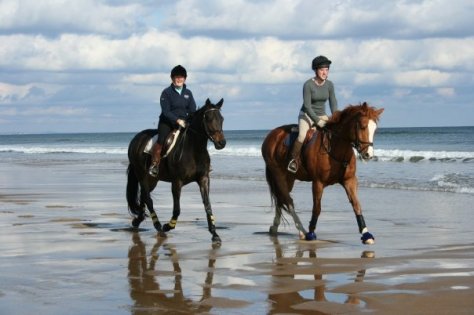
LeeLeftyBeach
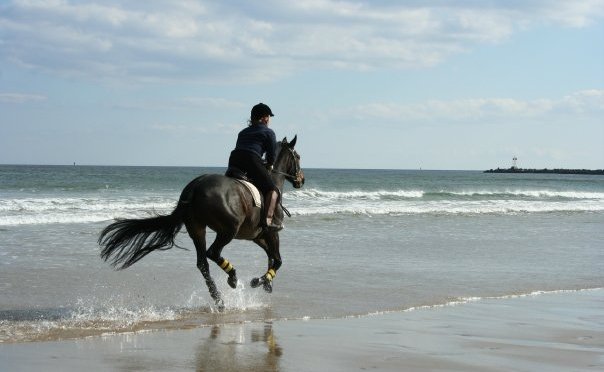
Lee and her friend Lefty at the beach, 2008

I was born with a horse bug.  My earliest memories of wanting to ride come from nursery school.  My parents aren’t “horsey”, and neither were my closest friends growing up.  How often have we heard this kind of story?  That this obsession should come from seemingly nowhere is unexplainable, yet it happens, over and over, these people who have a seemingly insatiable desire, or need, to be connected to horses.  Where that drive takes them is a journey unique to each individual.  Some may stand atop a medal podium.  Some may be fulfilled with a quiet walk down the trail.  Yet wherever we fall on this spectrum, we are all part of the same greater community.

I believe that whether we like it or not, the events which affect the “upper echelons” of equestrian sport affect the rest of us, too, sometimes as a trickle down and sometimes as a mad rushing current.  It is a good thing when we are inspired by a gifted rider’s performance on a talented horse; it is bad when we are left explaining to friends and family why a horse dropped dead at a show, or a big name rider/trainer is suspended for positive drug tests.  But the reverse is true, as well.  If an intrinsically horse loving young person grows up to recognize that there are no longer open spaces to ride, affordable boarding stables, quality instruction and opportunities to reach personal goals,  and they put their horse dreams on a shelf, then we all lose.

MollyandMel
My old horse Mel taught hundreds of children and young adults how to ride.  Here he is with his friend Molly, who enjoyed a special relationship with him. 

The USEF is the umbrella organization which oversees much “sanctioned” equestrian sport in the US.  US Equestrian sets rules, approves licensed officials, offers year end awards programs and more. Yet most people are members only because they compete and membership is required to show.  When they stop competing or take time off, they allow their membership to lapse.  Some of the controversies which have come to the fore front in sanctioned competition, most recently including covert abuse of drug rules, turning a blind eye to questionable training practices, and ever increasing fees, have caused some horse lovers to choose to leave the organization—and competition—behind.  I say horse lovers, because some of these are driven individuals who have put their love for the animal ahead of their love of competition.

us-equestrian
The new US Equestrian logo, similar to the old but without the shield.

For me, this is what it comes down to– love of the horse.  At the end of the day, it doesn’t matter whether someone shows or not, what discipline they ride, or even how often they ride.  What matters is that they love the horse, and they are committed to giving the horse a humane life, a safe life, one free from pain, suffering or misery, and that they love having that experience.  There is a woman at one barn I go to who doesn’t seem to ever ride.  She grooms, longes, and plays games with her horse on the ground.  It wouldn’t be for me, but that doesn’t matter.  SHE is happy, her HORSE is happy, and everyone wins. We are both horse lovers; we are equestrians.
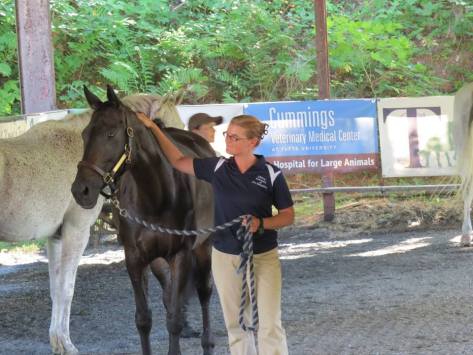
LeeatAwardsCeremony2015DistanceDays
Lee and I after completing the GMHA three day 100 mile competitive trail ride. 

New US Equestrian president Murray Kessler sent a letter to all USEF members (of which I am one), which he basically opens with, “I love horses.”  He has been involved at all levels of equestrian sport, from local shows to watching his daughter ride at an Olympic Games.  People who only know him as the father of Reed might dismiss him as another one of those “upper echelon” people; he has been successful in business and clearly has become financially secure to the point where exceptional horses are now a reality.  Despite this, my sense from the US Equestrian meeting is that Mr. Kessler still remembers what it was like to struggle to find the funds to attend a local show, and that he holds a bigger, broader vision of what US Equestrian could be for our industry.  Instead of a pyramid, I think he sees a circle, where the grassroots supports the top but then the top turns around and gives back to the grassroots.  I think that is something quite exciting.

Mr. Kessler has promised that he will serve as an “advocate for our membership at all levels in all breeds and in all disciplines. Every member of the Federation is important and plays a role in our future.”  He has promised to help the organization take a stronger stance on fairness and safety in equestrian sport, going so far as to state that the “purposeful doping of horses cannot and will not be tolerated”.  He vows to increase access and participation in the world of horse showing.  “Competing in equestrian sports has become so expensive that it is prohibitive,” says Kessler in his letter.  It is beyond time for someone in this level of leadership to formally act on these points, for the good of everyone in the industry, not just the competitors.
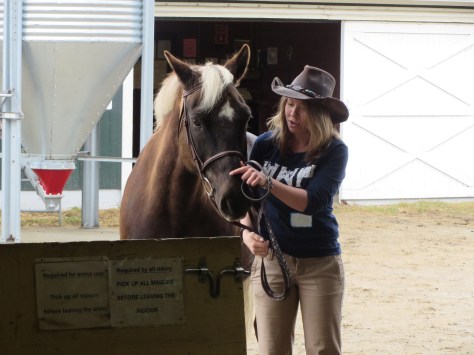
Equine Education Day 2015 055
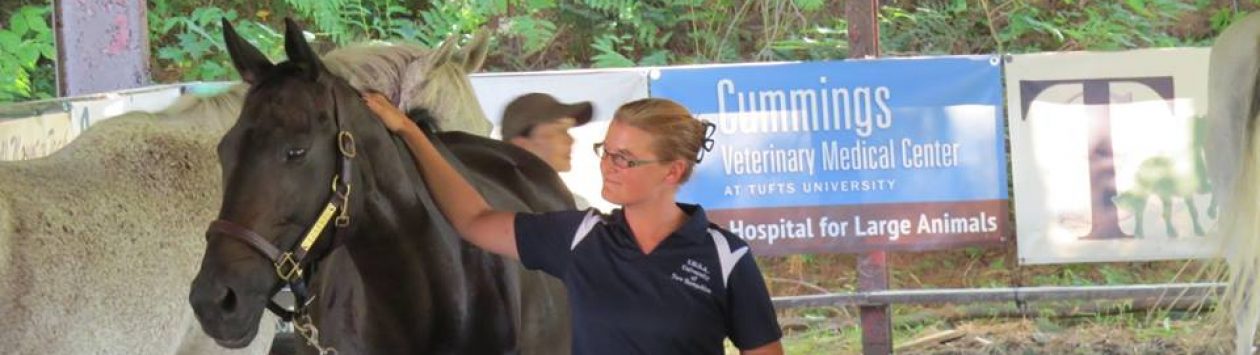
A senior equine studies major at the University of New Hampshire gets Coco (leased to UNH by Camp Runoia and a valued horse in the therapeutic riding program) ready for a presentation at the Equine Education Day, spring of 2015.

Because here’s the thing…on some level, the backyard owners need the horse show people.  Horses are a luxury item.  A robust industry means that resources are being produced and consumed, keeping tack retailers, grain suppliers, hay producers, instructors, trainers, boarding stables, veterinarians and farriers in business.  When the number of people consuming these resources dwindles, they become scarcer as suppliers go out of business.  Then the cost goes up, and all horse owners are forced to make difficult choices.

Kessler commented that his research shows that participation at the smaller USEF shows has declined by 40% over the past ten years, while entries at large scale, more costly events have gone up. In my role as the organizer for the University of New Hampshire Horse Trials, I have noticed a similar trend in eventing.  Our competition draws from a more local/regional audience, and we used to be full with close to 200 entries just a few days after opening; now, we are lucky to run 150 and are forced to accept entries post-close.  I hear other organizers of similar competitions say the same thing.  Our sanctioned summer dressage show used to run four rings with a waiting list; now we can barely fill three.

This slow and steady decline in participation is the result of so many different factors, but it is a concerning trend.  Undersubscribed competitions can’t sustain themselves forever, and sooner rather than later they stop running.  This takes the bridge between schooling competition and more prestigious ones away, leaving a gap in our circle that is hard to overcome.

Nevada and Eastern California 2012 582
Riding Thunder in the White Mountains of California.

US Equestrian states as its new vision, “to bring the joy of horse sports to as many people as possible”.  It has created a new “fan” membership; for just $25, fan members can have access to many of the benefits which the organization offers, including access to the new learning center (which has educational videos featuring well known riders and trainers), access to the USEF network, the youth high school lettering program, and more.  The new website lists “start riding” and “learning center” as the first two tabs in their banner, ahead of “compete” and even “join USEF”.  As part of their new membership recruitment efforts, US Equestrian has given a free fan membership to every member of the IHSA and Intercollegiate Dressage Association, and perhaps some other youth organizations as well (I just happen to know those two for sure).  The website has pictures of young people on horses and recreational riders as well as the usual competition photos.  It is, frankly, refreshing.

At the IHSA’s 50th Anniversary Banquet in early January, I was struck by how many generations of equestrians were in attendance. Everyone in the room was connected through just this one organization, and those present were but a small sliver of the total number who could call themselves a current rider, alumni, coach or former coach of the IHSA.  There are close to 10,000 undergraduate members today; over fifty years, that is an enormous community.
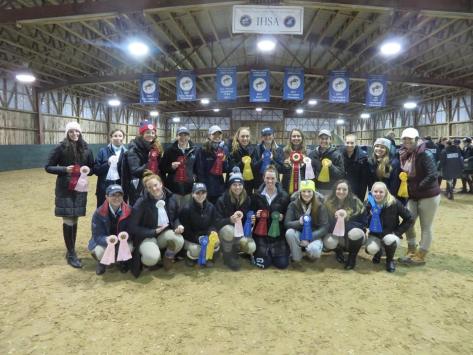
UNHIHSAFall2016.jpg
Many members of the University of New Hampshire IHSA team at their final show of the fall 2016 season.

Each and every equestrian needs to be mindful that we as a collective group are completely connected to one another.  Threats to open space access, to collegiate riding programs, to agriculture as a whole, all affect us.   It is crucial that equestrians seek the synergy amongst our different groups. We must work to cultivate a supportive, not competitive, atmosphere within our ranks. Our tack, goals and preferred riding speed may be diverse, but we should all be united by one thing: our love for the horse.

I challenge each of you, no matter how you define yourself as an equestrian, to work to always remember the love of the horse.  Share your love with others.  Because they are out there—those young people with the intrinsic, insatiable need to be with horses.  They are looking for you, for me, for all of us, to help them to fulfill those dreams.


The Four Seasons of Cold Moon Farm

This past September marked my first full year here at the farm, and overall Mother Nature was kind to me in my rookie year (thank Gaia!).  Each season brings its unique positives and challenges to horse keeping. I have worked on farms for decades but it is certainly a different experience when you are the one making the decisions and doing most of the work.  Now that I have had a full year under my belt here, it is time to pause and reflect on what I have learned so far.

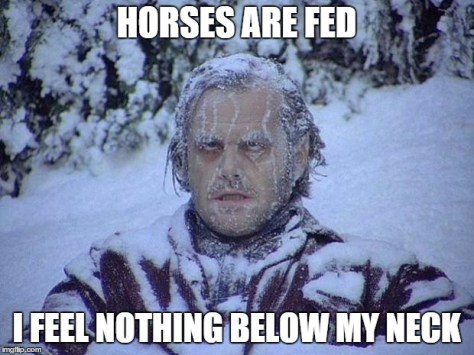
Winter is here in New England.  A few days ago, the farm was buried under 10” of heavy new snow, and now we have huge plow piles, tunnels to gates and waters and temporarily shorted out electrical fencing.  Last winter was relatively mild, which was much appreciated as my learning curve with the new property was fairly steep.  This winter already seems as though it will be more intense; we have had more snow, more ice and more crazy temperature swings before the end of December than I think we went through all season last year.horsesfed

Winter is certainly a challenging time for horse keeping.  All tasks are made harder due to the cold, the snow, the frozen patches…if you have dealt with it, you know.  If, after doing all the work to take care of your horses, you still have the energy to ride, it is still freezing most days, and I personally dislike having to wear layers and fat gloves and heavy boots.  But here is the thing–in New England, our ecosystems NEED winter.  The snow allows underground aquifers to recharge, deciduous trees, grasses and shrubs rest, and we all have a respite from most of the creepy crawlies that plague our horses the rest of the year.  Days are short, temps are low and the footing is questionable, which means that serious training can really only occur if your horse is stabled at an indoor.  One lesson I have learned from the distance riding community is that a little rest for your horse is almost never a bad thing.  No athlete can maintain peak performance year round.  Here in the snowy north, winter is the best time to allow your equine athlete the opportunity to rest and recharge.  After all, nature is doing it, right?

we-are-going-to-the-store-dr-heckle-funny-winter-star-wars-memes-300x226.jpg

Winter can also be a time of astounding beauty.  As much as I curse the mounds of snow after a storm, there is something utterly peaceful about being outside with the clean landscape, tree boughs heavy with accumulation, and horses happily rolling, leaping and playing, whiskers and eyelashes frosted. It doesn’t seem to bother them anywhere near as much as it bothers me!  With most riders spending less time in the saddle, winter is also a perfect time to thoughtfully make plans and set goals for the upcoming season.

February Sunset 006.JPG
A February sunset (2016).

In spite of my efforts to maintain a positive outlook towards the season, winter nearly always outstays its welcome, as far as I am concerned.  I eagerly look forward to any early signs of spring, especially as the days lengthen and winter’s piles lose their resiliency to the strength of a sun which rises ever higher in the sky.  I love the smell of the damp earth as it emerges from beneath the snow’s protective blanket and the sun begins to awaken all of the sleeping entities lying beneath the topsoil.  Seeds sprout, the grass becomes brighter and tree leaves begin to unfurl with reckless abandon.

from-solstice-067
Getting legged up April 2016.

Spring means that we can finally give the paddock a good cleaning, knock the cobwebs down from the corners of the barn, and begin to launder blankets and stow the shovels and scrapers.  We trade snow suits for being covered with the shedding hair of our equine friends.  Spring is the time to put all of the plans which we schemed during winter’s lull into action, the time to start to condition our mounts and prepare them for the upcoming active season.

Marquesa comes to Cold Moon 019
Marquesa and Lee enjoying spring grass in May 2016.

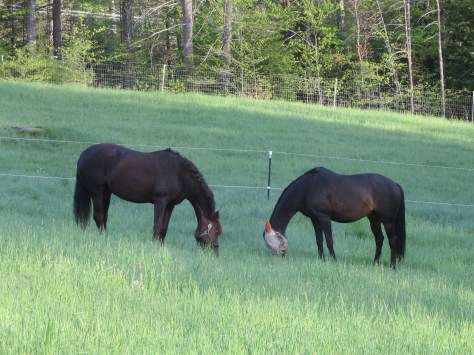
Songbirds return.  At Cold Moon Farm, there are multiple micro habitats and a lot of edge, and the color and activity of birds just returned from warmer southern climates brings a feeling of lightness and joy.  The grass begins to stabilize and the horses can begin the slow, gradual process of acclimatizing to grazing.

But spring is not all sunshine and buttercups.  Winter clean up can be onerous, from replacing torn sod to fixing broken fencing to removing downed tree limbs.  Dirt paddocks quickly turn into quagmires as snow melt runs off and April’s showers saturate (hopefully within the next few years we will have a proper, improved drainage in the sacrifice area).  Perhaps most annoyingly, fly season officially gets underway in April with the appearance of hordes of blackflies.  And worst of all, ticks are seemingly everywhere, emerging as early as possible. Yet just as you think you can’t take any more of the mud and the bugs and the need to clean up yet another area of the farm, the season changes again.

Early Summer 20156 002.JPG
The hazy days of early summer.  June 2016.

Summers in New England are short and intense.  There are really only maybe eight to ten weeks of true, full on summer, and we try to make the most of it.  I think I must be part cat, because I just revel in the sun and want to absorb as much of it as possible.  I love to get up early and feel the cool, fresh air in the morning, and I can’t wait to get out and about for the day.  My favorite thing is to ride first thing in the morning, before the humidity builds up, then sip on an iced coffee and teach for the afternoon.

This past summer was super sunny, which I loved for my own purposes, but in reality, it was not the best thing for the ecosystems of the northeast. Between the light snow season and the lack of rain, New England soon found itself in a drought.  I began to hear stories of wells running dry–I soon learned that these were mostly dug wells, which go down 9-12 feet, as opposed to a drilled well like mine, which is usually 200 feet or more and taps into an aquifer. But it was stressful to know that homes around mine were experiencing problems with their wells, so I worried about what I would do if water ran out at the farm.

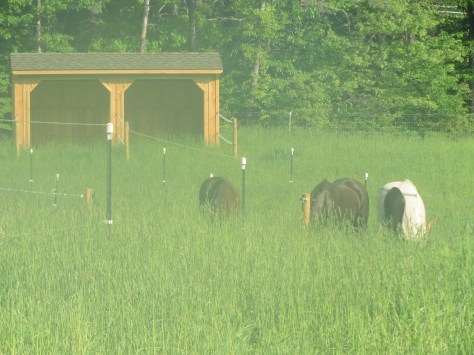
The drought also meant that the grass went dormant far earlier than usual.  I had to pull the horses off their grass fields in August and switch to feeding hay, almost a month earlier than I had anticipated.  On the plus side, I barely had to mow the lawn and I got away with not having a brushhog yet for the fields out back.  But as the grass began to crisp and the streams and water crossings out back ran completely dry, it was clear that the unusual weather was taking its toll.  Late summer can be a good time to spread lime on your fields, but that requires a heavy rain to help flush it into the soil.  I got lucky in the timing of an application right before one of our only big storms in August. Just as I thought that the fields and the yards and the trees couldn’t possibly take another sun soaked day, deprived of water, the seasons changed again.

002.JPG
Lime being spread August 2016.

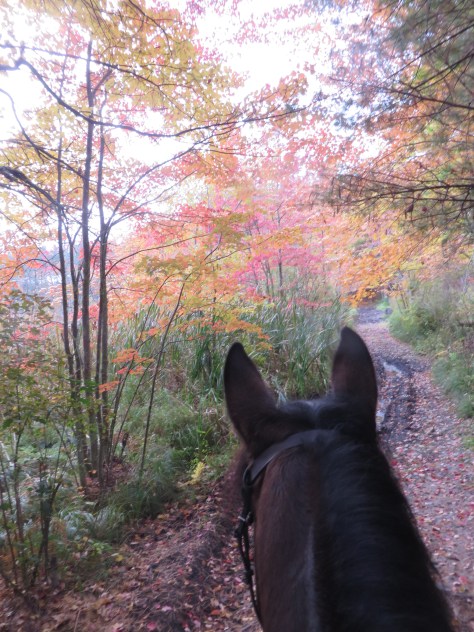
Fall here is simply stunning.  There are many maples on the property, which flamboyantly flash red and orange as the overnight temps cool and days begin to more obviously shorten.  Beech trees and a few oaks mix in as well, offering a later surge of color.  Lower in height, shrubs like sumac and dogwood are also not to be missed.  The trails out back offer a range of color displays, in every direction.  The drier air feels like a relief and this year, the fall brought with it some blessed rain to help begin to reverse the effects of an overly dry summer.  Late summer flowers bloom amidst the falling leaves, lending a competitive sense to the changing seasons.

fall-2016-023
The view from between Anna’s ears.  October 2016.
Later Fall CSC and Dart IHSA 2016 008.JPG
These two things don’t seem to belong together (October 2016).

Fall on a horse farm means it is time to prepare for winter.  The first order of business was stocking the hay barn to the gills with as many bales as will fit (here, close to 300).  Later in the season, it was time to put away the fixtures from the grass fields, which are closed for winter, then to trim the shrubs around the barn, put away the jumps and rails, and set up the heaters for the outside water.  And of course, autumn is nicknamed “fall” because of the leaves.  I have been lucky so far to either use the mower to mulch them or to allow strong winds to blow them off into the tree line; I certainly don’t relish the idea of hand raking the entire yard!

Later Fall CSC and Dart IHSA 2016 001.JPG
Yes, I mowed over these, or at least the ones that didn’t blow away.   October 2016.

As fall winds down, winter begins again.  And the cycle continues.

Each year, the seasons come, the seasons stay, the seasons change.  Each season brings its positives and its negatives, but without that yin/yang balance, it would not be as easy to appreciate the variety for what it is. New England is a dynamic place, and to successfully maintain a healthy place for ourselves and our horses, managers must consider the unique challenges faced during each change of the weather.

frosticlemarquesa
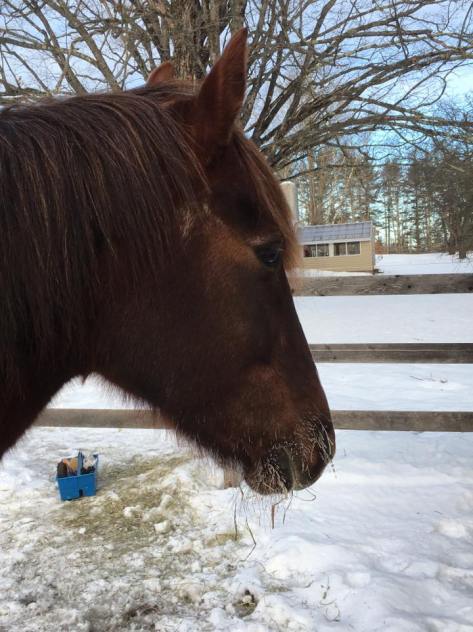
Marquesa shows off her “frosticles”. Winter Solstice, 2016.

So as I trudge outside yet again in my full Yeti suit, I will try to take the good with the challenging, and when it starts to get to the point where I think “I just can’t stand this (insert problem word here; examples could include mud, ticks, snow, ice, wind, torrential rain) anymore” instead I will try to say, “this too shall pass”.

brr
“You are so lucky to work outside,” they said.

Happy New Year.