Tag Archives: compassionate horsemanship

Liatris 1999-2024

On November 4, 2024, under a shower of tears and with so much love and gratitude, Lee, our most wonderful of warhorse mares, was laid to rest here at Cold Moon Farm after a period of declining well-being. She was 25.

It has taken me nearly three weeks to even begin to think about how to share her story, which is really our story, as for almost 20 years, Lee was perhaps the most constant being in my life. She was a creature of dichotomies: quirky and brave; sensitive and tough; light and soft physically and yet somewhat mentally inflexible. When I met her as a green-backed 6 year old, I never imagined our partnership would evolve as it did, or endure for so long.

Lee and I getting ready to start the 2015 GMHA 100 Mile Competitive Trail Ride.

Genetically speaking, Lee was meant to be an athlete. Her Thoroughbred sire, Denny Emerson’s Loyal Pal, was a warhorse himself– a multiple stakes winner who placed top three in 70 of his 124 races. Her dam, a Holsteiner/Thoroughbred cross named Lakshmi (Petunia), was a successful sport horse in several disciplines, including eventing and the hunter and jumper arenas. Although Lee looked like a full Thoroughbred, I always joked that tiny dollop of Holsteiner blood was just enough to cool her off.

Lee at the Wentworth schooling show in 2010. Photo Credit to Mystical Photography, used here with permission.

For many years, Lee and I concentrated on the jumpers, before switching to dressage. However, Lee had an inherent caution to her that was as integral to her being as her very DNA, and in competition, she often struggled to give her best performance. At times, I (unfairly) called her a “heartbreaker,” because it felt like she would let me down when it counted the most. There were moments in our early years together that she frustrated me to no end, and made me doubt my abilities as a trainer and horseman; I wondered sometimes if another rider, someone “more capable,” could better help her to fulfill her athletic potential. Yet I worried what might happen to my sensitive, quirky mare if I sold her somewhere else—how would it be for her, if she failed to thrive in a “program”?

Schooling at Rachel Greene Lowell’s Harvest Hill Farm, 2010.

Despite struggling in competition, Lee shined at clinics, where there was typically less “hustle and bustle,” and she had more time to settle into her space. In these settings, she truly showcased her athleticism and scope, and we had the opportunity to ride with some of our sport’s best, including my childhood idol, Greg Best. During my years as an intercollegiate coach, Lee also became a team favorite when she filled in at flat practices. In intercollegiate shows, in her home ring and on the flat, she was an unflappable, elegant, reliable draw who was pretty happy to simply follow the rail and ignore any drama that might be unfolding elsewhere in the ring. One year at our home show, nearly every rider who drew Lee won their class, including the high point rider championship. A longeing master, she also helped several Pony Clubbers meet standards at the C3 and B levels in this phase of the test. It filled my heart to see Lee experience success in these ways.
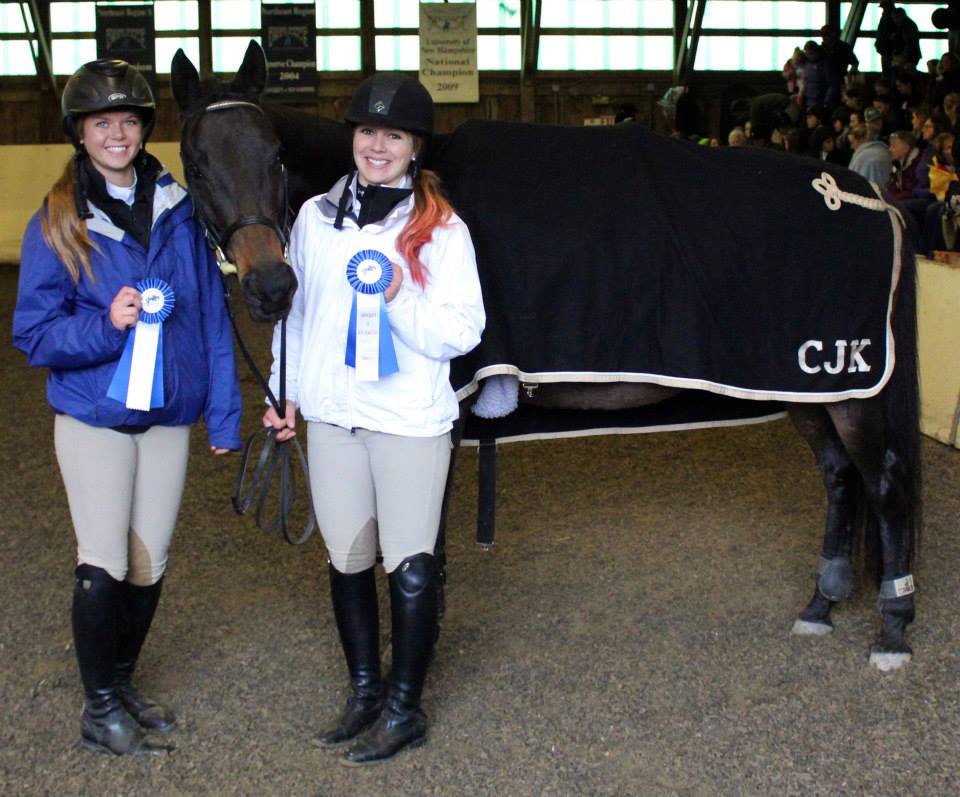
My horse Lee and two intercollegiate riders from my team, each of whom won a flat class on her at the home show.

Through lessons and clinics and hours of practice, Lee became quite an educated horse, both on the flat and over fences. Our relationship became stronger, and though she always remained cautious and sensitive, I also came to know exactly what to expect from her and how to support her when she became worried. Yet despite all of this growth, I still often felt Lee was a horse who had not found her true purpose.
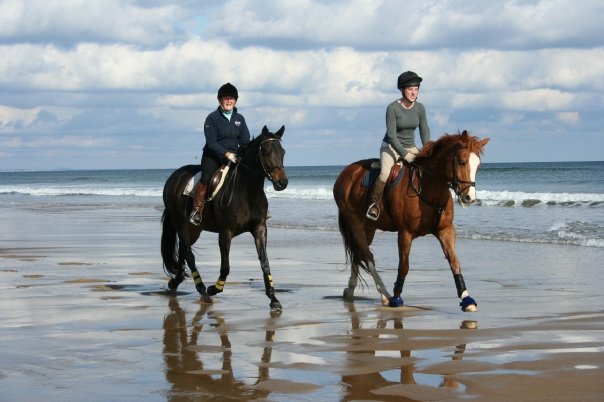
Lee and her friend Lefty at the beach, 2008

In 2013, a friend of mine was preparing her draft cross (emphasis on draft) for a run at the Waredaca Classic 3 Day event, and Lee and I joined them on several long, slow distance conditioning sets that summer. When my friend decided to sign up for the 10 mile introductory ride being held in conjunction with the GMHA Distance Days in September, I decided we would tag along.

To say that Lee was “unfazed” by the trail that day is, perhaps, an understatement. At the final jog out, she leapt into the air, bucking and farting (somewhat out of character for her), and the judge chuckled and said, “Perhaps next time, a longer distance might tire her out more?” And with that casual comment, the seed of an idea was planted. Maybe Lee, at 14 years old, could become a distance horse.
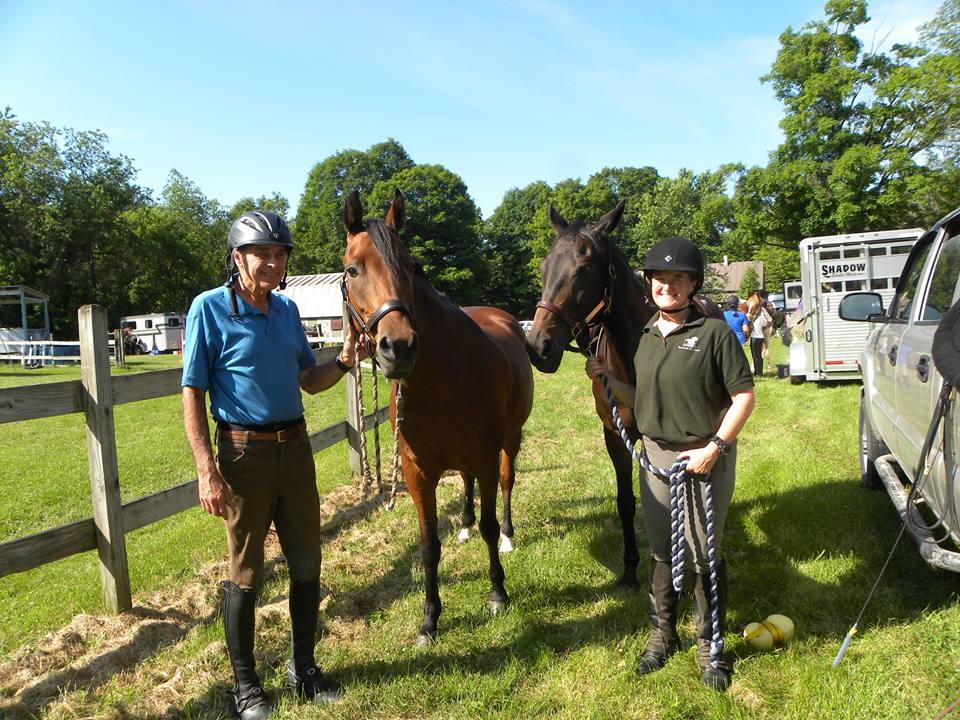
Denny and Roxie, Lee and I after completing the Hartland Riding Club ride in June 2014.

The next summer, Lee and I worked at Denny and May Emerson’s famed Tamarack Hill Farm in Strafford, Vermont. On the Vermont hills, Lee proved how tough she was– and so long as we didn’t have to get too close to the cows living nearby, she was happy and relaxed on trail, no matter how long or how far we rode. She completed her first 25 mile competitive distance rides that season, always feeling like she had more miles in the tank. So for 2015, I set a (somewhat ridiculous) goal of completing the 79th Annual GMHA 3 Day 100 Mile Ride with her at Distance Days in September.

To try to put this goal in perspective, at that point in time, Lee and I had completed perhaps five competitive distance rides, ever. I didn’t even know what I didn’t know in terms of conditioning, feeding, shoeing, electrolyte management and tack selection for a three day 100 mile ride. I didn’t know how distance riders on longer rides supported their horses on trail, during holds, and on the nights in between. Setting this goal was a bit like a First Level rider declaring she would enter the Grand Prix next season, or a beginner novice eventer announcing she would go advanced.

Clearly not a fan of having her face washed in during the 20 minute recovery time, post-ride.

But what Lee and I lacked in practical experience in the sport, we made up for in relationship. We had already spent thousands of hours together; she was sound, fit, and athletic. I knew how to research and ask questions and find mentors. And as we began to implement our conditioning and ride plan, Lee stepped up to answer every single question I asked—first, a 15 mile ride in May, followed by her first 30 mile ride later in the month (the only competitive ride she would win). In June, her first back to back rides, 25 miles on day one, and 10 on day two. In August, a two day 50 mile ride. With each outing, she became fitter and more confident, and when we returned home, she pranced around her paddock like a cocky athlete who had just scored the game-winning point. As distance horse, she was thriving. When I sent in the entry for the 100 mile ride, despite being rookies, I knew we were up to the challenge.

Coming out of the final hold on day 3, with about 15 miles to go, on the 2016 100 mile ride. One of my favorite photos of Lee, ever, captured by John Miller of Spectrum Photography.

Nearly a decade has passed since we entered GMHA’s White Ring at the end of day three, 100 miles in our rearview mirror, tears in my eyes. I think for Lee, it was just another day on trail. But for me, it was a validation—that my belief in this horse, a horse so many had suggested I pass along, was justified. Together, we had evolved, and Lee had finally found her purpose.

The 2015 GMHA 100 Mile Awards ceremony. A job well done.

In 2016, she finished the GMHA 100 Mile ride again; she earned the Perkion Award for Best Thoroughbred/Thoroughbred type both years, Top Rookie Horse in 2015, and the Spinner Award for Best Non-Registered Trail Horse in 2016. Her name is on the perpetual trophy that lives in the GMHA Youth Center. For the next two seasons, we completed several rides at shorter distances before she formally retired from competitive distance riding at the age of 19. In 2018, we checked off an Equine Bucket List item together, visiting Acadia National Park in Maine and covering nearly 50 miles of trail over several days.

On Rockefeller’s famous carriage trails in Acadia National Park, Maine, 2018.

Nine years ago, Lee became the first equine resident at Cold Moon Farm, spending six of those years in semi-retirement. She was never going to be a horse who could just stand around idly; Lee was far too much of an athlete for that. For Lee, “retirement” looked like going on hunter paces and other organized rides, visiting state parks, and still spending many hours on trail, just at a slower rate than what is required for a competitive distance horse. But even at the walk, she often outpaced her equine friends, and we had to pause and wait for them to catch up.
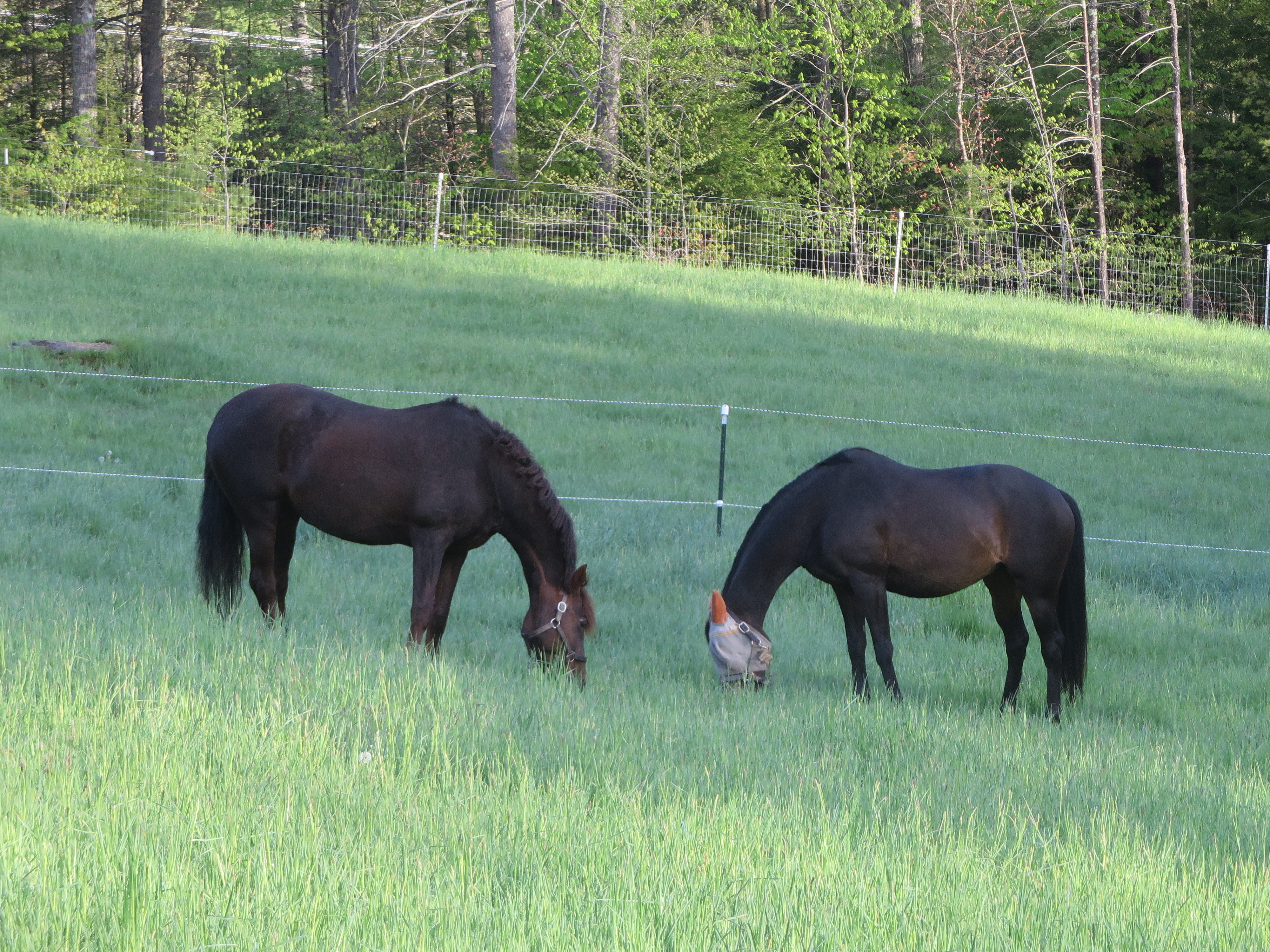
Lee and her sometimes friend Marquesa enjoying summer grass at Cold Moon Farm.

When I think back on the many memories and experiences Lee and I shared, I am both humbled and overwhelmed to recognize how much this horse taught me. More than anything, Lee reinforced that what is most important is to really understand the horse standing in front of you. Their breeding, their training, their previous experiences all count, but to truly honor the horse, you need to look past those details, and consider where that horse’s joy can shine the brightest.
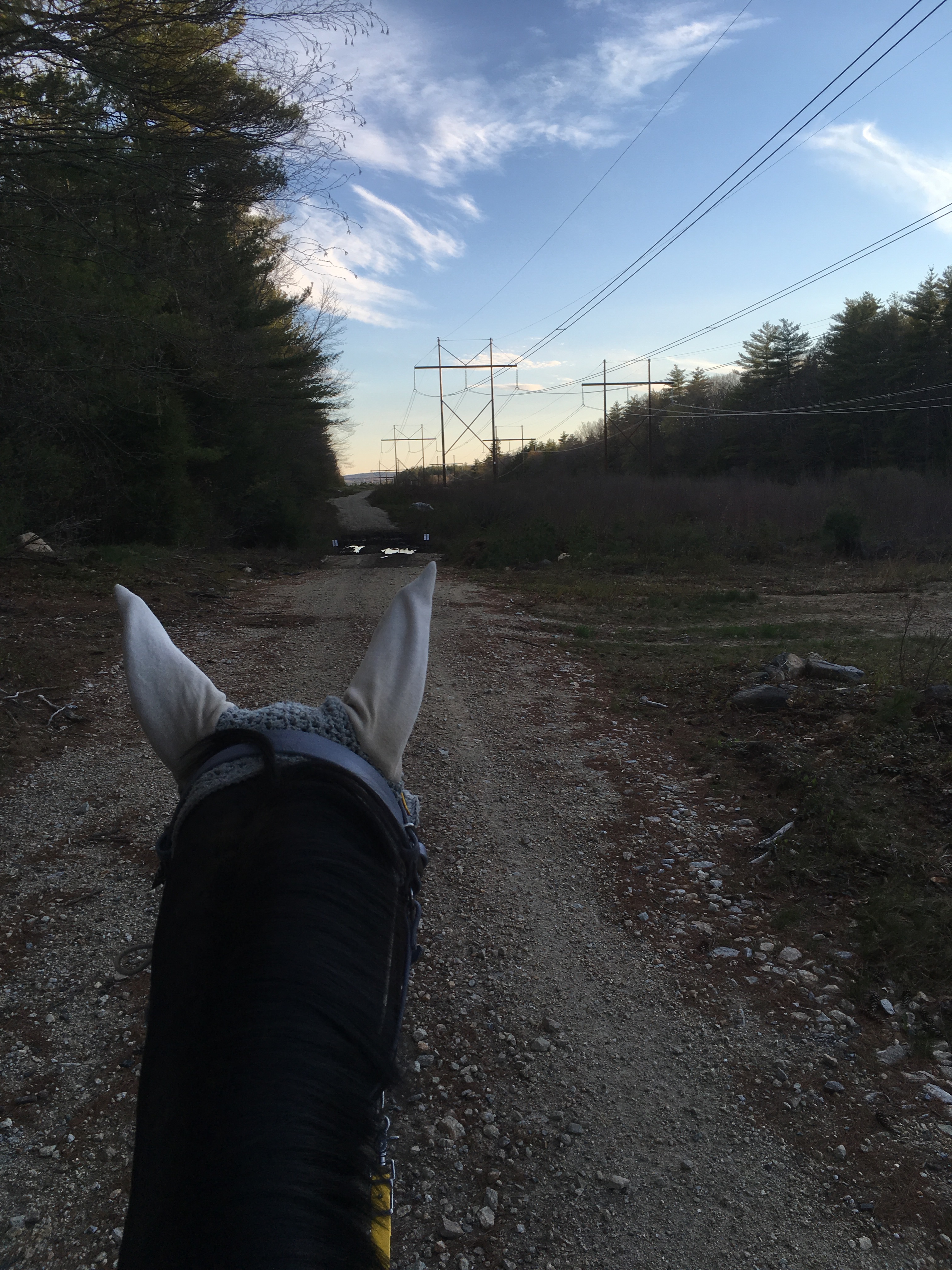
To my Dark Mare, the original “quirky girl,” I will love and miss you forever. I will never be the same for having cared for you and for having you be a part of my live, and for that, I am grateful. Thank you for everything.

Here are a few blogs featuring Lee and her adventures:

Reflections on Gratitude, Part II

A Journey of One Thousand Miles…or One Hundred

Trusting the Untrustful Horse

The Tamarack Chronicles, Volume II

Ya Gotta Know When to Hold ‘Em…and When to Fold ‘Em

What does it mean to be a “Compassionate Equestrian”?

When I founded Cold Moon Farm LLC in 2015, I created the following Mission Statement:

                “Cold Moon Farm is a working horse farm dedicated to promoting the principles of sustainable living, conservation, and the highest standards of compassionate horsemanship.”

For me, compassionate horsemanship lives at the intersection of the following beliefs: the importance of using evidence-based and humane handling, care, and training techniques, whether mounted or unmounted; respecting the horse as an autonomous, sentient being who chooses to comply with human requests but is never obligated to do so; and a strong commitment to doing our best to ensure that every interaction with our horses is positive, respectful, and fair. In addition, compassionate horsemanship includes understanding how the physical and emotional well-being of the people in a horse’s orbit impacts the animal’s care and well-being.

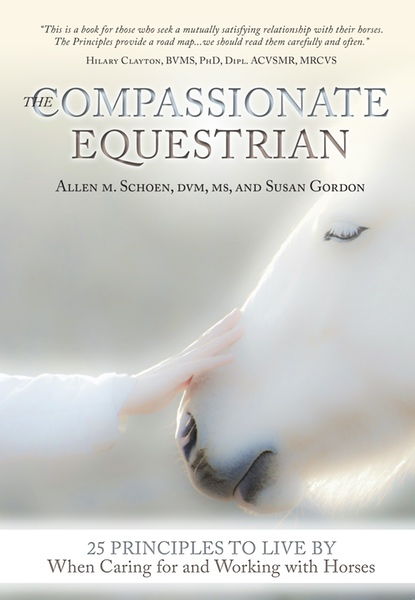
At the time, I had never heard anyone else cite compassionate horsemanship as the bedrock foundation to their practice. What I didn’t know back then was that Allen M. Schoen, DVM, and Susan Gordon had just co-authored a book called The Compassionate Equestrian: 25 Principles to Live by When Caring for and Working With Horsehttps://www.horseandriderbooks.com/store/the-compassionate-equestrian.htmls, published by my friends at Trafalgar Square. In fact, this book wouldn’t cross my path until 2022, and when it finally did, I was pretty floored by the synergy between these authors’ ideas and my own.

As the title implies, The Compassionate Equestrian defines 25 principles underscoring how the act of compassion must affect every action or choice we make around horses and toward each other. Schoen and Gordon discuss ideas ranging from the highly specific (a good rider is a physically fit rider, and a fit rider knows how to slowly condition their horse for peak performance) to the highly esoteric (integrating concepts from Schoen’s Transpecies Field Theory and elements of quantum physics and neurobiology). They discuss individual accountability, and then ask how the collective face of the equine industry might change if everyone involved put compassion forward as our most important and essential concept.

In this blog, I hope to offer just a taste of where my own beliefs and those of the authors intersected. For organizational purposes, I have grouped them into “individual” actions and “collective” actions, but this is pretty simplistic. In reality, even just one individual choosing to begin her journey as a compassionate equestrian will positively impact the collective equestrian community, because she will send ripples of compassion through her every interaction.

After you have reviewed some of these ideas, I am interested to know whether you can recognize an area in which you might shift your thinking, behavior or inner beliefs to embrace “compassion” as the first and most essential quality. How could such a shift make a positive impact on your life? On equestrians in general? Or even on the world at large?


“Be the change you wish to see in the world” (attributed to Mahatma Gandhi, 1913)
Image in the public domain, via Wikimedia Commons

Compassionate Equestrianism—Individual Actions

Ultimately, it is at the personal level where compassionate equestrianism resides. After all, despite our best efforts, we cannot control the behavior or actions of others; in fact, it is hard enough at times to navigate our own way in the world.

                Education The compassionate equestrian is on a personal quest to always know better, and to always do better—not because it will earn her better ribbons, or because her barn mates will look up to her more, but because it is the right thing to do for our horses. She understands that the horse’s welfare is of the highest importance at all times, and therefore asks questions when she does not understand, calls it a day when something doesn’t seem quite right, and constantly assesses whether what she is asking of the horse is reasonable and fair. Horses do express their physical or emotional discomfort, but often in ways that are not clear to humans. The compassionate equestrian seeks to become educated enough that she notices her horse’s sometimes subtle signals of distress. When something is off, the compassionate equestrian promptly secures the assistance of qualified, trained professionals to address the issue. In any situation, she decides for herself if what she is asking of her horse is truly in his best interest.

Anna and I attend a clinic in 2019.

                Being Present When we interact with a horse, we expect him to pay attention to us—so it is only fair that we do the same in return. To borrow a concept from my years of yoga practice, the troubles, worries and stresses of our “real lives” will all be waiting for us when we leave the barn. If we do not release them before entering the stable, those distractions will not only impact how we communicate with our horses, they color the interactions we have with everyone in our orbit. They shape our behavior and our responses to challenge. When we arrive at the barn, we need to take time to pause—for however long is necessary—to center our hearts and minds. The compassionate equestrian enters the barn community with the intention of having an open heart and tolerance for those around her.

                Controlling our Ego One concept I especially loved from The Compassionate Equestrian (and I will paraphrase here) is that there are two beings living inside each of us—our ego, and our “inner wise-guide”. All of our actions and choices will be driven by one being or the other. Ideally, we learn to follow the energy of our “wise-guide” more than our ego. When we ask our horse to do something for us, we need to know that what we are asking is within his skill set, his fitness level, and is in his best interest. If we are asking for something outside of those parameters, it is likely to satisfy our ego—and this is not the action of a compassionate equestrian. There will be times we make mistakes when it comes to our horses; after all, we are only human. When we follow our egos instead of our wise-guide, causing stress or pain to our horse, or to others around us—we forgive ourselves, and actively work to change as we move forward. Just as it takes a body’s systems years to adapt to the physical demands of increasing levels of performance, it will take time to train our mind to prioritize the wisdom of our wise-guide over the ego’s desire for quick results, rewards, and recognition.

Horses do not act from ego. They do not care what they do or do not achieve, but they do care that they feel safe, which includes having the company of other horses (Lee and Anna at a benefit ride in 2020).

Only when we are able to let go of our own ego can we fully embrace the practice of compassion. For most of us, it will take concerted attention to notice where our motivation is coming from, and to shift away from the demands of our greedy ego. In fact, Gordon writes, “Decreasing the destructive impact of egoic tendencies in a very ego-based business will be one of the biggest challenges to unifying a global community of horse people” (pg. 368).

Compassionate Equestrianism—Collective Actions

Practicing compassion is both a habit and a skill; just like other habits or skills, we get better at it the more we do it. It is most difficult to practice compassion when circumstances are challenging, so it is important to cultivate compassion during routine occurrences every day, until it becomes a comfortable and familiar way of navigating the world.  

What would this look like in practice? For starters, we can celebrate everyone’s victories, whether or not they seem significant to us. Smile and say to them, with genuine positive energy, “I am happy for you.” Do the best you can, to the best of your ability, in every action you undertake. If someone offers unsolicited feedback, assume their good intent.

For professional equestrians especially, the horse industry can test a commitment to compassion. When clients are making demands, or bills are coming due, or a top horse has had to be sold, the unrelenting pressures can make even the kindest human turn hard. These challenges can lead to burnout and unhealthy coping mechanisms, or even cause equestrians to question why they got involved in the industry in the first place.

And so, I will argue here that it is perhaps toward these most stressed, challenged or embittered equestrians that individuals must attempt to direct the greatest amount of compassionate energy. For our own protection, being compassionate doesn’t mean that we must keep ourselves or our horses within their orbit. But we can still project toward them, in Schoen’s words, “loving-kindness” and the sentiment, “I wish you well.”

Additionally, we must remember that no one is at their best, all of the time. When an equestrian is scared, or angry, she will behave in a self-protective way toward her horse and others around her.  When she is naïve, inexperienced, or uneducated (as we all are at some point in our equestrian journey), there is an overload of information available at her fingertips, and she may not know whose wisdom to turn to. We all must hold the belief that the majority of equestrians want what’s best for their horse. As professionals, it is our duty to present them with the most current, evidence-based information, and help them to determine the best path forward, for them. Further, we have a duty to work to prevent harm, when it is within our power to do so—essentially an equestrian version of the Hippocratic Oath.  To quote directly from The Compassionate Equestrian, we ask, “What is the most compassionate way to meet the needs of the horse and the capabilities of the rider?”

We must learn to share in the joyful moments of being around our horses, and to celebrate every victory, no matter how seemingly insignificant.

Finally, as a compassionate equestrian community, we must commit to collectively caring for all equines, at all stages of their lives. This would look like an industry committed to ensuring there is a home for every animal it produces; that every equine is provided with humane care and living conditions that allow them to thrive at all stages of life; that every equine, from an early age, is handled and trained so that a lifetime of safe interactions with humans are possible. When the quality of an animal’s life has declined to a point where they are always in pain, or are at risk of causing harm to themselves or others, or are otherwise not able to express the natural qualities inherent to being a horse, a compassionate equestrian community will ensure their humane transition. In a compassionate equestrian community, these actions are the expectation, not the experience only of those horses lucky enough to “fall into the right hands”. A compassionate equestrian community holds its own members accountable, whether they are a backyard hobbyist or top competitor.

With compassion at the core of all equestrian activities and pursuits, we can expect to evolve into a community that shows respect for its members, honors individual responsibility, and unifies the diverse interests of equestrians across disciplines, breeds, and skill levels.