
The Tamarack Chronicles: Volume II
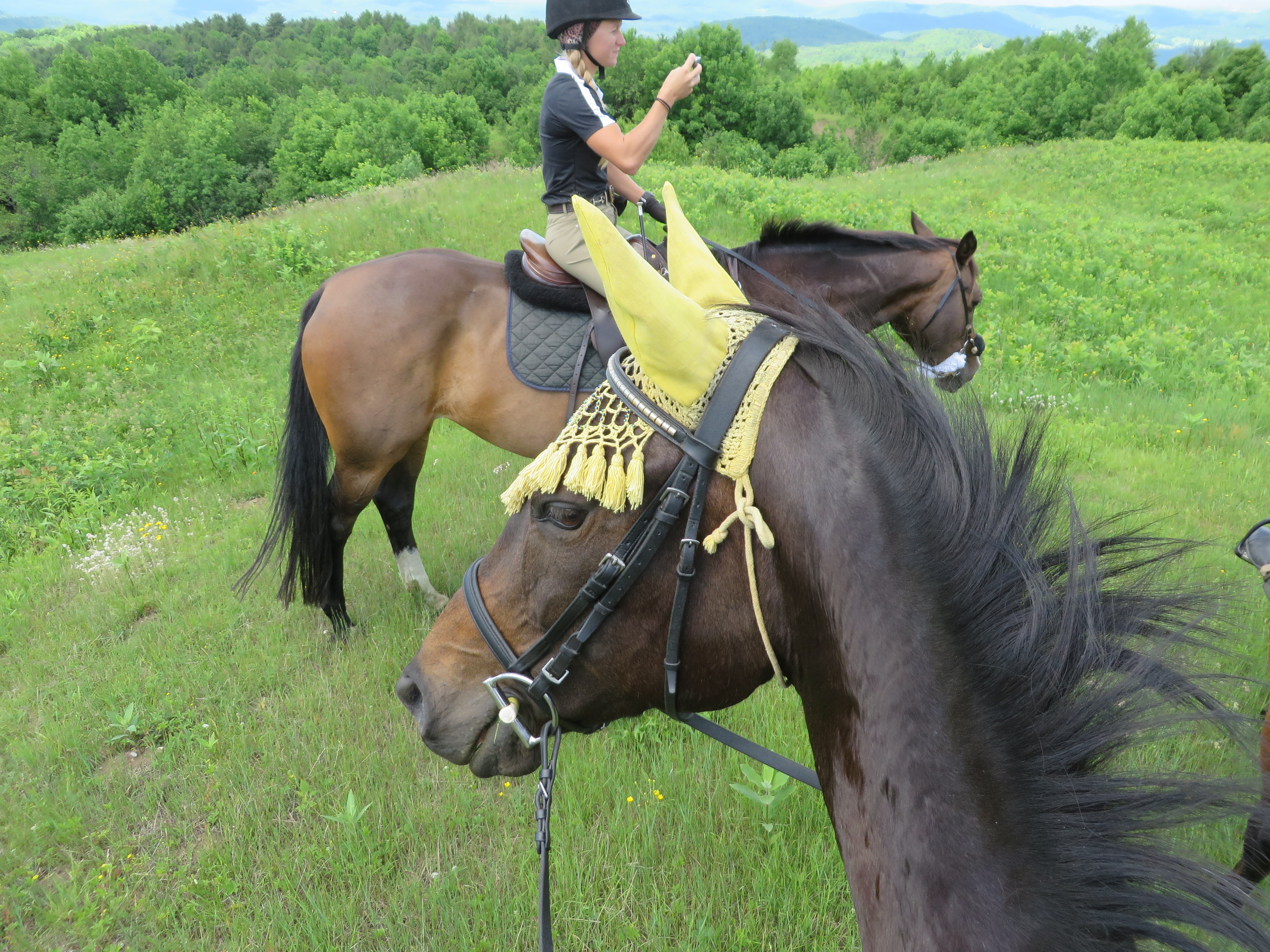
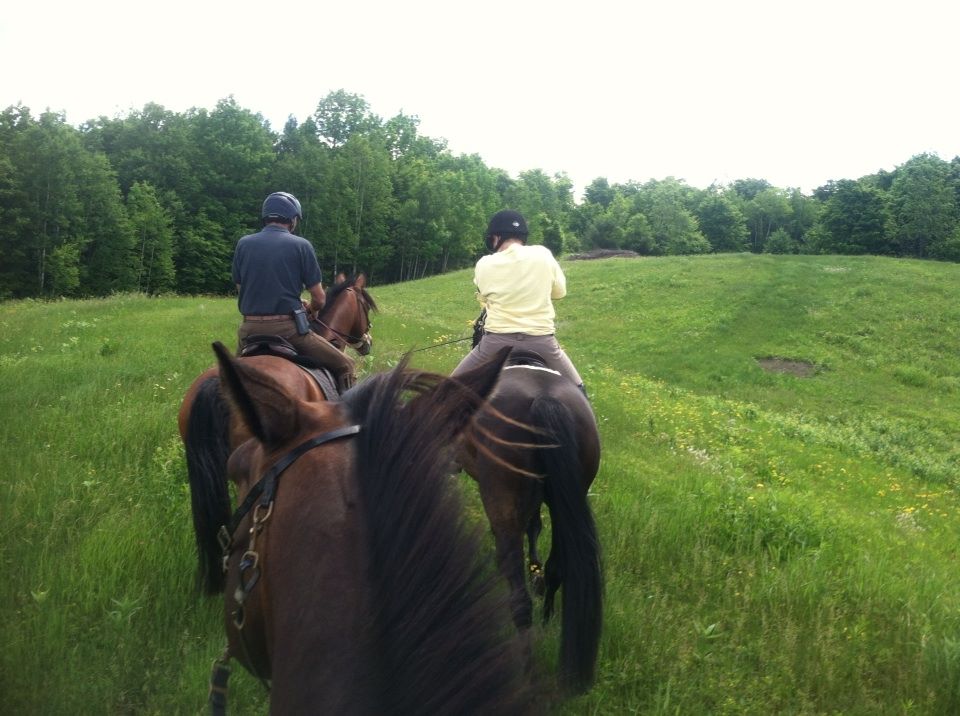
I think I may have found my new favorite horse sport—distance riding! On June 8, Lee and I, along with Denny and his mare Cordie (Beaulieu’s Cool Concorde, a 9 year old Selle Luxembourg mare) completed the 15 mile competitive trail ride at the Green Mountain Horse Association (GMHA) in South Woodstock, VT. It was such a great experience on several levels and I am excited that we are aiming for a second 15 mile ride this weekend, with the Hartland Riding Club in Hartland, VT.
If you love to be outside, love riding your horse, and enjoy spending time with other people who value these same things, then you may already be a trail rider. Competitive Trail Rides (CTR) and Endurance give those of us who enjoy all of the above but also appreciate a bit of friendly competition a chance to put our horsemanship skills to a true test.
CTR How’s and Why’s
As a veteran now of TWO CTR’s, I feel MORE than qualified to explain the basics of how these rides work—haha! Just kidding. Please take what I say here with a small grain of salt (or electrolyte) and understand that it comes from my limited personal experience and research only, not years of dedicated study and practice.
The CTRs that I have attended are by far more relaxed than any horse trials or hunter show, and nearly everyone—competitor, staff or volunteer—is quick to say hello and lend a hand.
As with most competitions, one of the first things to do upon arrival is to check in with the show office. Here, you will sign up for your start time; at GMHA, entrants are usually sent out in small groups at two minute intervals. You will also receive your entry number, and your horse will be marked on both sides of the hindquarter with their number in greased pencil. This allows for easy identification of an entrant from a distance, and provides a marker that is hard to wash off when the animal is being cooled out at the completion of the ride.
The next order of business is the “vetting in”, where each entrant is carefully looked over by both a licensed veterinarian and the lay judge, who is a knowledgeable horse person. The vetting in might be completed the day before a ride for a longer distance, or it can be done just before the day begins for shorter rides. Rides that are sanctioned by the Eastern Competitive Trail Ride Association (ECTRA) provide feedback on the vetting in/out to competitors via a carbon copy sheet which clearly identifies several critical areas for assessment. The purpose of the vetting in is to establish a baseline for the horse’s condition prior to completing the ride. The vet and lay judge will palpate the topline, note any rubs/blemishes/swellings, check the legs and note filling, cuts, windpuffs, etc., check anal tone, do a pinch test on the skin, note the condition of the horse’s gums and check capillary refill time. All findings are carefully noted on the horse’s sheet. Finally, horses are jogged in hand, moving straight away from and straight towards the judges, as well as in a circle to the left and right. Horses will start with a perfect score of 100, and points are deducted for changes to the horse’s condition at the end of the ride.
Once all the horses have been vetted in, competitors will attend a pre-ride briefing, during which various personnel are introduced, trail markers are described and general information about the route is provided. Additionally, riders are made aware of the time for the route; rides sanctioned by ECTRA or running under its rules seem to adhere to an average speed of 6 miles per hour. The officials also give consideration to the weather and trail conditions to come up with a window of time during which riders should aim to complete their route. There is a thirty minute grace period during which riders may still officially finish with point penalty. Exceeding the grace period will result in a team’s disqualification. Finally, the vet and the lay judge will announce what the target is for the recovery pulse and respiration rates (more on this later). For rides longer than 15 miles, information is also provided on the mandatory hold. I will have to update more on what this means once I tackle a 25 mile ride!
At this point, competitors will return to their horses to prepare to move out on the trail. The rides at GMHA allow competitors to sign up to go out with another entrant(s); this practice is almost encouraged for the simple fact that you will have someone nearby in case of emergency. Once on the trail, it is really up to the rider to pay attention to many variables to determine an appropriate pace. You must consider your mount’s condition and how they are feeling that day, the terrain in front of you (and yet to come), the temperature, etc., and then travel at an appropriate pace. Because CTR’s DO have a time limit, it is important to be mindful of this and to aim to travel an average of 6 miles per hour. The walk is about three miles per hour, so completing a ride on time requires maintaining a pretty steady trot. However, there will be times on the trail where conditions warrant a slower speed (walking) and it is more important to consider your horse’s well being than to make a specific time.

Next comes the best part—the actual ride! Vermont in the late spring and summer is a simply breathtaking place, and so as you ride along, you are able to enjoy your horse, the company of friends old and new, and of course, exquisite scenery. The June GMHA ride took us first part way up Morgan Hill Road, and led us past amazing properties, including one of the homes of endurance Hall of Famer Steve Rojek. The road sections of the route are on town roads of hard packed dirt, which allow you to fairly comfortably trot out. We passed homes that even Denny hadn’t seen before, including one that appeared to have a homemade polo field and another antique home which someone was painstakingly restoring to its original appearance. (We learned upon our return that this particular property formerly belonging to the famous actor, Michael J. Fox. It seems like everyone wants a piece of Vermont’s beauty!)

Our June ride took us on about 50% trail and 50% road. We had one ‘road crossing’ which required volunteers to police the traffic for safety. During the course of our ride, we encountered a handful of vehicles on the roads, and every driver was courteous and respectful of our horses. As someone who by and large avoids riding on roads when it is possible to do so, I appreciate drivers who pass horses slow and wide, and we were certain to acknowledge them with a friendly wave and smile.
One aspect that it is so important to remember is that in several instances, we were guests on private property. GMHA sits on 65 acres and maintains an extensive trail network, with some routes on their own property but many others are only accessible through the generosity of private landowners. Lack of space to ride is a major and critical issue facing the equine industry today, and all riders, not just trail riding enthusiasts, would be wise to take active steps to preserve the lands which they value. This topic warrants its own blog post, so perhaps I will reflect on this more and do just that. Visit http://www.gmhainc.org/trailpreservation.html for their thoughts on the topic.
As riders near the end of the CTR, many will try to slow their horse down to begin allowing their pulse and respiration to return to lower rates. This is less true at an endurance ride, where the goal is to complete the distance in as quick of a time as possible while considering the well being of your mount. Upon crossing the finish line, volunteers hand each rider a small slip noting the time of finish, and they also record the order in which each horse crosses the line, as this will determine the order for the vetting out. Riders are then given twenty minutes to return to the stable area, remove their horse’s tack, and to sponge their horse with water to assist in lowering pulse and respiration rates. Note that I said “sponge” not “hose”; hosing your horse is not allowed. Competitors usually will set up multiple buckets full of cool water along with sponges and scrapers before they head out on the ride; during the twenty minute window, riders will sponge and scrape, sponge and scrape, all in an effort to cool their mount out as efficiently as possible. At the twenty minute mark, more volunteers will come by to measure each horse’s pulse and respiration, and then record it on the slip handed to each rider at finish. Ideally, your horse has recovered to rates within the parameters set forth at the briefing. Horses whose rates are still quite high will be rechecked, and horses whose rates do not drop to within normal limits within an hour will be disqualified (and checked by the vet!).
Once they have completed their P&R check, competitors proceed to the “vetting out”. Horses are reviewed in the order in which they finished, but horses who are “friends” are usually allowed to come to the vetting out together and are reviewed in order. The same vet and lay judge who completed the vetting in will re-evaluate the same parameters that were checked before the ride; careful attention is paid to any areas in which condition has worsened. This may mean that the horse has acquired some rubs from the girth, or perhaps they have some swelling or scrapes from interference (shoes are permitted in CTR but protective boots are not). Horses are also jogged out in the same manner as they were pre-ride to note any unsoundness. Horses who show physiological signs of stress (changes in muscle or anal tone, increased capillary refill time, dry gums, etc) will have points deducted and in extreme cases might be disqualified. Sometimes, an area might actually improve in condition; for example, a horse may have presented with windpuffs pre-ride but shows tight and clean fetlocks post ride. Points won’t be given back for the improvement, but it is left to the judge’s discretion whether or not to deduct points for the initial blemish. Again, all horses start the ride with a perfect score of 100, and points are deducted for exceeding the time allowed on trail, for not meeting the P&R recovery threshold and for changes to the mount’s condition at vetting out.
Some rides, like our June GMHA 15 mile, are scored on a “pass/fail” basis. This means that no placings are awarded; it encourages riders to really consider their horse and use the ride as an opportunity to improve the horse’s fitness in the way which makes the most sense for that animal. Either your horse meets the minimum criteria and “passes” or they do not. At a ride with placings, it will be the best conditioned and soundest horse that wins. Therefore, the horse’s well being must always come first, as it should for all true horsemen.
CTR Versus Endurance
I was a little shaky on the difference between a CTR and an endurance ride, but after doing some research my short answer is that in an endurance ride, the winner is the horse/rider team who finishes in the fastest time whose horse is judged sound and healthy post-ride. Time of finish is not a factor in CTR, so long as you complete the ride within the time allowed. One other difference is that in endurance, where the distances covered tend to be longer, forward progress can be made by an unmounted rider leading their horse. In CTR, horses must be ridden for forward progress to count.
From the website of the North American Trail Riding Conference (NATRC; www.natrc.org): “A competitive trail ride is similar in many respects to an endurance ride. Both cover a set, measured course, and the veterinary judge closely monitors the horses in both sports. Endurance rides must be completed within a maximum time, and the winner is the horse that finishes first and is judged fit to continue. But in competitive trail riding, the horse and rider must finish the ride within a window of time, and speed is not a judging factor. Horse manners are judged in competitive trail riding, as is horsemanship; these are not judged in endurance. In endurance riding, horses are checked by a veterinary judge at certain points and are judged as fit to continue. The veterinary judge in competitive trail riding will check the horse anywhere along the trail, and the horse is judged on whether his parameters have changed since the baseline established at Friday check-in. Riders can proceed on foot in endurance riding, but for all forward motion in competitive trail riding, the rider must be mounted. Endurance rides may be much longer than a competitive trail ride-some endurance rides go 100 miles in 24 hours!”
Preparing for the CTR: “Never Hurry, Never Tarry”
When Lee arrived in Vermont the third week of May, she was coming off a winter of steady work 5-6 days/week in the indoor arena and a spring which saw some work outside (finally) by mid April, including a few rounds of trot and canter sets. I would tell you that she was in moderate work, but that she had not been doing the long, slow, distance style work that getting out on the trails can do for you.
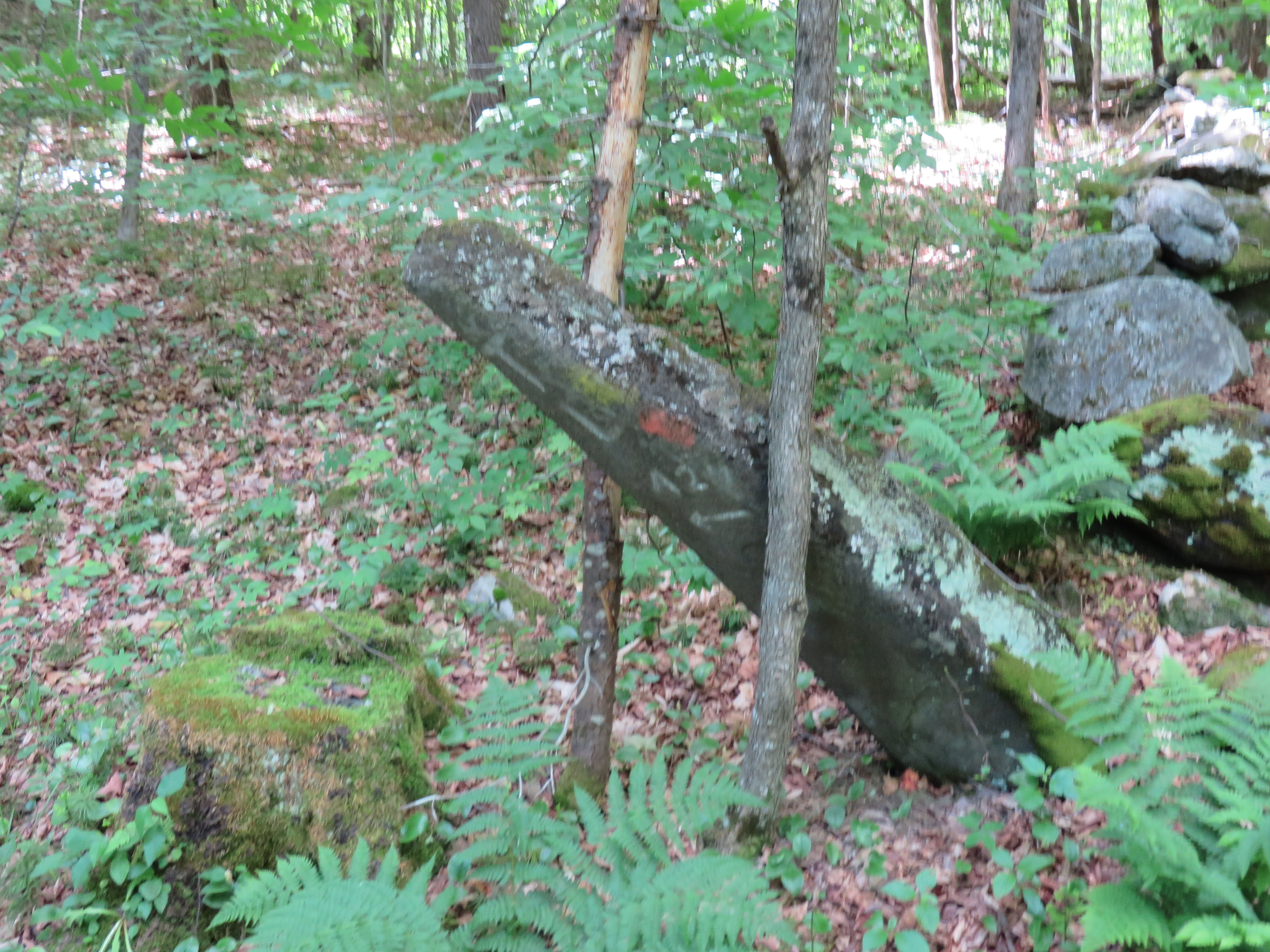
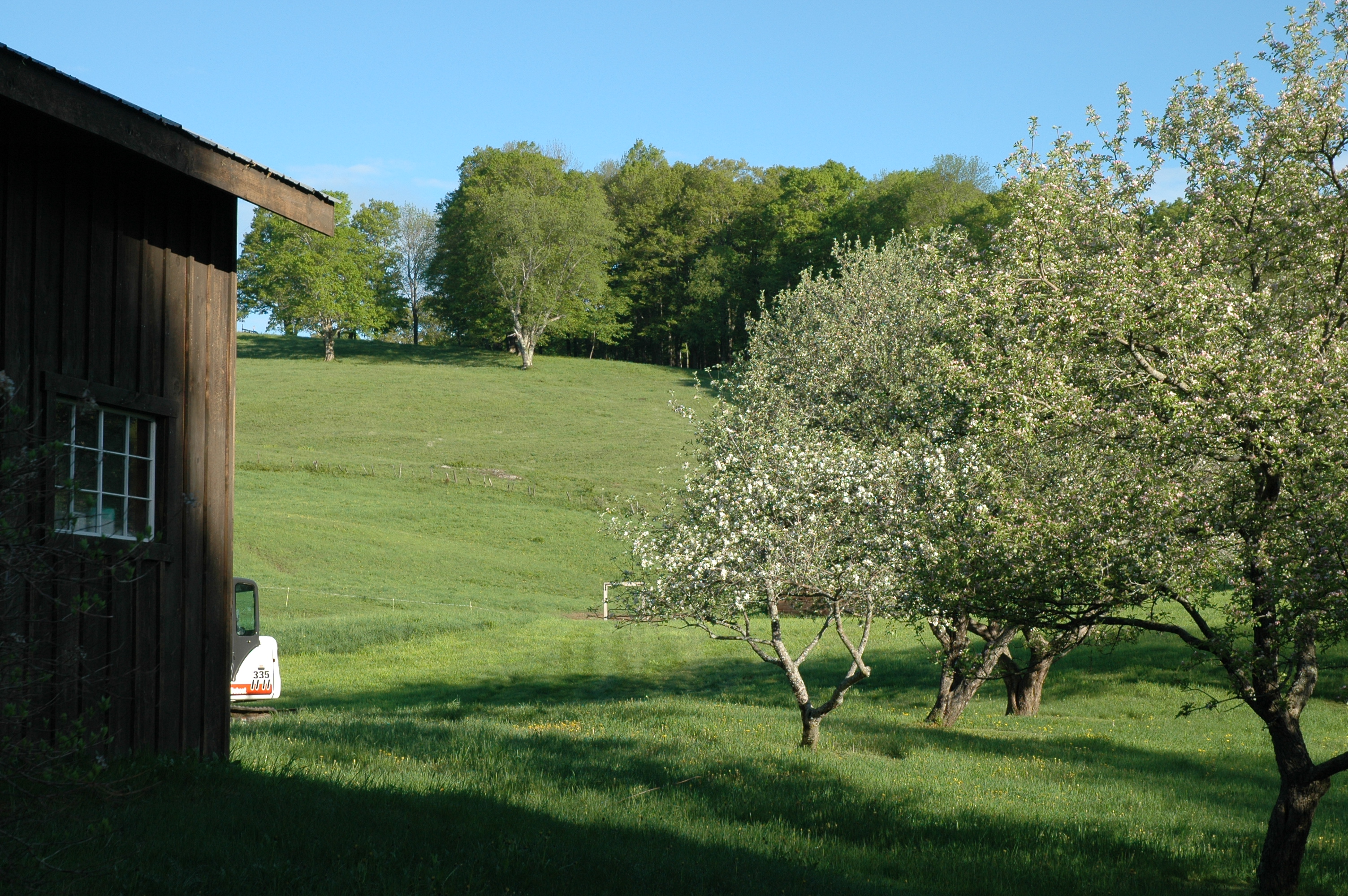
Being at Tamarack is an amazing experience for someone who likes to ride out. A local resident for over fifty years, Denny knows the land and landowners like no other, and works to help maintain a network of trails which I understand is shared with snowmobilers and cross country skiers in the winter. Riding back on these trails is unlike any experience I have had at home; there is no traffic, no road noise, no airplanes overhead, no trash in the woods. It is as though you have ridden back in time. And when you ride out with Denny, he tells stories of the places you ride through, gets to open vistas and identifies landmarks and towns and points out historical markers and other features that one might otherwise not notice.
In getting ready for our first two fifteen mile rides, Denny put our horses on a schedule of hard days followed by easier rest/recovery days. Some days, we would ride as long as two to two and a half hours, mostly walking, but also riding up some steep hills; these are hills which surely put positive stress and strain on a horse’s cardiovascular system as well as work the topline and hindquarters. To aid my horse, I would also assume the two point position, making me a stronger rider as well! Easier days might include an hour on flatter trails, or even light work in the arena. As someone who is accustomed to a steady five-six exercise days/week schedule (usually four in the ring, one on the longe, one as a hack), it was a different concept for me to consider conditioning a horse by pushing a bit harder/further and then giving them a day or two of complete rest in between. In addition, the week before a ride is usually a bit lighter, overall, so that the horse arrives to the competition feeling fresh and fit. Though I am just beginning to learn about conditioning horses for distance work, and Denny says most of what he does he has learned through trial and error, we have been told that this type of progression is used by serious endurance riders. It is exquisitely important to listen to your horse—if you give them a hard ride (whether in terms of distance, terrain, speed, humidity or some combination) then your next day might be a light ride or no ride at all, to give the horse’s systems time to recover. If you plan to ride, and the horse feels tired, then you back off even more. Of course, over time you steadily increase the demands on your horse so that they are stronger in mind and body to hold up to the longer distances on rides.
CTRs themselves can serve as part of the conditioning process, as they offer riders a chance to work their horses under a structured format over longer distances. In fact, you will often see these rides called conditioning distance rides (CDRs) when they are ten to fifteen miles in length. Veterinary evaluation offers clear feedback as to how your horse coped with the demands of the ride, and a smart trainer can use this to sculpt their conditioning plan as they move forward.
When we were on the ride itself, Denny shared with me a piece of wisdom that he had gained from a serious endurance competitor; when on the trail, “never hurry, never tarry”. You want to be more like the tortoise and less like the hare, I suppose. Keep your horse moving at a steady, consistent pace; trot where the footing is good, walk where it isn’t or the trail is too steep (up or downhill) to trot safely.

Distance Planning, or, Setting Long Term Goals
When planning the career of a distance horse, you need to think long term. Not just in terms of the actual rides you plan to attend, but for the overall health and well being of the horse themselves. One endurance blogger reports that he believes it takes three years to put enough conditioning work into a horse before they can be a serious contender at 100 mile rides; this is not to say that they might not be fit enough to compete before then, but they will be competing for mileage/experience as opposed to try to win. And this is assuming that no setbacks occur to horse or rider. Denny says that preparing for distance riding is largely a question of time and place; you need the time to put in the saddle, and you need a place to do that riding (ideally a place with hills, which maximizes your conditioning time).
It is easy to get caught up in Denny’s enthusiasm for everything horses and riding related, and he has been favorably impressed with Lee’s performance so far, calling her, “one tough horse”. He thinks that she has the capability of completing a three day 100 mile ride like the one they host each fall at GMHA, but to do something like that would require planning NOW. In other words, instead of coming out of the indoor next spring fifteen mile fit, she needs to be twenty five or thirty mile fit. And then next summer would be focused on continuing to gradually build the muscle, joint and organ systems to handle the increased demands required of a ride of that length. He has me excited to try to go for it, or to at least seriously consider prepping for it, with the option of re-routing to a shorter distance if she doesn’t feel ready.
So the plan for this summer will be to continue to gradually build and to see where we end up; the Hartland Riding Club 15 mile ride is this Saturday, and based on how our horses feel, we hope to go to the GMHA 25 mile ride in early August. Time will tell whether Lee will truly make it to a three day one hundred mile ride, but as in other horse training endeavors, I shall just keep adding layers to the onion, never hurry/never tarry, and see where we end up.



 The Academic Equestrian