Five reasons why YOU should ride at the GMHA Distance Days

Spring has come early to these parts, and with it the itch to get out and about.  After a two month rest during the heart of winter, the Dark Mare is working on getting legged up for what will hopefully be a full season of competitive trail riding.  My big goal is to successfully complete the 80th anniversary three day 100 mile ride at the Green Mountain Horse Association (GMHA) in South Woodstock, VT, in September, the centerpiece of its Distance Days weekend.

Lee and I completed this ride in 2015, both of us rookies to the sport.  It was singularly one of the most amazing and rewarding experiences that I have ever had with one of my horses, and I have been able to meet so many enthusiastic, helpful and fun people as a result of the training and preparation that went into it.

TeamPBandJ
“Team Peanut Butter and Jelly”, GMHA Distance Days 2015– Kat Waters and High Brook Quintessential, me and Lee, Robin McGrath and Aikanes Sunflower.  We did the 100 miles together.

The 100 mile ride is the marquee event of the festival of trail riding that is Distance Days.  There is truly something for everyone; if you enjoy amazing scenery, challenging trails, the camaraderie of fellow trail riding enthusiasts and the opportunity to pursue personal goals, Distance Days is for you.

Here are five reasons why YOU should plan to ride at the GMHA Distance Days.

1) Become a part of history.

The GMHA 100 Mile ride is, as ride manager Chelle Grald describes it, “the granddaddy of them all”.  Begun by the fledgling GMHA organization in 1936, the ride initially was held in Rutland, VT, just over fifty miles away from its current home in South Woodstock.  It was the first ride of its kind, and it remains the oldest distance ride in the US, predating the famous Tevis Cup endurance ride by nineteen years. It has run every year without interruption, with the exception of 2011 (you may remember a little storm called “Irene”, which blew through just before the ride weekend, leaving a good chunk of Vermont underwater….).

GMHA was founded as an “altruistic organization” for the purpose of encouraging the breeding and use of horses in the state of Vermont, as well as to develop a system of bridle trails throughout the state.  In its early years, over one thousand miles of trails were marked, traversing from the Massachusetts state line in the south to the Canadian border. Dues in the early years were just $2.00, which included a subscription to their magazine.

The 100 mile ride quickly became the highlight of the organization’s annual calendar.  Part social event and part horsemanship demonstration, riders came from as far away as Indiana and Virginia in the early years; some riders actually RODE to the ride, covering over three hundred miles before the competition even had begun.  Riders ran the gamut—children as young as nine were known to complete the ride, and men and women alike delighted in the thrill and challenge.  Mrs. Fletcher Harper, a passionate foxhunter, won the 100 mile ride riding side saddle.

Mrs Harper
Mrs. Fletcher Harper, who by all accounts was a fearless rider, jumping downed trees on trail while others searched for a route around.  Photo from GMHA archives.

All manner of horses have successfully completed the GMHA 100 mile ride—Welsh ponies, mules, Thoroughbreds, Morgans, grade crosses, and of course, the now ubiquitous Arabians.  Families would line the route to cheer on the riders; for many of these non-equestrians, it was THE social event of the summer. In its heyday, the ride had hundreds of entrants and a wait list.

Distance Days represents the opportunity to participate in a piece of living history, to add your name to an ever growing list of riders (and horses) who tackled the challenge of traversing the rugged and beautiful terrain of the Kedron Valley.

2) Short Rides, Medium Rides and Team Events

You are quite probably reading this right now and thinking, “well, that sounds pretty amazing, but 100 miles is a LOOONG way.”  You are totally right.  Maybe you aren’t up for that challenge quite yet….

And that is why  Distance Days offers more than just the 100 mile ride.  There will be five other ride lengths for competitive trail riders:  15, 25, 35, 40, and 60 miles.  The 60 mile is a two day ride, but the other rides are all one day long.  The entrants on these rides will be sharing the trail with the 100 milers, and so if you and your horse aren’t up to the rigors of the full 100 miles, you can still get a taste of the ride on these shorter routes.

The 100 mile ride covers the 40 mile WHITE trail on day one, the 35 mile RED trail on day two and the 25 mile BLUE trail on day three.  These trails cover terrain in the towns of Woodstock, Reading, Hartland, West Windsor and Hartford, and visit such historic and classic Vermont landmarks as the Marsh Billings Rockefeller National Historic Park and the Taftsville Covered Bridge.
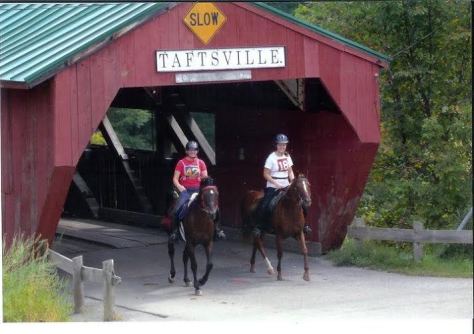
Taftsville
The historic Taftsville Covered Bridge has long been a highlight of the 100 mile ride.  The original bridge was destroyed by Hurricane Irene but was restored in 2014.  The bridge will be included on the 2016 route.  Photo courtesy GMHA.

Another aspect of Distance Days that is super cool is that the ride management has come up with a unique idea for this 80th anniversary weekend:  the 100 mile team relay.  There are several options, but basically 2-3 riders can make up a team, and by completing the requisite combination of shorter rides, can collectively complete the 100 mile distance.  Special awards will be given to the team with the best average score over all their rides.  If one rider were very ambitious but didn’t have one horse that could do all 100 miles, they could do each chunk of the distance on a different horse, or do 2/3 on one and the rest on another.
See, you could be a 100 mile rider yet!


3) Non Competitive Fun

Competitive trail riding is sort of unique among horse sports, because you really and truly are competing against yourself; rather, you are trying to use all of your horsemanship expertise to bring home a horse that is no worse for the wear after covering your chosen distance.  Horses all start with a perfect score, and at the end of the ride, they are compared to their starting condition.  Points are deducted for negative changes.

But some people really just aren’t into competing, and that is totally ok—Distance Days has something for them, too!  CTR requires travelling at a faster pace than what many recreational trail riders might choose, and this could be another good reason to go with the Pleasure Ride option held on Distance Days weekend instead.
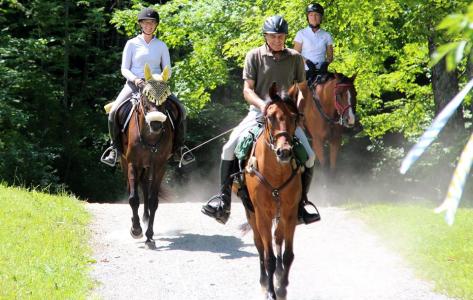
GMHA 50 Mile Finish 2015
Lee completes her first two day 50 mile ride at GMHA in 2015, with her friends Roxie (middle, ridden by Denny Emerson) and Camille (ridden by Robin Malkasian).

Pleasure rides will be offered on Friday, Saturday and Sunday of Distance Days.  You can do any and all combinations of day(s).  On Friday and Saturday, riders can choose from short (6-8 miles), medium (12-15 miles) or long (20 miles) options.  On Sunday, riders can pick from 6 or 10 mile options.

Horses and riders which finish the entire weekend’s worth of long options (so 50 miles total) will complete the 50 Mile Pleasure Horse Challenge, and will be recognized at the Sunday awards ceremony.

4) Stunning Scenery

Let’s be honest—there aren’t too many places which can beat Vermont in the late summer when it comes to stunning views, the hint of fall color and crisp, clear air.

The Kedron Valley is an especially picturesque region of the state, with many classic New England style farm houses and barns, stunning estates, covered bridges and burbling brooks.  Trails in the area are a combination of the quintessential Vermont dirt road and wooded routes.
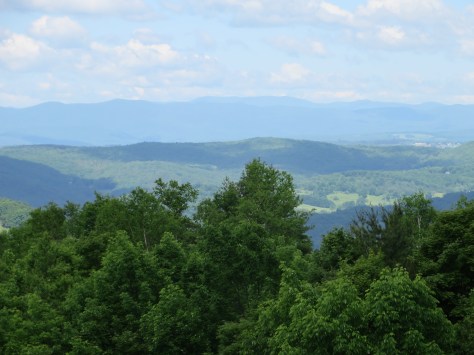
TamarackHack2014 008
Yet another stunning vista in Vermont, looking towards Tunbridge.

And of course, there are the hills. No one will deny that a horse and rider must have a certain degree of fitness to handle them.  The route covered during the Distance Days weekend tackles several of the most rigorous in the area, including  Cookie Hill and Heartbreak Hill, for a few.  But the reward for the climb to the summit is often a panoramic, expansive view, hearkening back to a time when horses were the dominant mode of transportation and the ‘conveniences’ of the modern era were far in the future.

The popular equestrian travel website www.equitrekking.com featured the trails around GMHA in its “50 States Trail Project” as the ‘place to visit’ in Vermont. You can read more about it here.

5) Friendship, Sportsmanship, Horsemanship and Love

The themes of “friendship, sportsmanship, horsemanship and love” are the dominant motivations for most of those who choose to tackle a challenge such as the three day 100 mile ride.  Grald has decided to highlight the significance of each of these important values in the commemorative Distance Days Program, which will be given to all entrants.  Included in the program will be vignettes from riders past and present, photos and even the recipe for the tasty Cookie Hill chocolate chip cookies.

Distance Days will feature several opportunities to socialize as well as to honor the contributions of the volunteers and landowners, without whose generosity these sorts of experiences would not be possible. The 100 Mile Banquet will be a fancy affair, to be held at the Woodstock Country Club and chaired by longtime Woodstock resident Mrs. Nancy Lewis, who rode in the 1946 100 mile ride. A special presentation by historian and author Dale Johnson at the banquet will spotlight the role of the historic Woodstock Inn Stables in the early years of the ride. Riders have a chance to thank landowners for their support at the catered BBQ on Friday, allowing a fun and informal opportunity to share memories and fun. Between the finish and awards ceremony on Sunday, 100-mile alumni will gather for a Longtimer’s Reunion. Finally, Sunday’s awards ceremony will follow the traditional catered brunch.

This ride has given many future endurance riders their first taste of serious distance riding, and has taught them the fundamentals of good horsemanship that these sister sports require.  Judges Dr. Nick Kohut (current president of the Eastern Competitive Trail Riding Association) and Linda Ferguson Glock will bring their extensive experience as riders, organizers and volunteers to the weekend.  Dr. Joan Hiltz will work with riders on the 15 mile ride.  Each step of the way, horses are closely monitored by their own riders but also by these experienced horsemen, to ensure that the animals’ care and well-being remain of the highest priority.
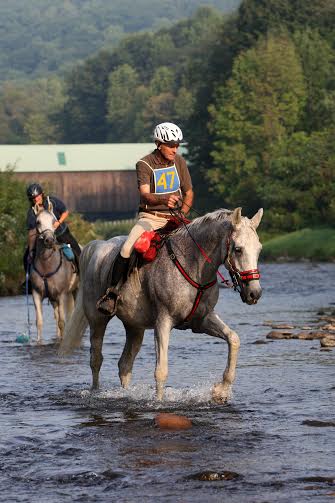
DennyEmerson
Denny Emerson is just one of many horsemen who got their start in distance riding at GMHA.  Emerson has gone on to complete the Tevis Cup and 2300 endurance miles.  Photo courtesy GMHA.

In spite of its legacy, rides like the GMHA 100 mile can only continue to flourish with the support of riders who are interested in participating in the shorter distance events which run concurrently with it.  With continued loss of open space to train, amongst other issues, fewer and fewer riders have the time or inclination to commit themselves to preparing a horse for such a rigorous challenge as a 100 mile ride.  Events like Distance Days are incredibly important, because they draw together all of the diverse types of rider who are ultimately united through their love of horses and “riding out”.

If this blog has piqued your interest, you can learn more about Distance Days at its website, https://www.gmhainc.org/trails/, or follow on Facebook at https://www.facebook.com/GmhaDistanceDays/?fref=ts



Detroit Horse Power

Last June, I was invited out to the Great Lakes Region of the United States Pony Club to teach at their (amazing) Regional Camp. Held at Hunter’s Run Farm in Metamora, MI, these Pony Clubbers had a great few days—most horses stayed in grass temporary pens, and the campers slept at the home of a local Pony Club family (bless them!), after riding twice daily, supplemental horse management lessons and other enrichment activities.  I know we instructors had a great time, and the whole camp ran like clockwork, with instructors rotating among groups, disciplines and subjects.

huntersrun.jpg

While I met many new faces at the camp, one stood out in particular.  David Silver was clearly not the typical Pony Club camper.  At 25 years old, he had already graduated from college and participated in the Teach for America program, working for two years with fourth and fifth graders at the Burns Elementary and Middle School on Detroit’s west side.  David had taken advantage of USPC’s age extension to rejoin the organization in an attempt to earn his H-A Pony Club certification (formerly rating).

While I admired his desire to keep learning and growing as a horseman, part of me did wonder what on earth would motivate someone so…adult…to come back to this youth organization as a participating member.  When I learned the reason, my respect for this inspiring emerging leader deepened.

It would have been easy for David to leave Detroit after his two years with Teach for America were up.  Raised in Westchester County, NY, David had competed through the CCI* level in eventing before college, and had enjoyed the advantages of a privileged upbringing.  With a degree from Dartmouth and connections up and down the east coast, there is little doubt that he could have secured a lucrative position in an upscale suburban community somewhere else, away from the struggles and challenges faced daily by the young people living in metro Detroit.

DHP logo
Detroit Horse Power’s logo.

But instead, David founded a non-profit organization called Detroit Horse Power.  As a teacher, David felt he had made real connections with his students, and wanted to do more to help them to develop the social, emotional and life skills which many of us have and take for granted: a sense of self-worth, self-efficacy,  and self-confidence,  as well as empathy, perseverance and patience, for a few.  Working with underprivileged young people in the city is a challenging task; issues such as residential transiency, poverty and neighborhood violence can be a routine part of their daily lives, with an education their only real hope of getting out.  Reflecting upon the life lessons that his years with horses had taught him, David saw an opportunity to bring his two worlds together.

DHP1.JPG
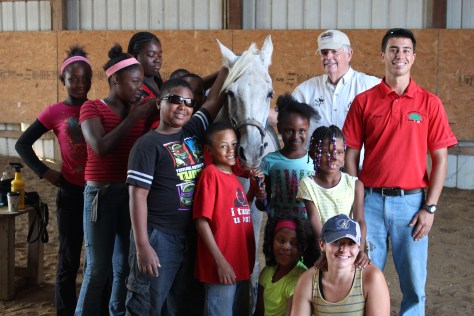
Participants in Detriot Horse Power’s second summer program in August of 2015.  David is in the red polo.

Detroit Horse Power was awarded its nonprofit status in April of 2015, and that summer, they provided programming for eighteen children during two, five day camps.   The children were vanned out of inner city Detroit to farms generously loaned to the program for its use.  Volunteers came from the local equine community as well as residents eager to work with city youth.

As most horse people know, something magical happens when you bring children and horses together.  For a young person raised in the city, meeting a horse face to face is unlike anything else which they have experienced.  Horses are big, docile and (usually) gentle, yet they require control of one’s emotion and energy.

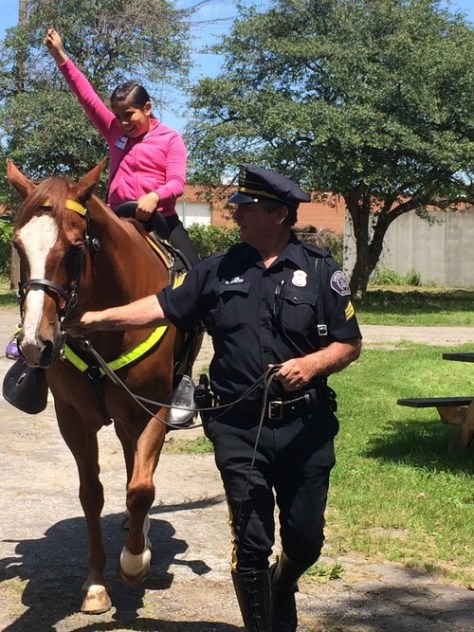
Through their five day session, the children were given a life changing experience.  According to volunteers, children went from negative self-talk to self-confidence.  They learned to lead, groom and even ride.  They learned how to problem solve, and they learned conflict resolution skills.  They learned from farriers, vets and even a mounted police officer.  In just five days, these children had a transformative experience, made possible through the support and generosity of many and the leadership of David.

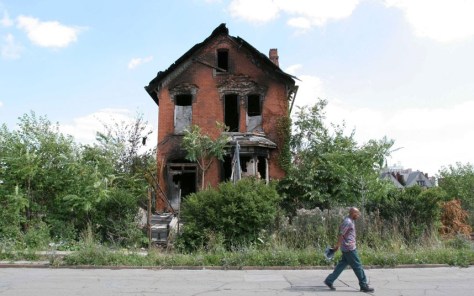
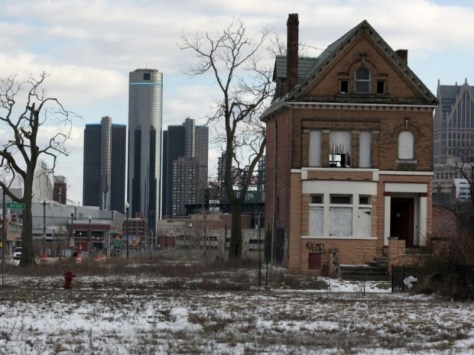
One could say that these sessions alone were a victory for a fledgling program; but David has a vision for what Detroit Horse Power will become, and these camps are just barely a warm up.  Detroit is a large, sprawling city, and due to a steady decrease in population from a high of 1.8 million in the 1950’s to 700,000 today, nearly 23 square miles within city limits lay vacant—a land mass as large as Manhattan.  Decaying, unmaintained buildings remain barely standing on some of these sites; some land is contaminated due to its previous use, while other sites have returned to grassy, unkempt lots which become trash filled homes for pests.  The city lacks the resources to maintain these vacant lands, so residents will often try to do so instead.  These untended lands are the embodiment of urban blight, reducing property values as well as the overall quality of life for residents.

depressed-detroit-_2622246k
Urban blight in Detroit, MI

Where some might see an overwhelming problem, David sees an opportunity.  His vision is to open a riding and horse boarding center, right within city limits. The Detroit Horse Power riding center will be a unifying resource for its local community, allowing young people a safe place to come to receive tutoring, support and time with the horses.  Other city residents who might normally move to the suburbs to keep their horses could instead choose to stay, leaving valuable financial resources within the city.  The boarding and equestrian events activities will support the operating costs and infrastructure of the center, leaving Detroit Horse Power as an organization with the opportunity to direct all of its resources towards its programming for youth.

boarded-up-house
A vacant, boarded up house stands in the once thriving Brush Park neighborhood with the downtown Detroit skyline behind it (Rebecca Cook/Reuters).

In 2016, Detroit Horse Power will be expanding its summer programs, reaching seventy five young people during six weeks of five day camps, held once again on farms donated to DHP for its use.  This summer’s programs are intended to be a launching point for getting into schools for the fall, with the objective of providing after school programming in horse management, as well as tutoring.

This whole story didn’t come out during my visit to Michigan last summer—that week, I helped David with some tips for longeing and bandaging as he worked to prepare for the H-A certification, a rating he attained later that summer.  David wanted the H-A as a credential to provide greater legitimacy to his work with horses and youth, because he knows that the US Pony Club and its certification system is recognized worldwide as producing thinking, skilled and effective horsemen.   I am glad I could play a small role in helping David get to where he wanted to go.

dhp38
A participant in the June 2015 Detroit Horse Power camp enjoys a visit by a mounted officer.  Photo “borrowed” from the gallery on the DHP website.

It was only after I had returned home that I began to do a bit more research, and learned more clearly what it was that David was trying to accomplish.  I was so inspired by his work and his goals that I asked him if I could do some writing related to it; a 3,000 word piece on Detroit Horse Power is scheduled to run in the July/August 2016 issue of Untacked (published by The Chronicle of the Horse).  I hope you will read it!

I must say that one of the things which has always bothered me about the horse world is seeing just how self-centered and demanding most of us horse people can be.  In college, I studied environmental conservation, and I definitely saw myself going into a field where I would be working to “make the world a better place”. In spite of my passion for riding and for horsemanship, I didn’t really want to go into the field full time because I thought it was too self-centered of a thing to do.  I know that the use of horses in therapeutic settings is increasing, and I really wish I could get interested in that for myself—but it just isn’t my niche.  So the “self-centeredness” of the equestrian world has always bothered my inner hippie soul, and it is still something I struggle with.  Hearing about someone who has so clearly been able to translate their love for horses with their desire to effect positive change is really inspiring.

If you want to learn more about Detroit Horse Power, you can follow them on Facebook or visit their website, www.detroithorsepower.org. I definitely recommend checking them out!

Fighting Fear in Riding and in Life

I don’t know this for a fact, but my hunch is that there isn’t a single equestrian who hasn’t, at some point, experienced the limiting effects of fear.  Fear plays an important role, evolutionarily speaking, in keeping us alive.  Fear itself is an emotional experience which triggers biological responses; for many species, it triggers increased heart rate, respiration and muscle tension, and a heightened state of alertness.  Horses as a prey species are well known for their genetically driven “fight or flight” response to unfamiliar stimuli, and it is only through careful and systematic desensitization and conditioned response training that we humans can work to overcome some of these natural reactions.  But as much as the human species has tried to separate itself from other animals, the truth is that many decisions in our lives are still driven by fear, manifested by our own fight or flight response to situations which we think might cause us harm.

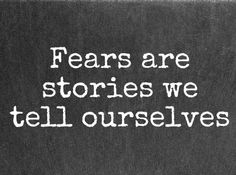
A few weekends ago, the UNH Equestrian Team attended a sports psychology seminar with Alannah DiBona of Windhorse Counseling. DiBona reminded all present that fear is a normal response to a situation which our brains think could cause us physical or emotional harm.  DiBona defined fear as “false evidence appearing real”, and told the riders that it is necessary to examine one’s fear in order to truly address it.

“Is the fear serving you in any way, or is it preventing you from doing something you want to do?” DiBona asked the audience.

Fearstories

Fear is a funny thing, because very often it is the things which we want the most which can simultaneously scare us—this is true not just when it comes to riding and our equestrian goals, but to all aspects of our life, whether we are starting a new job, buying a house or falling in love.  And fear can really limit us. There are plenty of tips and strategies as to how equestrians should address fear in their riding.  But I guess it always comes down to that essential question: are you feeling fear because of the actual task or expectation in what you are doing, and its accompanied level of risk, or do you feel fear because in your heart of hearts, you don’t want to do what you think you want to do at all?

DitchWallLedyard
Anna jumping the ditch and wall at Ledyard. I was way more worried that she was.

For the riders I work with, jumping in particular seems to trigger a large number of fear responses.  All riders (and horses) have a limit in terms of what they will be comfortable jumping in terms of height, technicality or speed.  But I feel like I work with a lot of riders who are on the line of needing to decide whether their fear is serving them or not.  In their mind, they think they want to jump, but when faced with an actual jumping exercise, the fight or flight mechanism kicks in and renders their aids ineffective.

People ride for a lot of different reasons.  But for most people, at least one of those reasons is to have fun.  We enjoy being with horses, and we value establishing a relationship and communicating with an animal of a wholly different life mindset (prey vs. predator).  There is no written rule that overcoming fear should be a part of your daily riding ritual, and having to do so doesn’t make you tougher; it just makes you suffer.  I think when a rider is starting to have recurrent physical and/or emotional manifestations of fear, it is time to consider why they are riding and what they hope to get out of it.  There are tons of ways to enjoy being around horses, and if what you are currently doing isn’t allowing you to do that, it is time to make a change.

Fearkills

This whole thought process is a corollary for me right now in another aspect of my life.  Thinking back to my earlier blog post about “living a sustainable life”, I think it is critical to analyze what you are doing when you feel like your wheels are spinning and you aren’t getting anywhere.  Fear can cause us to keep repeating the same familiar patterns over and over, even though we know that they aren’t working for us or are keeping us from doing something which is much more supportive of our core values.  There is a post circulating on Facebook which says something along the lines of, “instead of thinking of it as not having time to do something, think of it as “it’s not a priority””.

Try it and see how it feels.  “I don’t have time to ride today” vs. “It isn’t a priority to ride today”.  I think that is a pretty powerful way of looking at things.

donthavetime.jpg

Right now, fear is currently preventing me from acting on something which has caused me a great deal of anxiety, frustration and anger.  I know that responding to this action against me is a priority, but the question becomes whether my fear of the possible consequences of that response is enough to still hold me back.

When it comes to fear, it might not be any easier for my students to jump an oxer than for me to deal with my personal situation. Such is the nature of fear.