An online dictionary defines the term “ivory tower” as “a state of privileged seclusion or separation from the facts and practicalities of the real world”. It is frequently used in a derisive way, especially in regards to academia, to imply that someone’s ideas or actions are not as relevant as they might be otherwise because they are so far out of step with reality.
The day to day life of a full time, self-employed equine professional can certainly be grueling. These people often refer to the fact that being seriously involved with horses is a way of life, and they don’t mind the challenging aspects, including the long hours and few days off. The up side—being able to spend so much time with horses and to watch horses and riders under their direction or care grow and develop, outweighs the challenges. However, few would say that the self-employed route is easy, and there are certainly at least moments during which most reasonable people would consider whether the stress and adversity are really worth it.
Before joining the faculty at UNH, I too was “in the trenches” and cobbled my living together through an assortment of jobs. In the mornings, I was an assistant barn manager at a dressage facility, completing the usual daily chores but also getting horses ready for the trainer/manager. In the afternoons, I ran a small lesson business on borrowed school horses, teaching mostly children the basics of horsemanship. I taught Pony Club. I worked part time at UNH for a few semesters. I worked in the banquet department at the Sheraton, where I learned that the best shifts were for weddings, because most everyone was in a good mood and there was a DJ and cake. I lived from contract to contract. I paid through the nose for a health insurance policy which would still have required me to drain all savings before it would have paid a cent.
My horse Lee and two UNH IHSA team members, each of whom won a flat class on her at the home show.
When I first started at UNH, it was positively decadent. I couldn’t BELIEVE that they sent me a paycheck every two weeks just for showing up. UNH has excellent benefits, both insurance wise and investment wise, and you can also take classes. I was able to complete my Master’s degree mostly for free. The hours are still long, and there have been plenty of nights and weekends dedicated to the cause. But by and large, it has provided me with a great deal of security and stability, values which I have determined are essential for my mental health. And most of the time, I get to do what I like to do: work with horses and humans.
Participants in UNH’s therapeutic riding program. Shazaam, Marcy and Quill are all now retired, while Snowy (second from right) is a boarder who still works part time in the therapeutic program.
Recently, I had the opportunity to spend four days in Michigan teaching a Pony Club camp—it was great fun, and a nice chance to get back to my roots. The schedule was full, as was camp enrollment—something like 32 campers and a few Horsemasters, four mounted instructors and assorted local experts helping out with unmounted topics.
The three other instructors who I worked with all run their own riding/training/lesson businesses. One owns a thriving eventing and dressage barn, and had during one day in the previous week taught 18 lessons and ridden something like five horses. Another maintains foxhunters for owners who come to ride on weekends, providing full service care including daily conditioning rides and then shipping to and turning out for hunts. The third has a combination of training horses and lesson clients, straddling the disciplines of dressage and eventing.
With members of the UNH IHSA team at an Vermont show.
Listening to their discussions about the ups and downs of their businesses was enlightening. One trainer travels from farm to farm in the afternoons to teach private clients. A few clients are chronic last minute cancellers, which leaves her on the road with an hour or more of down time. When you freelance, time is money, and when such cancellations become common it can significantly impact the bottom line. She is struggling to come up with a cancellation policy which won’t alienate her clients but can protect her interests.
The trainers all have a few “difficult” clients; we know the archetype. They have more money than horse sense; they want to do cool and fun movements or jump big jumps with their horses, but do none of the actual work that gets you to that level; and they demand constant attention and validation. They talked about the strategies they use to keep these clients on track, working towards attaining goals without pushing too hard, placating their concerns and worries via text and phone. I was exhausted just listening to them.
Then there was the discussion on insurance, all aspects of it—liability/professional, but also health and disability. It is a cripplingly expensive essential. The cost can make it hard for them to save money for future plans or retirement.
It was then that I realized that I may have, quite inadvertently, become an “Ivory Tower Equestrian”, and I listened to the conversation with a bit of detachment. I used to deal with all of these concerns in my previous life, but my current reality is somewhat different. When a student chooses to repeatedly not come to class or doesn’t want to work super hard at it, their grade is reduced. Liability insurance is not a major concern as our activities fall under the university’s umbrella policy. If the weather is bad for a few days, or I am out sick or need to take a day off for personal reasons, I will still get paid the same amount.
Retired UNH horse Flash models the equine digestive system for students participating in the 2013 Equine Education Day.
From the outside looking in, it might seem like we Ivory Tower Equestrians have it made. And in many ways, we do. But it is not all sunshine and roses, and in some ways the challenges we face are not all that dissimilar to those of our self-employed brethren. They are similar, but different.
Sometimes Lee lets riders from other schools win prizes too– here a rider from Colby Sawyer celebrates after winning reserve high point honors.
At colleges/universities, programs live and die by their overall enrollments. If your classes are full, and there are students in your degree program, then odds are good that there will be some kind of continued support for you, though rarely in the amount or frequency which is actually needed. But the reverse of the equation is true, and the reality is that an equine program is an expensive one to run. The “lab equipment” used in all of the hands on classes, including horsemanship but others as well, requires daily care, food, and veterinary/farrier attention. These aren’t microscopes that sit quietly on a shelf until they are next needed. All of the usual issues with facility maintenance apply to us, too; fencing needs to be replaced, footing wears out, tack gets worn. In some ways, it is worse for us than at a private facility, because of the high volume of use during the academic year. School horse saddles can be ridden in for as many as ten hours per day; when you multiply that times five days per week per a fifteen week semester, that is a lot of seat time for one saddle to see. These costs are partially covered by the lab fees paid by students; if our classes aren’t full, or the lab fees exceed what the students are willing or able to pay, then the house of cards begins to quickly topple.
Two UNH riders with leased horse Wiggle and UNH’s Whisper celebrate after their first ever two phase competition.
Some people, both from within and from outside of the university setting, criticize the existence of collegiate equine programs, and they are derisive towards the validity of an equine studies degree. Some think that all we do is ride, or that we are part of the athletics department. At one staff meeting last semester, a tenured faculty member asked if our students’ final capstone course was whether or not they could sit eight seconds on a bucking bronco. As a program, we are constantly evaluating our curriculum both for efficacy and rigor, but still there are those who publicly and privately question what we do. At the end of the day, the University of New Hampshire Equine Program graduate is receiving a Bachelor of Science degree, with a heavy emphasis on biological science and including courses in general biology, anatomy and physiology, genetics and nutrition, with specialty courses in equine disease and sports medicine, amongst others. These subjects and the skills students gain in studying them are applicable to a wide range of career paths, both in and out of the equine industry. Regardless of choice of college major, it is up to the student to figure out what to do with it. A college major, and the degree it elicits, is only a starting point; the student must then seek out opportunities to continue to grow and expand their careers.
A senior equine studies major gets Coco (leased to UNH by Camp Runoia and a valued horse in the therapeutic riding program) ready for a presentation at the Equine Education Day, spring of 2015.
Some of the same external critics who deride the validity of an equine degree also publicly criticize anyone who would even CONSIDER donating their horse to a collegiate program. At least 90% of our horses come as donations from private individuals. They come for a variety of reasons—age, manageable conditions which reduce resale value, owner financial issues, or a horse that is not up to the continued challenge of a competitive show career, for examples. Many donors want to know that their horse will not continue to be sold on and on. Some of our horses have been in our program for most of their lives. They are well cared for, loved, carefully supervised, and have allowed hundreds if not thousands of horsemen to grow and develop during the animals’ careers with us. When our horses tell us that they are no longer happy doing what we need them to do, we seek to place them in carefully screened adoptive homes, sometimes with former students. If they are in pain, suffering or otherwise unwell in a manner which will cause a diminishing quality of life, we allow them a humane and dignified end when their time comes. However they leave us, we cry to lose them and smile with their memories.
Longtime UNH school horse Cooper passed away this spring at the age of 23 after a period of failing health. He was in the program for thirteen years.
People criticize equine programs because they cannot keep horses forever. The reality is that all horses get to an age or physical condition in which their workload must be modified or ceased. After all, this is often the reason that their original owners passed the horse on to us in the first place. If the former owner has asked to be notified when this time comes, we always do so (and sometimes even when they have not asked, just to make them aware). Very few are interested in taking their horses back but are grateful for the call.
UNH students riding school owned horses Clementine, Whisper and Morocco participated in a clinic with UNH graduate Nancy Guyotte.
The critics claim that equestrian programs at universities overwork horses, quickly sell them on, or ship them off to auction when they don’t work out. Perhaps that happens at other places, but it does not happen here. And frankly, it really frosts me to read those kinds of ignorant comments. We are quite transparent with our policies and the use of our horses; in fact, every single activity we do with our horses—from riding them to practicing bandaging to therapeutic riding— must be reviewed and approved by the Institutional Animal Care and Use Committee, and their work hours are carefully documented. I somehow doubt that most privately owned lesson strings receive such comprehensive and regulated monitoring.
UNH equine residents check out the view.
We Ivory Tower Equestrians may not be working to run our own business, but many of us are working to run the business that is our program. We must recruit new “clients” (students) and ensure that the “product” that we are selling them (a B.S. degree) is of high quality and a good value for the money. We must balance the needs of our program with the values of a constantly changing and somewhat underfunded state university. And just like our comrades in the field, if our clients aren’t satisfied with our output, they will take their business elsewhere. A true Ivory Tower Equestrian who does not consider these realities will likely find themselves out of a job. Perhaps we are more alike than we are different.
UNH Equine Program co-hosted a course design clinic with internationally acclaimed designer Richard Jefferey with USEA Area I. Here students pose with Jefferey after building the show jumping course for the UNH Horse Trials 40th Anniversary.
For me, this experience was an important one in terms of remembering what the daily concerns of the self-employed instruction business is like, but also to appreciate the unique benefits and challenges of the university setting.
When we were kids in school, most of us were told to keep our eyes on our own papers. Ostensibly, this was a punitive measure for not studying, designed to prevent us from getting a leg up from the students around us who we perceived to be smarter than ourselves or more likely to have the correct answer. However, it is quite often the case that we in fact do know the right answer, and keeping our eyes on our own papers is a means to demonstrate our own skills, knowledge and strengths.
I have long struggled with feeling insecure about my riding, probably because it is the one thing above almost anything else which is tied to my self-identity. Riding is a humbling sport, in so many ways. How many times have we equestrians said that horses are our best teachers? Every single day, we can learn new things about ourselves, our own horses, and about horses in general, if only we are willing and able to listen. But sometimes our eyes stray, and we take in the movement of another horse, the skills of another rider, the amenities of a different facility, and we begin to doubt the value of what we have in front of us.
Annapony and Dark Mare (Lee) at Tamarack Hill Farm last summer.
This happens to me all the time. But I am slowly learning the value and technique of riding your own ride.
This spring has been a time of real growth for the dark mare, Lee. As we progress towards our season’s goal of completing the three day 100 mile ride at GMHA in early September, I have been gradually stepping up her competitive distances. This May, we rode our first one day thirty mile ride. It was full of new adventures—we had to camp the night before, with Lee spending the night in a three sided cow stall at a fairground in rural Maine, while I slept in my horse trailer (the part the horse rides in, not a tack room or LQ). We didn’t know anyone there, but the other riders and organizer went out of their way to be helpful and friendly to the rookie rider and horse. The morning of the ride was cold, in the thirties, and as I hand grazed Lee before the ride started she was leaping about at the end of the line. I am sure that some who witnessed her behavior wondered how the rookies were going to fare that day.
Lee enjoyed the cow-free cow barn in Maine.
We rode out with another rider, a gentleman on a lovely Dutch Harness Horse who was doing day one of the three day eighty mile ride. Lee has overall gotten much better about going out on her own, but has a hard time leaving other horses if they are around. So for the first several miles, we stuck with the gray gelding and his veteran rider.
As both horses began to loosen up and get moving forward, they seemed to be staying at a steady pace consistent with the training rides I had been doing with Lee. The terrain on this ride was mostly flat, which meant that it was easy to sort of just motor along. This rider told me that he had more recently been doing endurance competitions (which is essentially a race) and so was needing to readjust his sense of pace to suit competitive trail, which requires riders to finish within a set window, neither too slow or too fast. He used a combination of trot and canter, and for a while I kept pace with him.
But then I looked at my watch, and I realized we were averaging five minute miles. I knew that this was not a pace that Lee could sustain, nor was it necessary to do so to finish the ride on time. So I gradually held Lee back, allowing the gray horse to push further and further ahead, eventually leaving our field of vision altogether. For the first time in her competitive trail career, Lee and I were riding alone.
Between the ears– riding Lee in Vermont summer of 2014.
Without a friend to lead her, Lee was a little less confident, spooking or shying more than usual, but she gradually settled into her own rhythm and continued steadily forward. We continued like this for nearly ten miles, and as we traveled along, I reflected on the truth of needing to do what is right for your own horse. In endurance riding, the tag line is, “to finish is to win”, and experienced riders talk about the importance of building a horse up for years before they get to the level of strength and experience that they can actually race and attempt to win at rides. Competitive trail is assessed by more subjective criteria than endurance, but the overarching theme is that your horse must be well taken care of before, during and after the ride if you are going to achieve a good result. That means that you, the rider, must make good choices for your horse in terms of when and how hard you push them onwards, which requires that you have an excellent awareness of both their fitness level and condition as well as how they are handling the ride that day.
Lee and I caught up to other riders at the half way hold, including our friend on the gray. She quickly pulsed down to recovery criteria and continued on in good form. But I don’t think this would have been the case if I had tried to keep up with the other horse. It wasn’t a question of his horse being ‘better’ than mine, or he being a savvier rider. She simply wasn’t as fit as he was, because the two horses are currently on different training paths. The gray horse’s pace was inappropriate for Lee. It was important for me to stick to what I knew was right for my own horse, and to ride my own ride.
Lee went on to win the Maine 30 CTR with a perfect score of 100.
This June, I had the amazing opportunity to officiate in the Connemara division at the Upperville Colt and Pony Show, held in the heart of Virginia horse country. This year was the 162nd anniversary of the show, and my first time officiating as a licensed USEF judge. No big deal—just one of the most prestigious “AA” shows in the country, and the largest sanctioned Connemara division. I admit I was nervous to be a part of such a cultured history in horse showing.
The show grounds are incredible, and overall the quality of the horses there matches the atmosphere. One doesn’t bring the average workaday hunter to compete at Upperville. This is a land of quality breeding, high end care and all the accoutrements that go along with it. There are classes running on both sides of the street, countless vendors, spectators everywhere and golf carts galore. The evenings each feature some sort of marquee class, one night a grand prix, the next a $25,000 Hunter Derby. Ringside parties are attended by richly dressed members of the social elite; the old money just oozes off of them, in the most non ostentatious way possible. I am confident that the amount that most competitors spent on their week of showing would send a family of four on a decent vacation.
It would be so easy to become jealous of the riders there, to long for a pair of their custom field boots (made by someone whose name I can’t pronounce), to covet their high end tack, their amazing, highly trained jumper (the one who TOTALLY ignored their cues to leave a stride out at the combination and who instead smartly touched their feet down just so and carried that rider straight into the jump off).
But instead, I am learning to ride my own ride.
Instead of getting overwhelmed by the sheer affluence of the horse show, I found myself able to look at it with new perspective. We can spend our time bemoaning the “things” or the assets which we haven’t got, or we can spend that same life energy focused on using our resources to their best advantage. My pocket book may not be anywhere near as deep as that of the average Upperville competitor, but that doesn’t mean that I am not making steady progress towards my own goals. Being a successful rider means different things to different people, and for me, my own success is not dictated by the caliber of the competition which I am able to afford to attend. We each have to set those goals which make the most sense given our unique set of variables. We need to know which goals are most important to us, and by identifying the destinations which matter the most, we can better prioritize whatever resources we have at our disposal towards reaching that goal.
Anna and her friend Izzy show U of New Hampshire Wildcat pride at the Wentworth Hunt Hnter Pace in May.
Finally, I have a sneaking feeling that there are people who I know, who I am friends with on Facebook, who I see out and about, who are looking at me and saying, “gee, I wish I had what Chris has…she is really living the dream”. I have two horses, a truck and trailer, a great job which allows me the freedom to pursue some of my own equestrian goals as well as the opportunity to be doing “horse things” for my paid work. I appreciate how truly fortunate I have been to get to where I have gotten to, with the support of so many friends and family members that I couldn’t even begin to name names. Sometimes I wasn’t as grateful to them as I should have been, for which I am sorry but I am trying to be better. And I am trying to be better about keeping in perspective the fact that there are aspiring riders who would love to be standing in my shoes.
So the next time you find yourself saying, “if only…” stop and ask yourself instead why you think that what the other person has or is doing is better than you. Consider if the answers you have put down on your own paper are, in fact, valid and correct for you.
As the caregiver for a 33.5 year old equine (who has been in my life since he was a mere lad of 16 years), I am frequently asked for insight or advice in terms of the care of the older horse. I have to admit that in Carmel’s case, I think I have had the advantage of some good genetics—his dam was a maiden mare in her upper twenties, who was bred by a recently gelded youngster who jumped the fence. Clearly there is something in these lines which is determined to survive!
That being said, I feel that Carmel’s longevity and good health can also be attributed to several critical care and management decisions along the way. I have the unique advantage of basically knowing his whole life’s history, and I know that he has always been well taken care of. With the ever improving quality in veterinary care and an increase in owner education, it stands to reason that more people will be finding themselves caring for aged horses who are still sound, happy and healthy members of the equine community.
Carmel at one of his last events at UNH, ca 2000.
For me, caring for an older horse has been a gift, but it has not been without its hard times too. Once horses reach a certain age, it is a tough truth that as the steward of that animal’s well-being, you will be asked to make some hard decisions. Horses are expensive to maintain, and it isn’t everyone’s reality that they can afford to keep a horse who doesn’t suit their personal needs anymore. I feel quite strongly that if you make the commitment to keep a horse into their retirement years, you have an obligation to do right by that animal—which usually means that you will be doing more than just meeting the horse’s basic needs for shelter, feed and water. It is important to know, going into it, just where your personal “bottom” is—knowing this will hopefully help ease the difficulty of making judgement calls when they come before you.
So with all that being said, here are five tips from my own personal experience caring for older horses.
Tip # 1: Give them a job. In my opinion, a horse which is used to competing, regular riding or even just weekly pleasure outings doesn’t do well in complete retirement. Horses are creatures of habit and routine, and when they are used to a consistent program, it can actually increase mental stress and contribute to physical issues when their work is ceased, particularly when such a change is made abruptly. Certainly as horses age, their job will change. But this doesn’t mean that they don’t still have a niche to fill. The term “schoolmaster” is frequently used to describe the experienced horse which teaches the novice. While it is perhaps most appropriately used to describe horses trained to elite levels, I believe that the term is relative. Carmel never competed above novice level in eventing but went on to give lessons to many beginners who learned to walk, trot, canter, and jump small fences on him, and he took several Pony Clubbers up to the D3 level, all after he “retired” at 20. Even today at 33.5 years old, I take Carmel for twenty minute hacks a few times per week in order to provide him with some sort of structure and routine.
Tip # 2: Quit while you are ahead. A corollary note to tip # 1 is that in order for your older horse to have a job, they must retire mostly sound. This means that it is imperative for you to be highly in tune with your horse and to fully consider the consequences of pushing them “just one more season” at a level which is becoming a physical challenge. While we certainly can prolong the performance career of our horses through the judicious use of all means of sports medicine therapies, it is my opinion that the conscientious horse owner must always consider at what point enough is enough. Horses which need extreme maintenance to perform at a given level should probably step it down a notch to where their job can be done without taking such lengths. In my case, that time came when Carmel was twenty. While he was still handling the height and width of novice fences at that point, I could tell that the effort was becoming greater and his recovery times longer. Instead of risking an injury which might result in permanent lameness, I opted to change his job.
Carmel at the age of 27, competing at the elementary level with his friend Olivia.
Tip # 3: Allow for plenty of turnout. We all know that horses are herd animals which are meant to travel up to one hundred miles per day or more, foraging along the way. It is a reality in our increasingly developed and suburbanized world that our horses frequently must be kept stalled due to lack of appropriate turnout areas. This is truly unfortunate and contributes to all manner of health and behavioral disorders. I have been very fortunate that since owning Carmel, he has almost always been able to live in an in/out situation where he can come and go from a shelter at his own desire. Barring that, he has lived at a facility that allowed him to be out about twelve hours per day and kept in only at night. I really do believe that this living situation has allowed him to remain sounder in the long run, both in mind and body. Arthritis never had a chance to really establish itself in his joints in a debilitating manner, and his lungs remain clear due to good air circulation. My horses go out every day for at least a little bit, even in extreme weather –and what is funny is they almost always choose to go outside in spite of it. I do not think that we do them any favors by locking them in for our benefit. So long as they have an accessible shelter if they need it—let them be out!
Carmel enjoying some time outside after the Blizzard of 2015.
Tip # 3: Provide routine veterinary care. Older horses require the same regular veterinary care that any other horse receives—but having a good relationship with your veterinarian can help you to customize their care to suit your individual needs and situation. For example, your older horse still needs to be vaccinated each year, but some of the risk based vaccines may no longer be a priority. This is important if your horse is one who has had a history of mild or moderate reactions to vaccination. Annual monitoring of your older horse’s bloodwork can give you a baseline from which to compare results if your horse begins to seem a bit “off”; it can also allow your vet to notice changes in the function of the body’s systems early. Many older horses end up developing pituitary pars intermedia dysfunction, or PPID (usually called Equine Cushing’s Disease), which often causes symptoms such as an extremely heavy hair coat that is slow to shed, a cresty neck, abnormal fat deposits and sometimes hoof abscesses and laminitis. Confirmation of this disorder is done via blood test completed in winter, spring or summer. For most horses, Cushing’s can be regulated through the use of diet modification, exercise and medication (pergolide)—but you will need to work closely with your vet. Older horses also need routine dental care, but as they age and the available tooth decreases, they may not need regular floating—your vet or other qualified dental professional can advise you on your horse’s specific needs.
1998 or 1999. I wish I could get his tail that long again!
Tip #4: Give them a little attention every day. Just because you may not be riding your older horse as regularly doesn’t mean that daily attention isn’t important. At a minimum, I always pick out feet every day and do a once over of Carmel’s entire body. In the winter, blankets come off at least every other day, but preferably daily, to check on body condition. (Blogger’s Note: To blanket your older horse or not is a topic for another blog—I have chosen to blanket Carmel due to his tendency towards being a hard keeper and also because his PPID can cause thermoregulatory challenges.) Even as Carmel’s activity level has decreased over the years, I have still religiously groomed him every day. I think this is important for so many reasons—it is a way for me to keep my bond with him, and because I am in close contact with him, I notice the tiniest changes in his attitude or way of being. Grooming promotes circulation and stimulates the oils of the skin to come to the surface, and for horses who are struggling to shed, regular grooming can help ease the process.
Tip # 5: Feed the right amount of a quality feed. Older horses can be challenging to keep at an appropriate body condition. Some are easy keepers and they need little to no grain to maintain a healthy weight. Others, like Carmel, tend more towards being too thin and therefore careful feed management is necessary in order to keep them in good physical shape. There are numerous senior feeds on the market which are formulated to meet the needs of an older equine. They tend to be palatable, fortified, extruded and complete—meaning that if your horse struggles to chew forages, the senior feed can be used as a sole source of nutrition. Most also dissolve easily in water to make a mash for those horses whose teeth are not up to the task of chewing. Something I learned along the way is that senior feeds are meant to be fed at a much larger quantity than regular feeds. We are so conditioned to feed “little and often” that it can be hard to understand that as much as five pounds of senior feed can be fed at one meal, with as much as fifteen pounds per day being totally reasonable and safe to feed.
Carmel snacking in 2012.
Final Thoughts
The truth is that taking care of older horses is mostly about continuing to practice good horsemanship and to attend to their basic needs with the same level of attention to detail as for a competition horse. Certainly the onset of age related conditions will require some modifications to their riding schedule and maintenance plan, but with quality care the older horse can remain a productive and happy equine citizen well into their golden years and beyond.
When I was a recent Pony Club graduate, I had the opportunity to travel to Kansas and Oklahoma to teach a few weeks of summer camp for some local clubs. One club in particular had a robust program for its members; few of the riders owned their own horses but instead were dropped off at the DC’s facility, where an appropriate mount was provided. When I asked how many horses were actually on site, the answer was “something on the order of seventy five before we stopped keeping count”. Horses were stashed here, there and everywhere, with a large number living in a herd on the hill. Mind you, this was Kansas, so “hill” is a relative term. But each morning, the members would head up to the hill, halter and lead slung over one shoulder, horse treats in hand, and they rode whichever horse they could catch.
If you live in the Midwest, apparently tornado sirens become a sound synonymous with summer. During the first several days of camp, the sirens went off at least daily, causing this New Englander’s hair to stand on end. “Shouldn’t we take shelter or something?” I asked nervously the first time they went off, while simultaneously noting that no one else, human or equine, looked remotely concerned. “Oh no,” came the reply. “There is nothing going on right now. Those just go off every time there is the remotest chance there might possibly be a tornado. If we went inside every time they went off, we’d never get anything done.”
The sirens continued to intermittently howl, and as the days went by, I began to adopt the “casual and carefree” attitude of the locals. I will admit that a part of me wondered what the point was of having a warning sound which no one seemed to listen to. Nevertheless, they lived here, I didn’t, and they weren’t worried. So why should I be?
Then there was The One Morning.
I will never forget it. The air was thick—humid, oppressive, heavy–the kind of air that only a strong thunderstorm can get moving again, the harbinger of a front and a change of tide. While the air felt still on the ground, the clouds above were agitated and rolled along quickly; not in a leisurely, lazy summer afternoon sort of way, but in a hectic, hurried and disturbed manner. And the sky was green. Everything felt positively unsettled. Then the sirens went off. Again.
I went to the covered arena, where the first group of riders was already mounted and waiting to start their lesson. I looked to read their faces, to see if any level of concern was creeping into their visages. I certainly felt on edge. Most were busying themselves in adjusting tack and joking with each other. No one looked worried. “Ok,” I thought. “This must be just another day.”
But not one beat later, the only other Real Adult on the farm (my co-instructor) came running over. “I am going up on the hill to get the kids back down,” she yelled. “Tell these guys to pull off the bridles and get in the shelter.”
“WHAT?!” I couldn’t help but exclaim. Her instructions seemed irrational.
She grabbed my arm and pointed to the roiling clouds. “Do you see how that cloud is curling that one way, but that one is doing it the opposite?” she asked. I did. “That is how they start. Tornados. This is a siren we listen to.”
So we pulled the bridles, grabbed the attention of all the kids on the hill and ran for the storm shelter. The older children reassured the younger ones, while I tried to remind myself that I was also supposed to be a Real Adult and needed to be calm and in charge of the situation. Fortunately for us, the area we were in only experienced a strong thunderstorm with large and damaging hail; a neighboring town was less fortunate, as a tornado did in fact touch down, though leaving minimal damage.
The experience for me was a powerful one on a number of levels. As someone who has lived in the northeastern US for her entire life, tornados were an unfamiliar threat; I had to rely on the wisdom and experience of the locals for guidance as to how to act. Their reaction showed a level of composure that only comes from having done something before; even the younger children knew what to do and got themselves to a safe place efficiently and calmly. Yet it got me thinking about how easy it is to become nonchalant about those threats that we face on a regular basis, perhaps leaving us unprepared to quickly react when true danger is imminent.
New Englanders don’t usually face threats from sudden and hard to predict events like tornados and earthquakes. Our natural disaster risks are most often weather related—the classic “nor-easter” winter storms and blizzards, ice storms, and in milder weather, hurricanes. These are events which have the capacity to paralyze a region figuratively and literally; however, they also usually come with plenty of warning. In spite of this, local residents are usually found scrambling at the last minute to refill pantries, replace batteries and to check generators.
My horse, Carmel, after the New England Blizzard of 2015.
In 2011, Hurricane Irene left a devastating wake of destruction in its path, especially impacting Vermont, a state which normally escapes hurricanes relatively unscathed. When I lived in Vermont during the summer of 2014, many of the areas which I travelled through each day to get to and from work had been under water after Irene came through. What was chilling is the fact that the rivers in this area for the most part are shallow enough for fly fishing or even just wading; tubing is a popular past time as well, but the waters are so tame that it is possible to devote one tube to one’s beverage of choice. It is nearly impossible to imagine that these seemingly placid rivers could ever reach a flood stage that would cause so much damage and destruction. Yet even now, three and a half years later, there are numerous locations in Vermont and New York which still have piles of debris now weathered by the sun , pushed high up on banks and into fields. These piles serve as silent reminders that disasters can affect us in even the most unlikely of locations.
For perspective, this photo was taken from the cab of a GMC 2500 Heavy Duty pick up. Hood is visible at bottom of image.
Defining Disaster
Pearce (2000) defines a disaster as a non-routine event that exceeds the capacity of the affected area to respond to it in such a way as to save lives, to preserve property and to maintain the social, ecological, economic and political stability of an affected region. Disasters are usually large scale, cross geographic, political and academic boundaries and require response and recovery efforts greater than what a local community’s resources are equipped to provide. According to the Federal Emergency Management Agency (FEMA), most common disasters are weather related or geological in origin; some are predictable (like a hurricane or blizzard) and some are not (earthquakes). Clearly there are also disasters that are manmade in origin; this could include a toxic spill, a nuclear reactor failure, or acts of terrorism.
For individuals who are responsible for managing animals, ignoring the threat of disaster is simply unacceptable. In fact, FEMA emphasizes that owners are individually responsible for the animals under their care during a disaster threat. If you as an animal caregiver are not prepared, then it is more likely that you will potentially experience a devastating loss. Ultimately, animal caregivers will need less outside assistance and will experience fewer losses if they face the possibility of disaster with proper preparation.
FEMA defines five areas of emergency management:
Prevention
Protection
Mitigation
Response
Recovery
The first three areas are all geared towards “preparedness”, which is better defined as the prevention of or decreasing the cause, impact and consequence of disasters. Taken cumulatively, the goal is to create “a continuous cycle of planning, organizing, training, equipping, exercising, evaluating and taking corrective action in an effort to ensure effective coordination during an incident and response” (FEMA). Preparedness activities include planning, training and educational actions. Response defines those efforts which occur in the immediate aftermath of a disaster; during this phase businesses and other services might not be normal. The term recovery addresses those restoration efforts which occur concurrently with regular operations and activities; this phase can be prolonged in the case of a severe disaster.
Considering for the care and safety of animals (livestock as well as companion) during a disaster is a critical component to a community’s Emergency Operations Plan, because experience has shown that by planning for the care of animals, a community ultimately is planning for the care of its citizens.
Hurricane Katrina slammed into the Gulf Coast in 2005, leaving over 1800 people dead and causing nearly $89 billion in property damage (FEMA). In addition to the loss of human life, thousands of chickens, cows and hogs were lost, as well as hundreds of horses and companion animals. The negative effects on agriculture in the region were felt for years. A portion of these losses were the result of individuals who failed to evacuate in a timely manner due to concerns for their animals. It has been proven time and again that when it comes to their animals, people will put themselves at risk by going back into damaged areas to rescue animals or failing to evacuate when told to do so.
New Orleans, LA–Aerial views of damage caused from Hurricane Katrina the day after the hurricane hit August 30, 2005.
And while major disasters like Hurricanes Katrina, Rita and Irene, and the tornado which devastated Moore, Oklahoma in 2013, grab the national media headlines, livestock producers (which includes horse farms under FEMA guidelines), suffer the most losses from small scale disasters and local events, such as localized flooding, hazardous waste spills and fire.
It is easy to become overwhelmed or to feel hopeless or helpless in the face of some of these disasters. Where should a concerned animal caregiver start when it comes to planning for disaster?
Lessons from Irene, Rita and Katrina and Moore: How to Protect Your Animals
Preparedness (prevention, protection and mitigation) are the three areas in which animal care givers have the most control of the outcome of a disaster event. Below are some specific areas in which to focus your energy.
Know your area
Certain weather or geological events are more common in some parts of the country than others. Here in New England, we are more likely to face severe snow or ice storms or hurricanes than fires, tsunamis or earthquakes. However, I remember flying into Boise, ID, a few years back to the sight of smoke out the plane window, rising from uncontained wildfires in the region. My friends from Kansas were accustomed to the threat of tornados. Knowing which kinds of threats are most likely to affect you will help you choose the best types of protection and mitigation strategies. This might mean relocating a barn out of a flood plain along a river, building fire stops into the landscape on a western farm or installing an automatic generator to power a well in New England.
A 2007 wildfire near Santa Barbara, CA.
Disaster Kit
Every animal care provider should have an emergency disaster kit which is kept stocked and accessible; it is important to periodically check the kit and update its contents. The exact content will vary depending on the species which you are taking care of. For companion animals like cats and dogs, the kit might contain spare harnesses/leashes, carriers/crates, bowls, litter/litter boxes, dry or canned food, spare medications, toys, beds, and copies of health paperwork; essentially, everything you would need to take care of your pet, all stored together in one place for easy collection if the need for a quick evacuation arose.
For larger animals like horses it is more complicated; however, a modified version of this kit might be kept in your trailer. Similar to above, the kit should contain items that would allow you to care for your horse in the event that you needed to evacuate; it is ideal to be able to bring grain/hay, but in a true emergency this might not be possible. Spare halters/leads, health paperwork, first aid kit and proof of ownership/identification are good to keep in one easy to access location.
Planning for the removal of horses and having a pre-packed disaster kit can lead to a more efficient evacuation. Photo: Kathy Anderson, University of Nebraska
Identification
Having clear identification on your animals can make it possible to be reunited with them post-disaster as well as clarify ownership in situations where large numbers of animals may be gathered for shelter. Owners of companion animals should consider implanting permanent microchip identification, but can also use tags on collars and harnesses. Livestock such as horses can also be microchipped but identification is more likely to rely on markings, coloring, permanent ID like tattoos and brands, as well as photos. Owners who have had to evacuate without livestock sometimes resort to labelling taped phone numbers on halters or even painting the owner’s phone number on the animal themselves.
Several horses were brought in to the Animal Disaster Response Facility staged in the Ford Arena outside Beaumont following Hurricane Rita’s landfall. Bob McMillan/ FEMA Photo
Plan Escape Routes/Alternative Housing
In its Emergency Management Institute training, FEMA encourages animal owners to take their pets with them when told to evacuate, if it doesn’t jeopardize human safety, even if you have no place to go. However, planning in advance for your animals will alleviate stress and worry during a chaotic time.
Consider looking into staying with friends or relatives from out of town as well as pet friendly hotels; knowing several areas to which you could go will provide alternatives if some routes are impassable. Note that many Red Cross and public shelters are unable to allow animals in due to public health concerns. Contact local shelters and animal welfare groups in your area in advance to locate potential shelters which will allow animals during disaster.
Large animals are obviously a bit more complicated and require advance planning. Fairgrounds, large horse farms, racetracks, show facilities and veterinary referral hospitals all have taken in livestock during evacuation orders. Many states have an emergency DART (disaster animal rescue team) which might be able to refer owners to evacuation centers within the region.
The unfortunate reality is that when it comes to large animals like horses, it may simply be impossible to save all the animals, especially in the case of a “sudden impact” event like fire, tornado or flash flood. In these situations, saving some is preferable to saving none, so managers should know in advance which animals are the priorities to get to safety.
If a potential disaster is aiming for your area, it is best to respond to the threat at the earliest sign of danger. Using the tornado example from the beginning of the blog, the other adult went to get the children from the hill and so began to enact their emergency drill as soon as it became clear that a tornado threat was imminent. This meant that all of the Pony Clubbers were able to take shelter before the storm’s force hit the area, and if a tornado had actually come through, that they had the best chance of emerging unscathed. If the actions prove unnecessary due to the threat moving away, the practice gives managers the opportunity to assess and modify the emergency plan so that it will work effectively when it counts.
Two horses in a flooded Missouri pasture. FEMA photo.
Get Involved in Your Community
When it comes to disaster preparedness, no one is better equipped to plan for the safety and well-being of a community’s animal residents than their caretakers. This is particularly true when it comes to large animals like horses. It is the responsibility of local government to create an emergency plan to serve as the roadmap for an effective and coordinated response in the event of disaster. These plans are typically reviewed on a regular basis, and these reviews can present the perfect opportunity for the input of knowledgeable and skilled livestock and animal caretakers. Local resources and expertise usually are the best source of ideas, and can identify those resources which already exist or are needed within a specific community. Developing a cohesive plan with the input of all critical stakeholders is the only way to ensure that citizens, animals and property will be protected during an emergency.
In its Emergency Management Institute training, experts from FEMA recommend that animal caretakers take the initiative to see if their community’s plan addresses the needs of livestock and companion animals. If the existing plan does not address these concerns, then the impetus to improve or revise the plan moving forward will likely need to come from the caretakers themselves.
Further Education
FEMA offers a variety of free online courses through its Emergency Management Institute which can help provide a more complete picture of disaster planning. These programs take participants through the disaster preparedness process and help them to consider how disaster planning can benefit their farm and community. After passing a final exam, participants may download a certificate of completion and/or receive continuing education credits.
I have personally completed four courses relevant to planning for animals in disaster, and would highly recommend them to anyone who might find themselves in charge of the wellbeing of animals in an emergency situation.
IS-10 Animals in Disaster: Module A, Awareness and Preparedness
IS-11 Animals in Disaster: Module B, Community Planning
On December 15, 2014, the U of New Hampshire Equine Program hosted a jumping clinic with eventing veteran Nancy Guyotte. Nancy, of Hill, NH, is a graduate of the UNH Animal Science program and was involved with the early years of its now well established horse trials. Of course, Nancy also went on to great personal success of her own as an eventing rider, coach and breeder. Our students very much enjoyed having the opportunity to work with her; I was also able to squeeze myself into one of the groups, which was great fun and a positive experience!
Getting Started: Connection and Suppleness
In my personal experience, taking a clinic with someone new can be a nerve wracking undertaking, particularly when the focus is work over fences. I have absolutely had the experience of riding with a clinician who simply raised the fences higher and higher, assuming I guess that it is everyone’s goal to jump large obstacles, even if they do so poorly. I like to be challenged and to learn new exercises, but I don’t want to find my horse overfaced with the questions in front of us.
I think it is hard for clinicians as well, especially when they are coming in cold and don’t totally know for sure what the expertise level will be of the riders they are working with or the caliber and training of the horses.
Therefore, I wholly appreciated that after a brief round of introductions and review of equipment, our session with Nancy began working with cavaletti and flatwork. Nancy wanted our group to focus on suppleness, responsiveness, adjustability and connection in our flat work, which are also important qualities to bring forward into the work over fences. In my own instruction, I try to help my students to make this association as well—because for many riders who like to jump, flatwork is just what you do to warm up, not the main focus of a ride.
Anna warming up.
After a working in phase of work in walk, trot and canter, Nancy began to focus more directly on each horse’s lateral and longitudinal suppleness as well as the overall connection from hindquarters to the bridle. Two exercises were particularly helpful for me. The first was using a bit of counter-flexion with a leg yield of just a few steps to the inside to get Anna more even between both reins, as opposed to overflexed in the neck without bend through the ribcage (a favorite evasion). This mini-exercise is used as a microadjustment, a rebalancing of the aids, and it is super effective. Another exercise that Nancy had the group work on was turn on the forehand. I don’t school this movement frequently, though I do use other forms of leg yield and turn on the haunches. Turn on the forehand can help improve the connection to the outside rein as well as the engagement of the inside hind. If your horse gets stuck, you should step forward for a few strides and then return to the turn. You can also think about riding a small circle with the hind legs, and a smaller circle with the front ones, rather than making the turn be completely “on the spot”.
As our group rode the turn on the forehand, most of us would do 180 degrees and then leave the movement. Nancy reminded us that you can go 360 degrees around, or even just keep your horse in the movement until you are satisfied with the result.
An Eye for Detail
Once the horses had worked in, we began working over a straight row of four cavaletti poles. If you do not have traditional cavaletti (the kind with an “x” at the end), it is important to try to use square poles which cannot roll or to brace round rails with plastic blocks or other similar tools.
Nancy set up a row of cavaletti at a distance of 4’6” on centerline; we walked through the rails first and then proceeded to the trot. At this distance, the horse should put one trot step in between each of the rails. The advantage of using centerline is that you can reverse directions after each approach and therefore work the horse equally on both sides. The challenge is that it then becomes harder to keep the horse straight.
Working through the cavaletti.
I have usually allowed my horses to stretch and reach a bit over cavaletti rails, but Nancy pointed out that when Anna did this, she was taking advantage of the rails as an opportunity to become disconnected. Nancy encouraged me to take a bit more time prior to coming through the rails to really get Anna through and over the back, and then reminded me to keep my lower leg on as we came over the rails. With successive repetitions through the rails, Anna began to more consistently remain connected and increased her activity.
Next we moved on to work over a fan of three rails. In a “fan” pattern, the rider approaches the rails with bend through the horse’s ribcage, as opposed to the straighter line taken through rails on the center line. The inside rails of the fan are closer together, while the outside rails are spread further apart. In this case, Nancy placed the rails such that the center to center approach was at 9 feet. This meant that the horses could trot through the rails, taking two steps in between each, or canter through in a bounce stride. Depending on the horse’s natural length of stride, fading to the inside of the fan or pushing towards the outside might make the exercise easier. However, Nancy emphasized the importance of being able to create the middle canter, and to be able to maintain the bend, balance, connection and energy through the center of the rails.
Coming through the fan.
Though this sort of exercise sounds as though it should be rather easy, the reality is that to keep each component of the horse’s gait and body position wholly under control of the rider is actually quite difficult. The horses in our group tended to start over the first rail straight (so, perpendicular to the center of the rail) but then veered off on a tangent, rather than remaining connected, bent and engaged through the inside hind leg. With successive repetitions, each of the horses became more consistent through the exercise. Nancy remarked that she actually keeps an exercise like this set up in her arena most of the time, so that it can remain a regular component of her schooling.
Eventually, the center element of the fan became slightly elevated, and we began to approach the first rail in trot but then ask for the canter as we crossed the third rail. Finding the timing for this aid was most possible when the approach into the exercise was correctly executed.
What I most appreciated during this segment of our session was Nancy’s impressive eye for detail. It was always the most subtle things which made the biggest difference— for example, lowering the hands slightly or supporting with the lower leg more consistently. As always, the constant focus and attention on basics is essential for success.
Moving on to Jumps
These preparatory cavaletti exercises were actually quite demanding on the horses. On the one hand, work over cavaletti can be less arduous than actual jumping and therefore represents an excellent method to work on jumping related skills without adding wear and tear on the horse. On the flip side, these kinds of exercises require the horse to consistently and deliberately flex and then engage the hind limbs, as well as add greater elevation to the forehand and shoulder. The stress of the exercise is cumulative. Muscles become fatigued and then mistakes can be made, which is when injury might occur. So it is important to find the balance.
After our preparatory cavaletti work during this session, we moved on to working over a few fences. Essentially, we began over the fan, and then maintained the bouncy canter which the exercise had created to a modified oxer. From there, it was an immediate bending line, then a related distance on the diagonal.
On course!
Again, few repetitions were necessary but details were important. Nancy pointed out that though Anna has a lovely flying change, sometimes she uses it as an excuse to not remain connected, and has a tendency to try to swing the haunches. I have a bad habit of raising my hands on the approach to a fence, which of course just ruins the canter, and Nancy reminded me to keep the hand low and allow Anna to come forward at the fences.
Take Home Thoughts
At this time of the year, when we are stuck indoors and usually are sharing our ring space with other users, it can be a real challenge to keep jumping skills tuned up or set a full course. The use of exercises such as those which Nancy used in this clinic can be a great way to provide some relief to the monotony of the arena while also helping to polish jumping skills. In fact, most of the exercises we practiced would be quite appropriate for any horse and rider, whether they jump or not, to help maintain fitness, improve the development of a correct connection and build strength. I have already begun incorporating one day per week of cavaletti work into my routine and hope that through its use I can further improve Anna’s connection and swing.
Happy New Year! Tis the season for resolutions large and small, for those promises to ourselves and others that this year we will finally take those steps towards positive change. Here in New England, it is also the beginning of the most challenging riding season of the year, with bitterly cold temps alternating with ice or snow storms—these are real impediments when you have to ship your horse to an indoor to ride, as I do with Anna. Therefore, it is a great time to pause to reflect upon your goals for the upcoming season—short, medium and long term.
After my summer in Vermont working with Denny Emerson (see the Tamarack Chronicles, Volumes I- VI), I came back inspired and full of new energy and ideas regarding what I want to do with my riding and within the equine industry in general. In preparing my goals for the 2015 season, I realized that it would be a huge help to step back and really evaluate the Big Picture—to think about those goals which seem so outlandish and so far out there as to be almost unattainable. Because the reality is, if you don’t think about those kinds of goals in a Big Picture way, you almost certainly won’t backtrack and make the changes or seek the opportunities necessary to try to take them from being a dream to a certainty. And then someday you are likely to reflect upon your career and say, gee I had always wanted to [fill in the blank]…but it is too late now.
Lee at the awards ceremony for the 25 mile ride at GMHA Distance Days, 2014.
Therefore, this year I have formally created Chris’s Equine Bucket List, a short collection of goals, dreams and experiences that I wish to have with horses. I maintain that this list is subject to revision and editing as I see fit, and I reserve the right to add, remove, alter and/or otherwise modify these Big Picture destinations. However, as of right now, these are some actual goals that I want to achieve before I hang up my spurs, in no particular order.
Chris’s Equine Bucket List
Drive a big hitch. At Equine Affaire in Springfield, MA, this year, I was treated to a performance of the Fantasia show. This spectacle features performances from riders and horses representing an array of breeds and disciplines. This year, by far my favorite exhibitor was the six horse Belgian hitch from the Morrisville College Foundation. The quiet power of each of these amazing animals combined into one suddenly small arena was just awe-inspiring. The metal fittings on the harnesses gleamed, and the air hung heavy with the sound of their powerful feet rhythmically striking the soft footing. I probably should start with a refresher on how to drive just one horse. But boy, it would really be amazing to be directing that much power.The lead pair of a six horse hitch of black Clydesdales. By Blodyn (Own work) [CC BY-SA 3.0 (http://creativecommons.org/licenses/by-sa/3.0)%5D, via Wikimedia Commons
Raise a foal. There is a true problem in our country with there being more horses than appropriate homes for them. In spite of this, I have not so secretly had the desire to breed one of my mares, a desire which to date I have been able to keep reasonably in check. That said, I still would like to have the experience at least one time of raising a foal from the very beginning, whether I am the breeder or not, and bringing them through the training process. I have had the pleasure of working with my current horses from a very green place in their lives, but someone else had done all of the early work. I want to have the experience of raising, developing and nurturing the horse from their first days through to their time under saddle. I also believe that this route might be my only option when it comes to getting to the FEI levels in either dressage or endurance.
Train my own horses. In general, I am more interested in training my own horses than I am in buying or leasing a schoolmaster to get me to a certain goal. I think that schoolmasters are AMAZING and I am so grateful for the ones that I have had the opportunity to learn from in the past. I also fully believe that I will seek their wisdom in short doses as I move forward in my career. However, I take a great deal of pride (and humility) in knowing that the horses I ride and work with are the product of my own effort and time. It is more meaningful to me to develop the relationship with each individual horse along the way. See entry # 2 for more info on this point.
Anna and I schooling July 2011. To date, I am the only rider to ever school her over fences.
Earn my USDF Gold Medal. This one kind of relates to #5; before I can compete at a CDI, I need to actually get a horse to the FEI levels. If I am riding at the FEI levels, maybe even on a Connemara or a half bred (how cool would that be?), my goal would be to attain the scores for the silver and gold medal rider awards—two scores of 60% or higher at Fourth and Prix St. Georges for the silver, and two each at Intermediate and Grand Prix for the gold. One of my favorite classes to compete in with my former mount Worldly (show name: Weltinus) was the musical freestyle, and I already have bronze bar scores for First and Second Level from my time with him. The “bar” award is for freestyle performance, and is only awarded after the regular rider award for that level has been attained. So let’s add earning the bronze, silver and gold bars, too, to this item. What the heck.
Worldly (Weltinus, on the left) after winning the 2006 Region 8 Second Level Freestyle championships.
Compete in a CDI. So this is definitely a huge end goal. I don’t care if I even place. I just want to have the chance to compete in an FEI competition, and I think that dressage is the most likely niche for me to do it, maybe on my fictional Connemara, who I have also raised and trained myself. It’s a wish list, don’t judge.
“Do the Florida thing”. I would really love to have the chance to see what winter in Florida is all about. I have heard so much about it—and it seems like it would be like going to equine Disneyland. So many talented horses, riders, instructors and clinics are available in a condensed place. Whether riding, competing or auditing, I can’t imagine that one wouldn’t return from the experience a new horseman (and with a much lighter checkbook, I understand). And I never object to getting out of the cold.
(Kristen M. Clark / The Palm Beach Post)
Keep my horses at home. This has been a lifelong dream of mine—to have my own farm, with my horses wholly in my care. I have been very fortunate to board at wonderful facilities but there is just nothing quite the same as being able to do everything the way you want to. Related to this, I have a strong interest in sustainable living and sustainable agriculture, and how we can apply those concepts to horse facility management. Having my own place would allow me to begin to experiment with these principles first hand.
On this day, I had forgotten something at home and stopped in en route home after a clinic. Not quite what I mean when I say that “I want to bring my horse home” but it is the closest I have gotten so far….
Trail ride in Acadia National Park. I am told it is amazing—a breathtaking area, with trails specifically designed for horses. Parts of Acadia used to be owned by the Rockefellers, who have had equine enthusiasts in their family for years and who were critically involved in building the miles of carriage roads in the 1930’s. With my newfound interest in competitive trail and my wonderful and now reliable mount Lee, I hope that a visit can be arranged in the near future.
Train in Europe I am not talking anything on the level of taking my own horses over and training like I am going to make a team or something like that. However, the tradition of horsemanship in countries like England, Germany or even Portugal and Spain is rich, and I think it would be greatly informative to have the chance to see how horses are managed and trained and riders are coached.
Complete a classic three day event. This one has been on the list for a long time, pretty much since I first learned about the novice and training level educational three day event options being held at Green Mountain Horse Association (GMHA) in Vermont. When the lower level classic format events began, I didn’t have an event horse and was mostly riding dressage, but I thought, “Perhaps someday”. What I didn’t count on was the fact that after taking a few years off from jumping and then returning to the eventing scene, I am not quite as brave as I once was. So I am not sure if the reality of actually doing this is going to happen. But for the time being, it remains on the list. See the clause above regarding editing of the list at the owner’s whim.
Anna at King Oak Farm, September 2014. Photo courtesy of Flatlandsfoto/Joan Davis and used with permission.
Complete a 100 mile ride. This one is a fairly recent addition to the list. I am secretly hoping that Lee might be able to complete the three day hundred at GMHA before her career is done, but if not, at some point this is something I wish to have accomplished. As they say in the sport, “to finish is to win” and the opportunity to connect with your horse on the level which is required to prepare them and help them to get you through such an effort is a true testament to a rider’s horsemanship skills. I would be so bold as to say that someone who completes a one hundred mile ride on a horse which they have prepared themselves is not just a rider; they are a true horseman, which I consider to be the highest compliment.
Crossing the finish line at GMHA Distance Days 2014, completing the 25 mile ride.
Save a horse. This is not a goal which is wholly defined in my mind; it is more that I think it is of the highest importance that those who love horses remain advocates for the promotion of humane education and training. So whether attaining this objective might be quite direct, in terms of getting a horse out of a situation that is dangerous or inhumane, or indirect, in terms of providing continued education to horse lovers and support for rescues, I think it is absolutely critical that we as a community remain ever vigilant.
It is imperative that anyone who loves and cares about horses be an advocate for their protection and well being.
Ride a reiner. In the vein of stepping out of my usual comfort zone to have new experiences with horses, I have secretly had the desire to learn a little bit about—and try my hand at—riding a reiner. Mind you, my experience in riding in western saddles is limited almost exclusively to my horse packing trip out west. I have some friends in the Intercollegiate Horse Shows Association (IHSA) who are western specialists, and just the other day I asked if it was reasonable to ask someone to teach a rider like myself some basics of reining on an experienced horse. She gave me some northern contacts, and then explained to me the basic aids for beginning a spin to the left. The cues are subtle and, of course, totally not what I would do to initiate a pirouette left. It sounds like it could be fun, and totally out of my comfort zone. I am not looking to change disciplines, just to try it out.
The sliding stop.
This version of Chris’s Bucket List represents some of my thoughts as of today, early January, 2015. I think I will see what the year brings in terms of progress towards knocking a few of these off the list, and perhaps I will check back in a year’s time to see where I have come to.
So what is on your Equine Bucket List?
Where are you going with your equestrian pursuits?
It had been nearly five hours. We had just a few moments to spare, but confident of crossing the finish line before our 4 hour and 55 minute deadline, we had slackened to a walk, allowing our horses to slow their respiration and pulse in preparation for the check- in to come. As the finish line neared, I felt a tightness developing in my chest as I became almost choked up with pride for my horse. And as we crossed the bridge bringing us back to the B barn at GMHA, and the volunteers handed us our time in slips, I bit back a few tears. She had done it. Lee had finished her first 25 mile ride. WE had finished OUR first 25 mile ride. Getting to this point had been such a long, long road—literally and figuratively—that I was almost lost for words.
Lee after completing her first 25 mile ride.
In the Beginning
From day one, Lee has never been easy. I met her when she was six years old. She had been sent to live for the winter at the dressage farm where I was then employed. Her owner was quite busy juggling a young son, running her own business and commuting from Massachusetts, and so Lee stood around more than she worked. Somehow I was asked, or offered, to ride her a few days a week. She was quite green on many levels, and also quite quirky, which just enhanced the greenness. Here is a basic list of Lee’s early challenges:
I had to longe her each and every time before I rode—or else. I had to mount her from the ground, because she wouldn’t go near the mounting block. She didn’t cross tie at first, and even after she learned, for the longest time if I left her alone for even a second to run to the tack room, I would hear the crack and thump which indicated that she had broken her ties or the halter and run off. She also wouldn’t let you within fifteen feet of her with clippers of any kind, and even if you were clipping someone else, that was still cause to run away. Brooms were also problematic—whether in use, being carried past, or simply leaning against the wall. (Blogger’s Note: None of the above issues are issues anymore, except the clippers. That is a still a “no go”. You simply must learn to pick your battles).
Lee’s owner had left her ‘dressage bridle’, since Lee was at the dressage barn, meaning simply that it had a flash noseband. But when her mouth was held shut, Lee just would refuse to move at all. So off came the flash; I have never used one on her again.
My former dressage mount Worldly, on left, and Lee.
Even given these quirks, we began to slowly make progress in terms reinforcing the basics. One day, Lee’s owner was chatting with the farm owner, and she said, “maybe Chris would like to compete Lee next summer.” The farm owner’s response? “In what?” (probably accompanied by a roll of the eye). And for Lee, that has always been the $10,000 question.
Today, we shall be Eventers
Given that Lee is ¾ Thoroughbred, by the stallion Loyal Pal, and out of a part Holsteiner mare named Lakshmi who herself competed in hunters and eventing, and at the time I still considered myself primarily an event rider, my first thought was that Lee would make a wonderful event horse. She is built in a very Thoroughbred-y manner, with a low neck, slight but solid frame and a hind end built for engagement. She also has an excellent gallop. In fact, one of the best gallops I have ever seen from her was the day she dumped me off into a puddle of icy water behind the UNH Equine Center, then spun and went galloping back to the main barn, where she broke through someone else’s crosstie, fell in the aisle, slid across the floor into the boarder’s tack room door, got up, ran back down the aisle and was finally caught heading towards Main Street and campus. While all this was happening, I still sat there in the mud and slush, thinking to myself, “my, what a beautiful gallop she has. She will make a great cross country horse.” This, before I entertained some less charitable thoughts about her recent behavior.
So even though she was green and a bit looky (“she is funny about fill under the fences”, said her now former owner, “but it gets better when the jumps are bigger”), I figured with enough exposure she would come around, right?
Not so much.
I hacked Lee and hunter paced her. I jumped her over little jumps in the ring. But when it came to cross country, she was absolutely not interested. She resolutely refused to jump anything which remotely resembled a cross country fence (coop, roll top, log, you name it). I remember riding on the UNH cross country course nearly ten years ago with the captain of my riding team mounted on a steady eddy type veteran, trying to use him as a lead for Lee to jump a very basic log. After umpteen refusals, my student looked at me with a sad expression and said, “I just don’t think she is going to jump it”.
Lee and her friend Izzy go hunter pacing in 2010.
I did eventually (read, five or more years after the early attempts) get Lee to follow another horse over a few logs on a pace event, and got her to jump a few small logs on the UNH course independently. And she has always been willing to go into water and up and down banks and drops (remember that I said she was quirky?) Unfortunately, to be an event horse, this just wasn’t going to cut the mustard.
But that was okay, because Lee was so speedy and cat like, and turned so quickly, perhaps she had a more appropriate niche—the jumper ring. I really like doing jumpers and thought it would be fun to have a handy and quick horse. So that is where we quickly shifted our focus.
Perhaps Show Jumpers?
Monday, February 22, 2010
Hi Chris
Just a quick note to be sure you are ok? We all have those days!—MKB
I still have this email in my inbox. It is from the organizer of a series of local winter schooling jumper shows that I have frequently attended, and it is in reference to the day I fell off not once but twice at the same show. The first fall, if I recall correctly, was the result of a spook at a faux stone wall placed under a tiny (2’3”) vertical. The second one came later, when my horse decided to refuse an oxer— after she had already taken off. She and I landed in somewhere in the middle of the spread, but we did not land together. It was a low moment. I thought the email was an incredibly kind and considerate gesture from one rider to another.
Lee and I have attended more clinics together than I have with any other horse, ever. I have jumped her with Nona Garson, Linda Allen, Amy Barrington, Greg Best, Michael Page, Joe Forest and probably other luminaries whom I am forgetting about. The clinic setting is really her happy place, because you have plenty of opportunity to check out the fences before being asked to jump them, to warm up in the arena where you are expected to perform and if you spook at something, you get another chance to make it right.
Lee and I with Nona Garson, 2006.
This of course is NOT the case in the jumper ring. I learned quickly that skipping the schooling warm up was simply not an option. And if some condition of the ring changed in between schooling and my round (i.e., they brought out a digital timer), that could be a real deal breaker.
As I had expected, Lee was quick and cat like. She turned well and moved up well. Unfortunately, she was just as quick to chicken out and stop short, even over a fence which she had already jumped. There really was no rhyme or reason. It seemed like with Lee, you either won or you were eliminated. There was no in between.
Schooling, 2010.
I spent an inordinate amount of time working with Lee over fences before admitting defeat. I know others would have stopped sooner, and perhaps I should have too, but I will say that looking back at those years I learned some lessons along the way that I am not sure I would have been ready to learn at other points in my career.
For example….
Greg Best was one of my favorite clinicians to work with. He is patient and kind, never runs on time, and spends as much focus as is needed to get to wherever you need to get to with a given horse in a session. I had entered Lee in the three foot group; the morning of day one, she had a little bit of a bellyache, prompting a visit from the vet and causing me to pull a UNH school horse into service. I had only ridden that horse once, the day we tried him out for the program, but Windsor was experienced and well-schooled and rose to the occasion admirably. While I was grateful to have a backup come available, I was disappointed to not be able to bring my own horse. When she was cleared by the vet to go to days two and three of the clinic, I was quite relieved.
I have always ridden Lee in a plain cavesson noseband, and a basic snaffle bit. She is difficult in the connection, and seems to go best in a bit with solid rings. At that time, I had her in a single jointed Baucher snaffle. Many equestrians erroneously assume that the Baucher has leverage, because it has rings which attach to the cheekpieces, with a separate ring for your rein. However, what the unique cheekpiece attachment does is in effect to lift the bit higher in the corners of the mouth, thereby causing it to be more stable. It was the best fit I had found for her and she was fairly willing to go to it.
Greg watched me warm up Lee, along with the rest of the group. He doesn’t say much during the warm up, just observes and takes in what he sees. I couldn’t have ridden more than ten minutes before he called me over to ask about my bit.
Lee warming up at clinic with Greg Best, July 2010
Now, I had by this time noticed that Greg is a believer in riding in the mildest bit possible. He had already taken away a plethora of twists, gags and elevators from other clinic participants, and I had been feeling pretty good about my Baucher as being a mild enough snaffle.
“I think you have too much bit,” says Greg.
Well, darn. Now what? Greg travels with a bag that I can only compare to that of Mary Poppins—it is a nondescript, small duffle, faded from hour upon hour of sitting in sunny arenas. But when you open it up, it seems to magically contain bits, spurs, straps, doohickeys and all other manner of tools that can modify tack. From the depths of the bag, he pulled out a loop of leather. He called it a sidepull; I have also learned that this piece of equipment can be called a non-mechanical hackamore. Simply put, you remove your horse’s bit and noseband and attach the cheekpieces instead to two rings on the sides of the leather loop; your reins attach to two rings which are positioned just under the jawbones. It seemed like it was just one step up from riding in a halter and leadrope. I said as much to Greg.
“Yes, basically,” he shrugged.
With Greg Best. You can see Lee is in the sidepull here.
And that was how I rode Lee for nearly five hours over two days in the clinic. The sidepull absorbed any defect in my release or timing, and Lee became more and more freely forward under its influence. I had no trouble at all stopping or steering her. She was so much happier without a bit.
She was again expressing her preferences in tack, if I had only known to listen.
Another lesson…
Lee’s swan song as a jumping horse came at a clinic with eventer Amy Barrington. I have ridden with Amy several times; she is a creative instructor and sets up exercises and courses which you don’t think you can possibly jump—but then she breaks it all down into pieces and the next thing you know you have gone and jumped it all. At this clinic, we jumped a skinny one stride, constructed out of half a wooden coop placed on top of half a brick wall, with a wing on one side. Never in a million years did I think Lee would go near something that odd looking, never mind go over it.
Piece by piece, we put the course together. And then we did the whole thing—all the oxers, all the odd combinations and spooky fences, all at 3’-3’3”, without a single refusal. It was like nirvana. But I had had to ride really really hard, wear really big spurs and dig in to the bottom of my bucket of grit to get it done.
And I knew that if I had to ride that hard to get the job done, the horse probably wasn’t meant to do it.
Amy seconded my thoughts, saying, “You might be able to get her through this….but you might not. She sure is hard.”
Around this time, I was completing the USDF “L” judge’s training program, and at my final exam at Poplar Place in Georgia, the most ADORABLE little dark bay mare did some simply wonderful tests at the First Level Championships. “Hmm…”, I thought. “That horse moves and is built a lot like Lee. Maybe I should make her a dressage horse….”
So we put away the jumping tack and put on a dressage saddle. Now THIS would really be her niche, right?
Well….
Then Dressage, For Sure
Overall, I feel quite competent in the dressage arena. I can put most horses together to a level appropriate for their training fairly efficiently and I think I have a decent eye for problems from the ground. However, riding Lee on the flat made me feel like I knew nothing—not one thing—about how to put a horse On The Bit. It was so humbling. Even though my main focus for Lee had been as a jumping horse, I also had been steadily working with her dressage training all along the way. I had shown her lightly in the dressage arena; she scored a 65% at her first rated show at Training Level, and had also gone to many local schooling shows, with results ranging from $( % (look up the numbers on your computer) to upper 60’s at Training and First Level.
Lee at the Wentworth schooling show in 2010. Photo Credit to Mystical Photography, used here with permission.
I began looking for a dressage instructor who would “get” this quirky horse. My first choice was someone who suggested riding her in draw reins—no thank you. I continued to work on my own before connecting with Paulien Alberts. Paulien is based in Holland (of course, why would it be someone local?) and she did a series of clinics in southern Maine geared towards para-dressage riders. The same out of the box thinking that made her successful with equestrians with physical challenges also made her successful for Lee. She was also willing to get on and ride my horse—something no one else had been willing to do. With Paulien on board, I could really see the “dancer” side of Lee come out. It was so much fun.
While the sessions with Paulien helped us to develop, I continued to look for someone closer to home to work with more regularly. For about a year, I worked with another trainer who had a European background, but it became clear that her enthusiasm for working with Lee quickly had waned and I moved on. I found the most success with another travelling clinician, Verne Batchelder. Like Paulien, Verne understood that this horse was unique and was willing to work with us “as is”. He also was willing to ride her, which I think speaks volumes. It is easy to look at Lee and think that she is a simple ride and that it is the pilot who prevents her from achieving her full dressage-y potential. But anyone who has gotten on and actually tried to correctly connect her quickly realizes that she is not that simple at all. It has been a humbling experience to work with a horse that is so hard to put together. And I know that others have judged me for it—both in terms of, “why are you wasting your time” and “why can’t you do a better job”? But their judgments are their problem, not mine. What Lee has taught me is that while the rider is OFTEN the cause of the horse’s problems, they are not always the WHOLE cause of them, and until you have personally sat on a horse and felt what is going on for yourself, you cannot KNOW what is going on. So perhaps don’t be so quick to judge others.
Looking dressage-y at the beach in 2008.
Showing Lee in dressage was easier than showing her over fences, but her performance could be as inconsistent. I took her to the NEDA Spring Show, and she had an absolute meltdown in the busy atmosphere of the Marshfield Fairgrounds (hence the $(% score that is on her record). I scratched from my classes on day two and just took her home. However, the most colorful showing experience I had came at the GMHA dressage show in June of the same year.
It was my birthday weekend, and I travelled to Vermont with my two pugs, Lee, and my sometimes trusty maroon pick up (mercifully now retired and working at a camp somewhere). I was looking forward to a pleasant weekend of good weather, to meet up with some friends, and to ride four Training level dressage tests.
As was my routine, I rode Lee around upon arrival, and although alert, she seemed more relaxed than she had been at the NEDA show. I personally feel that the sprawling layout there is quite horse friendly and have found most of my mounts to be at ease at GMHA. Three of my four tests were scheduled for the Upwey ring, so I concentrated my schooling in that area and then hacked around the rest of the grounds.
The next day, I headed out to Upwey to warm up for the first test. Overnight, a herd of black and white Holstein dairy cows must have been moved to a new field, because this morning, they were all hanging out directly behind the judge’s booth of my arena. As in, judge’s booth, narrow Vermont road, large herd of cows. They seemed to be taking in the warm up, rings, and general increased level of activity with a sort of detached bovine disinterest.
Lee took one look at those cows and went into full on “survival” mode. She would go nowhere near that end of the warm up, even in hand, and actually flipped her tail up, Arabian style, while velociraptor-snorting in their direction. Not one other horse in the warmup was having this sort of reaction. Excellent.
I valiantly carried on and when the time came, tried to ride our test. Lee would go no closer to the judge’s booth than “X”, and at one point was cantering backwards away from the cows. I didn’t even know horses could do that. After what I would consider a heroic effort to create some sort of Dressage in my horse, I saluted the judge and asked to be excused. She leaned out of the booth.
“I think you are very brave!” she yelled out.
Upon returning to stabling, I was beyond frustrated. How many more excuses could I give this animal? I mean, all I wanted her to do was walk trot and canter in the ring with her head down. Seriously, was this too much to ask? Had I not been patient enough?
While glowering in my stall, a friend and her daughter stopped by to see how my ride had gone. One look at my stormy expression said it all. “You know, J.K. has a cowboy with her,” said my friend. “He hacks all of her horses around and gets them over stuff like that. Do you know her? You should go ask if he would ride Lee.”
Photo by Mystical Photography and used here with permission.
I knew J.K. by reputation only, and knew she had serious FEI horses that went well in the ring. I also knew I had never, ever, not one time, paid someone to ride my horse for me when they were being bad. It seemed like an admission of failure. But at that point, after everything I had gone through with Lee, I really, really just wanted to ride one dressage test in the ring like a normal horse. So I went to find J.K.
“Hello, we haven’t met,” I said. “My name is Chris, and I work at UNH Equine Program,” (figuring I would throw that in there for good measure). “I hear you have a cowboy with you.”
“Oh, I DO have a cowboy with me!” J.K. enthusiastically responded.
“Could I borrow him for a few minutes?”
So I was introduced to her cowboy, whose actual name I don’t even remember, and then introduced the cowboy to Lee. I now had quite a posse of friends and acquaintances following the saga of “Lee and the Cows in Upwey”, and this posse joined us as I sent Lee and her new cowboy friend towards the mounting block. He was a biggish fellow—not heavy in an out of shape way, just large like a muscled man can be, and he wore full chaps, big spurs, and a helmet only under duress as it was the GMHA policy. He mounted my petite, 15+ hand mare, and gave her a squeeze. She promptly tried to go straight up. He booted her forward, in a totally appropriate way, and she moved forward. “That might be the end of it,” whispered one of the posse members.
“Oh, it better not be the end of it,” I growled. And I knew it wouldn’t be, because she would never give up that quickly.
The cowboy brought Lee to the warmup, and starting at the end furthest away from the cows, who I am pretty sure were now hanging out at the road side edge of their field just to taunt the horses, began to play with Lee in her basic gaits. He slowly and steadily made his way down to the end of the warm up closest to the cows, where he worked her some more. He also let her stand and look, and to blow some more like a velociraptor. She did become slightly more relaxed—but that wasn’t saying too much. After about thirty minutes or so, he rode back over to me.
“Well, I don’t think you’ll be roping cows off of this one,” he drawled in his British accent.
Apparently horses besides my own were having enough problems with the bovine residents that the show management had decided to open up the Upwey arena for schooling that night. I scratched from my afternoon test and made arrangements for the cowboy to ride Lee again during the schooling time. The posse was now double in size, and people had brought alcoholic drinks. They were ready to be entertained.
Lee demonstrated her considerable athletic prowess and made me appreciate that the money I was paying the cowboy was well spent. She leapt, ran sideways and backwards and nearly took out the perimeter string. Again, the cowboy was patient yet firm, and his chief attribute was his ability to sit his hefty self squarely in the saddle no matter where the horse went underneath him. Again, Lee got better, but there was no way I was going to be able to go down centerline with her with cows anywhere near the judge’s booth.
So I scratched yet another test, the morning test for day two, but resolved that I WOULD ride my last test, scheduled for the Walker Ring— all the way across the grounds from the cows and Upwey. The cowboy agreed to be on standby, just in case.
In preparation, I took Lee over and walked her all over the area near Walker (totally cow free) and let her graze there for what seemed like hours. When our scheduled time came, we executed what for us was a near perfect test—she scored a 63% and placed 3rd, but that ribbon may as well have been a gold medal for all that blood, sweat and tears that went into it.
I began to think my horse was autistic. It seemed like she needed a completely steady, stable and predictable environment to perform her best, without any of those pesky distractions or interferences common in the real world. I showed her several more times in recognized dressage competition, but there was always that unpredictability to contend with. I decided that maybe I should focus more on training and clinics with her, and less on showing.
Lee developed to the point where she was able to do most Second and some Third Level movements—but movements only. She does not carry herself in quite enough collection and lacks the quality of connection and throughness required at these levels. Verne understands that, and was willing to work on improving the quality of the connection through the use of movements, instead of drilling endlessly on a 20 meter circle trying to make the connection better. I have always been pleased with the progress that Lee ended up making, but I was also painfully aware that I was still probably trying to shove a square peg into a round hole.
Some friends suggested that I sell Lee. “You really have tried and tried with this horse…maybe it is time to move on?” I know they meant well. But in spite of all the ups and downs, I still liked riding the horse—maybe because each step forward was so hard won. I also had real worries about what would happen to such a quirky horse on the open market.
During all of this, I have always done random things with Lee that you wouldn’t think she would like doing. She has been to the beach several times. I have ridden her while the ROTC students practiced helicopter training across the street from our facility. I have ridden her under the lights in the outdoor at night. She is foot perfect at IHSA flat practice and shows, even with a full set of bleachers and other horses acting naughty around her. She doesn’t flinch with Durham launches its fireworks directly across the street from our facility. But I still struggled to figure out what this horse truly wanted to do. What was her niche? They all have one….I just had to find it.
But really…Competitive Trail?!
In 2013, Denny Emerson began really talking up an event called GMHA Distance Days on his Facebook page. The premier event of the weekend was the three day long 100 mile ride, but divisions were offered with as few as just ten miles required. A friend of mine was actively conditioning her mare for a novice level three day, and for some reason, I got a little caught up in the excitement and decided that perhaps Lee and I could do the ten mile ride with her.
Lee and her friend Ariat at GMHA Distance Days, 2013
To be quite honest, I would say that any horse who is ridden regularly (let’s say five to six days per week, for an hour or more per day of walk, trot and canter) should be able to handle a distance as short as ten miles without too much fuss. But being diligent, my friend and I took our mares to several parks and local trail systems to work on their “distance” conditioning.
About a week or so before the big event, we took the mares to the local Rockingham Recreational Trail for one final long trot outing. The trail is a former railroad, and it is flat, has decent footing, and stretches all the way from the Newfields/Newmarket line to Manchester, NH, if you are brave enough to cross a few very busy roads (for the record, I am not that brave). Branching off of the rail trail are several other trail networks, mostly maintained by local conservation organizations, all open to non-motorized users, including horseback riders. Having gone back and forth along the main trail several times, on this visit we decided to explore one of these side trails. This proved to be the start of an unexpected adventure.
It became clear that these side trails were less heavily used than the main rail trail, and there were areas in which the brush and branches became quite a bit narrower. We explored several paths, most of which led to dead ends or areas which were too wooded to take the horses. We passed along areas where we were completely in forest and areas which lead us through meadow or formerly logged terrain. It was after passing through one of these more open areas that my friend’s horse began stomping her hind feet in an odd manner, almost like she was kicking out at Lee. Almost immediately, Lee started acting oddly, too, and I looked down to see a wasp sticking out of her neck. Quickly assessing the situation, I squished the wasp and yelled, ‘wasps, GO NOW!!!”
We cantered away as fast as was possible, and amazingly, neither of us was stung ourselves and our mares declined to buck us off. Unfortunately, the only way we knew how to get back to the main trail meant returning through the same area. After catching our collective breath for a few moments, we turned and moved swiftly through the “wasp” area. Neither of us ever saw the nest, but it must have been a ground hive, and a few more stings were acquired going back through that section of trail.
Looking forward.
Deciding that we had had enough adventure “off roading”, we returned to the main rail trail and continued our progress towards Epping—away from our trailers, which were at the start of the trail in Newfields. After a few minutes, Lee started flipping her head somewhat violently, almost yanking the reins from my hands and reaching to scratch her nose on her leg. The behavior increased in intensity and persistence, and I realized that she had developed a few hives around the area where I had pulled out the wasp.
I wasn’t too concerned, because the hives seemed to be just around the one area and that seemed to be a logical reaction to a sting. But soon Lee’s entire demeanor became more frantic, more frazzled, and I asked my friend if we could turn around to head back to the trailers—some 5.5 miles away. When my friend turned, she took one look at Lee and I could see by her face that things weren’t good. The hives had spread and increased in size and thickness—almost before your eyes. I vaulted off, and began pulling off tack. Lee’s entire body was quickly consumed—her major leg joints looked like basketballs, her lips puffed like an actress after Botox, and not one square inch of her body was left alone. Terrifyingly, her outer nostrils had also begun to swell. She was clearly in distress, and here we were, miles from our trailers, in the woods, somewhere between Newfields and Epping.
Denny and Roxie, Lee and I after completing the Hartland Riding Club ride in June 2014.
My friend called our vet. We couldn’t even tell her what town we were in. I led Lee, carrying my saddle, to a crossing where the rail trail came close to a road. Some bicyclists passed by and were able to identify the route we were on, and we passed the info along to the vet’s service. And then we stood and waited.
I can’t remember ever feeling so powerless, so helpless and so scared for my horse. After what seemed like an eternity, our vet, Dr. Monika Calitri of Seacoast Equine, arrived. She had been out jogging, and hadn’t even taken the time to change out of her running clothes. She quickly got Lee started on some strong anti-inflammatories and reassured me that as scary as she looked, my horse would probably be okay.
While the medication clearly brought Lee prompt relief, she still was a lumpy, swollen mess and she was in no condition to be ridden back to the trail head. Dr. Calitri, bless her, called her partner and asked him to bring her own personal truck and trailer, still hitched from a show the day before. Once he arrived, we loaded both horses and they took us back to the trail head. What service, what kindness, and I am grateful to this day for her compassion towards my horse.
In spite of this setback, we were able to compete at the ten mile ride and had an amazing time. The people were so open, friendly and welcoming. I loved the chance to be out on the trail and to see areas of the country that I would not have otherwise accessed. I had the notion that this was perhaps something I wanted to do more of.
In spending the summer of 2014 with Denny (see The Tamarack Chronicles, Vol I- VI), I was able to spend hours riding out on the hilly trails around Tamarack. Lee became fitter than she has ever been, and interestingly, the fitter she got, the less spooky she was. Finally, she had become secure and confident. I started riding her in an “s” curve hackamore, which makes it easier to allow for hydrating and eating on trail; but interestingly, she also became so much more willing to just “go”. In the hackamore, she has had moments of being a little spooky or silly, and I have never felt even a little bit out of control. I just don’t need the bit. As she travels down the trail, her lower lip droops. It is sort of adorable.
Crossing the finish line at GMHA Distance Days 2014, completing the 25 mile ride.
On trail, Lee is still Lee. She still hates cows. And for the most part, she won’t go first…but never say never, as towards the end of this summer, she has actually begun to willingly lead other horses on familiar trails. She recently acted as babysitter for a green horse on a hack. This could be a sign of the impending apocalypse—just as a heads up.
Crossing the finish line at our first 25 mile ride this August at GMHA caused me to feel so overwhelmed with pride and gratitude. This horse really and truly gave me her everything on the trail, which was rocky, hilly and technical. She readily kept up with a pair of experienced Arabians and quickly pulsed down to the appropriate parameters. I realize that in the scheme of competitive trail, 25 miles is still just the beginning, but compared to anything the horse had done previously, it was far and beyond the best effort she had ever made—and I think she even had fun!
Lessons Learned
My years with Lee have really taught me so much about what it means to be a horseman. In some ways, I feel like the more I have learned about horsemanship, the less I know. Lee has been a humbling horse to work with, and though many have encouraged me to move her along, I am so glad that I have not done so.
I have always been a rider who adapted disciplines to the horse I had at hand, more or less. In my quest to find a niche for Lee, I have had occasion to clinic with so many amazing horsemen and women, and their lessons have been important ones. I have experimented with different types of equipment and approaches for training. I have competed and schooled, travelled and stayed home. I have literally ridden over mountains and across rivers.
Lee showing off her prize from Hartland.
Lee has taught me to listen to the horse. And in her own way, she is predictably unpredictable. Lee moonlights as an IHSA flat horse for the University of New Hampshire team, and she is probably the most consistent draw of the group. At one practice, she carried our walk trot rider around the ring after she had been bucked off another horse. The fall had been scary, the rider’s confidence severely shaken, and Lee just quietly moved along, in spite of the rider’s green aids. I was so proud of her that day, even more proud than when she carried another rider to the reserve high point championship at our home show.
A rider from Colby Sawyer’s IHSA team poses after riding Lee to win reserve high point rider.
I have enjoyed rides under stars and moonlit skies.
I have galloped down the beach.
So while Lee has never turned into an elite competitor, she is still an amazing animal, and I am so grateful that our paths have crossed.
Just prior to my departure from Tamarack Hill, Denny asked me what the most compelling lessons of the summer had been. I found myself a little tongue tied, as it was nearly impossible to briefly summarize all of the concepts, large and small, that I will bring forward to my training, teaching and personal philosophies. My time at Tamarack has been hugely influential; how to encapsulate it in just a few words?
I have been home from Vermont for less than a week, and slowly I am letting the dust settle from three months away. Now that I have had some time for reflection, I think I am finally able to begin to tackle the answer to Denny’s question. So here we go….
What DID you Do on your Summer Vacation?
Denny and May were generous enough to allow me to bring both of my horses to Tamarack this summer; as discussed in The Tamarack Chronicles: Volume I, had quite different goals with each of them. I can confidently say that both horses met and exceeded my expectations of progress during the course of this summer. The growth was slow and steady; while I was aware that both horses were improving, it is really now that I am able to step back and take a look at the overall development that I can acknowledge just how far they both came.
Lee has evolved into a true competitive trail horse. Her current level of fitness exceeds anything that I have previously brought her to. During our time in Vermont, she successfully completed 15 mile rides at GMHA and Hartland Riding Club and her first 25 mile ride at GMHA. On my last day at Tamarack, Denny and I did our own personal 16 mile ride with Lee and Cordie, so though that ride didn’t include the vetting procedures it certainly counts towards her increased fitness level. If everything stays on track, she will compete at the 25 mile ride at the GMHA Distance Days in late August.
Team “Long Sloe Gin Fizz” after completing the GMHA 25 mile ride.
Beyond the physical changes, Lee has grown tremendously in confidence. While she still does not want to be the lead horse on a trail if someone else is available to do the job, she strides out with power and ease. I have been riding her in an “S” curve hackamore, a style which Denny uses on Roxie and Cordie when hacking out, and feel completely in control. Not only that, I think she is happier to move forward in the hackamore than in a bit. She is less spooky both in the barn and out. I think that she has finally found her niche.
Lee after completing her first 25 mile ride.
Anna has returned to her more confident self over fences, and the opportunity to jump “little and often” has helped to make jumping less of an anxiety filled experience for me. I competed in both of the Tamarack Jumper shows, getting back up to the 2’9” level in the second show, and competed at the Huntington Schooling Trials. With a re-emphasis on correct basics, I think I will be able to maintain this level of confidence as we move forward. I have entered her at two USEA events, King Oak and Stoneleigh Burnham, this fall.
Anna at the July 2014 Tamarack Hill Jumper Show (Photo by May Emerson)
Philosophical Thoughts
In school, teachers are trained in pedagogical theories, based on current educational research. For example, elementary school teachers who help youngsters learn to read will use a combination of pedagogical approaches: phonics, whole language, etc. Some approaches work better for one student than another, while some students will learn no matter which approach is used. Therefore, teachers must rely on a tool box of different techniques and exercises, all while keeping a consistent philosophy in mind regarding their overall objective.
In my opinion, the best horse trainers and coaches are the ones who have a “training philosophy”, or pedagogy, which is the result of their own equestrian education and experience. The best philosophies are grounded in classical theory, a calm and patient approach, and compassion. The best trainers know that while it is important to keep an open mind and to learn about new techniques, they are also not inclined to go for the latest fad or shortcut. They know that their system will work for their horses and riders.
Denny and Roxie, Lee and I after completing the Hartland Riding Club ride in June.
It is clear in working with Denny that his sixty odd years of riding experience have given him a personal pedagogy for riding education. He admits freely that he has made mistakes (and has learned from them) and that he tends to jump in feet first to new endeavors, which honestly is part of why he has been so widely successful. He regularly references the great riders and coaches of past eras (LeGoff, Steinkraus, Chapot, Jenkins, Davidson, and others) as well as the current era (Balkenhol, Davidson Jr, Dujardin, etc). In other words, he honors the legacy left by those who have come before but also continues to learn from those who are currently coaching and competing.
One of the more compelling comments which Denny made this summer was regarding the young up and coming professionals in equestrian sport. He said that in his opinion, there are two phases to a rider’s career—first, one must learn the craft, and second, one shoots for the top. Denny’s observation is that many young riders are hungry for phase two to begin, and so they sort of “gloss over” phase one. It is easy to understand why that is. Phase two is where the glory, prestige and fame occur. Phase one requires patience, hard work, diligence, persistence, and comes with little glory, prestige or fame. But without taking the time to develop your Personal Pedagogy as a trainer, based on the classical work that has come before you, it is much less likely that phase two is even going to happen. Sure, some people can buy fancy well trained horses or talk their way into getting others to buy them these horses, but for the most part, the holes will start to come through.
Denny told me this summer that when he was still actively doing clinics across the country, he was often introduced as a gold medalist, from his team’s win at the 1974 World Championships. While this fact was true, he said that it was AFTER that point that he really learned how to ride, and developed his understanding of the importance of keeping the lower leg under the rider and not jumping ahead with the upper body. His point is that in spite of the fact that he had won a gold medal, he was really still in Phase One of his career—learning his craft.
So in being exposed to Denny’s teaching this summer, it is clear to me that his Personal Pedagogy is one which emphasizes correct basics, slow, steady and methodical training, and striving to ensure that horses are left happy and content (as opposed to mentally fried and physically exhausted) at the end of a work set. Perhaps this is the most compelling lesson of the summer—it is far, far better to stop too soon in your training than to push too far or too long. As is true in so many aspects of horses, in the long run it is faster to go slow.
Looking Forward
Being at Tamarack gave me the opportunity to step away from my “real life” and be around people who are truly driven to ride and excel. Everyone at Tamarack works hard, every day, and as summer goes along, the days get busy. The horses are happy and content, the barn is CLEAN and riders routinely ship in for training. I had my own two to ride daily, and often also was given the opportunity to hack out with Denny on Cordie, Roxie or Atti, or with fellow working student Katie on the babies, Derwin and Q. I wish I knew how many miles we logged over the course of the summer on the plentiful trails around Tamarack—a few hundred, I would guess!
Hacking Denny’s horse, Atti.
It became clear to me over the course of the summer that I had been stuck in a rut with my own horses’ training programs. There is an expression, “if you keep doing what you’ve always done you’ll get what you’ve always got” or something to that effect. Being at Tamarack allowed me to reassess my basics and especially hone in on DETAILS that allowed my horses to make big strides forward. As a trainer, I will endeavor to keep my focus on these details as I return to working independently at home.
Additionally, Denny’s emphasis on correct basics has only served to reaffirm for me as a coach and instructor that work in this area is time well spent. As someone who primarily coaches college students coming from a wide range of equestrian backgrounds, I am frequently faced with “hungry” riders who are ready for phase two of their riding career to begin. Unfortunately, many of them are still lacking a solid foundation of basic skills and understanding of training theory. I know I won’t be able to reach all of them, but if I can strive to maintain this focus on correct basics and classical theory in my instruction, I think it will only serve to benefit my students more in the long run than the alternative.
“Between the ears”… Anna hacking on the Tamarack cross country course.
During my last week at Tamarack, Denny posed a question to me that was even more difficult than “what did you learn this summer.” What he asked me was if I knew what kind of a rider I wanted to be. This is a question that I have struggled to answer for years, so I didn’t have any better of a response for him than I usually have for myself. His query was not meant to give me an answer specifically, but rather to open my eyes to possibilities and to how my own choices will affect the outcome.
It is clear (and has always been clear) that my path is not going to lead to the upper levels of eventing or show jumping. I enjoy jumping, usually, but it does make me a little nervous and so I am best suited for low level sport. That is fine. What I have recognized this summer is that in spite of this, I actually have a fairly good eye on the ground. At times I have felt insecure in the fact that I do an extensive amount of coaching over fences in spite of no longer being as comfortable as I used to be when it comes to jumping larger obstacles. Denny reminded me that you can be a gifted instructor even if you no longer ride or even if you have never ridden at all, given a proper education. After all, Sally Swift revolutionized the equine industry with her Centered Riding concept, and she never rode at all.
Looking down on the main farm from the top of the hill.
I enjoy dressage, and I probably have more innate skill in that sport than in work over fences. I do want to compete at the FEI levels. But again, to make a serious bid for fame and glory in this sport would take more financial backing and all-consuming dedication than I have interest in pursuing. When I compete at the FEI levels, it will be for me, to fulfill my own goals, not to make any kind of a charge to “make a team” or be a true contender. And none of the horses in my current string are likely to be my FEI dressage mount.
So where does that leave me?
During one of our hacks, the day that he posed the question of “what kind of a rider do you want to be?”, Denny started listing the qualities of an elite endurance rider. He said that those who are successful in endurance are steady, methodical and don’t have great mood swings regarding their riding. They are motivated by the success that is completing a ride with a sound horse that is fit to continue. They have a horse who is suited for the job—usually an Arabian or perhaps an Anglo-Arabian. They come into their own at a slightly older age— where eventing is a sport largely for the young and fearless, endurance seems to appeal more to those who are able to take the time to properly condition a horse to handle the demands of long distance riding. It takes at least three years to make a 100 mile horse, which means that you need to have a long term focus in sight beyond that day or week or month.
Lee showing off her prize from Hartland.
Denny’s point is that for the most part, these are all qualities that I have, and further, that if I wanted to shoot for the elite levels in endurance, that this could in reality be a goal that can be actualized. I still have a lot to learn—you know, having completed a lifetime total of 65 competitive trail miles—but as Denny said, that is 55 more miles than I had at the beginning of the summer. I am intrigued by the sport, I have enjoyed meeting the people involved with it and appreciate the values that the sport teaches.
I have never seriously considered trying to do a ride on the level of a one day hundred, never mind something as prestigious as the Tevis Cup or Old Dominion. But Denny counseled that these rides are attainable, and do-able by someone like me, if I have the right horse. During the summer, I met a Pan Am Games medalist in endurance, Connie Walker, and a recent first time Tevis finisher (11th place!) in Gene Limlaw. Meeting these people made me realize that completing rides at this level is possible and do-able.
The idea excited me more than I would have thought it would. I am by nature a bit more cautious when it comes to taking chances, so unlike how Denny would do it, I won’t be rushing out to purchase an experienced Arabian endurance horse or moving immediately to the endurance capital of the US (I am not sure even where that is, but surprisingly, I have heard there is a large endurance community in Florida). But I am willing to consider the possibility and explore the options, large and small.
Overall, I am extremely grateful for having the opportunity to take these past three months at Tamarack and to clarify further the most important tenets of my own Personal Pedagogy. I am pleased and proud of the progress which my horses have made. I am delighted to have made new friends in Vermont and am so, so glad that I took the step out of my comfort zone to take this time to further my own riding and education.
Even though two of three phases at a horse trials involve jumping, the fact is that to be competitive you must be good at dressage. It used to be that an accurate, steady test would be enough to put you in the top six after dressage, but now that same performance will usually leave you down the leaderboard, behind those riders who have really learned to embrace the Training Pyramid (and/or who have a better mover than yours, sorry to say).
Another important observation is that if you want to be safe on cross country and to leave the rails up in show jumping, you must be able to rider your horse’s canter. And to do that, the rider must first understand what kind of canter she is looking for and to teach the horse to work in that place. Essentially, the canter must be adjustable. This means that the horse both understands how and is willing to move powerfully forward in a longer stride while maintaining balance and also is able to compress and engage without losing power. This is not a skill you teach a horse by jumping a million jumps. This is a skill you teach a horse by riding a million tiny transitions. ON THE FLAT.
Working on the canter, during warm up.
While I haven’t yet put away my jumping saddle for good, I will freely admit to the fact that I actually ENJOY riding dressage. However, I know that for many jumping riders, the “d” word (dressage) is just as much of a swear as some others and they work in the sandbox only under duress. But the fact is that if you want to be a better jumping rider, you need to also better your dressage skills. As Denny says, most horses don’t have a jumping problem, they have a canter problem.
Here at Tamarack, we have touched on many different themes during our dressage lessons. Below is a brief summary of several of them.
Warm Up is the Most Important Part of the Ride
Denny attended a clinic with famed international coach Klaus Balkenhol, where he audited the sessions. One of the messages he heard there which has stuck with him is that most riders hurry their horse’s warm up. This is especially true in the dressage, but is also relevant to jumping. The rider gets on, walks a lap or two of the ring, and then will start to pick up the reins and fuss and fiddle with their horse. Balkenhol remarked that the warm up is the most important part of the ride, as it confirms that a horse’s muscles are supple and loose and ready for the day’s work.
Most horses living in the northeastern states do not have access to unlimited turnout. Yet this is a species which has evolved to take thousands of steps per day. Being stall bound is a necessary evil for many horses, but it is counter to the needs of equine physical and mental health. When we as riders are overly earnest, thinking about an upcoming competition or even just what we want to accomplish in our day’s ride, we do our horses no favors by forcing them into a connection when they are not yet ready.
Here at Tamarack, it is expected that you will walk your horse on a loose rein for about ten minutes before beginning to ask them to connect and work at a stronger pace. Often times, this “walking warmup” can occur outside of the arena, by going on a short hack. Once the rider begins her work, it is important to still take time as the horse’s muscles begin to warm up. For example, Denny often warms up in the canter in a light seat, even when in a dressage saddle, to allow the topline time to loosen.
Hacking out with friends to loosen up prior to a cross country school at Tamarack, 2012.
Don’t think of the warm up as just something to get through. If breakfast is the most important meal of the day, then your warm up is the most important part of your ride. Just as we do not expect a child to focus in school when they have not been properly fueled, it is only when the horse’s muscles and mind are properly prepared for the work head of them can we expect their best effort.
Do Not Over Do
The challenge in developing dressage skills comes from finding a balance between asking the horse to push a little harder, engage a little more, be a little bit rounder or more supple, etc., without drilling. Riders who specialize in dressage are stereotyped to have, shall we say, a bit of an “attention for detail” and this can lead to a habit of drilling movements on their horses. Horses that associate the dressage arena with dull repetition and unrelenting demands are unlikely to be able to demonstrate the mental and physical relaxation that leads to supple, loose muscles, free forward movement and ultimately schwung, cadence and expression.
Denny compares the work in the dressage arena to body building at the gym. If you are looking to “bulk up” your muscles, you will need to start with weights that are just a little bit hard to lift, and do enough repetitions to cause stress but not so many as to cause strain. From there, you build, slowly and gradually, as the body adapts to the increased demands. You also don’t usually work the same muscle groups day in and day out—muscles need rest periods in order to repair and grow stronger.
If you use this same philosophy in your dressage work, you will be able to condition your horse’s muscles, tendons and ligaments to be able to handle increased demands and pressure. The growth will occur in a systematic manner, and the horse should never get to the point of feeling fried.
University of New Hampshire Event Camp, 2011
Put yourself back in the gym again. Imagine your least favorite machine or exercise. Now imagine that, no matter how hard you have pushed, how many reps you have done, or how much your muscles are screaming for a break, your trainer kept demanding more and more and more, well beyond what you were capable of doing that day. How will your body feel afterwards? How likely are you to return to that trainer and that gym? Realistically, you will be miserably sore and the next time you have a notion to go to the gym, you will likely hit the couch instead.
It seems so obvious that this approach is not the best way to improve strength and fitness, yet well intentioned riders do this exact thing to their horses every day by over-doing, repeating exercises too many times, and drilling on movements.
Denny says that if you think of dressage work as body building for your horse, you will be less likely to overdo the work. The horse must know that the end is in sight and that the goals are attainable. Work your horse in short sets with rest breaks. Change directions regularly. Be happy with little and reward often.
Use the Canter to Improve the Trot
Denny says that a common mistake that many riders fall into when practicing dressage is to spend a disproportionate amount of time working in the trot, while disregarding the canter. If you want your horse to become more adjustable for the jumping work, well, then you need to practice the canter on the flat.
Denny uses the “hoof print game” in his canter work on the flat (as well as when warming up for jumping). Pick a point out ahead of you and ride actively towards it; Denny suggests using one of the doubtless hundreds of hoof prints in the footing. Practice getting to that point with a count of 3, 2, 1. Doing this will cause you to activate the horse’s canter with your leg and also to create balance in the canter by using your seat and upper body.
Anna at her first show, Sept 2010.
In addition to the benefit this will give you in terms of your horse’s overall adjustability, when the canter becomes connected and energetic, this will transfer over into the trot work. All horses which demonstrate a true, two beat trot have a moment of suspension in every stride, when the diagonal pairs of legs switch positions. With increased thrust from the hindquarters and swing in the topline, this moment of suspension becomes slightly longer. This increased engagement and thrust creates a better quality of gait. Of the basic gaits of the horse (walk, trot and canter), it is the trot which is most able to be improved upon. Use your canter work to create the energy you need for better trot work.
If you Want Your Horse to Move Like a Jaguar….
In dressage, it is easy to become overly focused on what the horse’s body is doing, when the reality is that how they move is often a reflection of how the rider is (or isn’t) moving. I teach my students that in the free walk, the horse should be moving like a jungle cat—supple, loose, slinky. The challenge is to then take that feeling of losgelassenheit into the rest of the gaits. But we can always come back to that jungle cat imagery.
Many times, if we as the rider imagine a feeling in our body, it is possible to steer our horses towards replicating that movement in theirs. For example, if you want the horse to move in a specific tempo, that tempo should become your posting beat.
Sometimes the harder we try as riders, the more we impede our horse’s performance. It is essential that the rider works to create elasticity and suppleness in her own body, in every joint (elbows, shoulders, and hips, especially), while not going to the extreme of being a floppy rag doll.
“If you want your horse to move like a jaguar…then you need to move like a jaguar,” says Denny.
In order to develop this suppleness, riders must also cultivate strength. Why is it so hard to sit to the trot? Well, it is a symmetrical gait with a moment of suspension, and the mechanics of its movement cause the horse’s topline to rise and fall with that rhythm. To appear still on a moving object, in this case the horse, the rider must move their body in perfect coordination with the horse’s body. Watch a dressage rider sometime—even though they appear to be immobile, look at their joints, and you will see movement. There is a unique push and pull required between suppleness and strength. This is not easy to master.
Working on suppleness.
The other piece here is that riders must learn to think of themselves as athletes. Athletes, by definition, are fit. Denny isn’t saying that someone needs to be rail thin skinny to be fit—he points out that 300 pound football players are athletes while someone else might be 100 pounds and bedridden. Riding is an athletic endeavor. You cannot expect your horse to be an athlete if you are not one yourself.
The “A-Ha” Moment
Just this past week, I had one of my biggest “a-ha” moments on Anna in terms of developing her work on the flat. Anna gets a lot of points for being “cute” and is the queen of the balanced, steady test—we generally receive comments along the lines of “needs more forward energy” and “needs more suppleness/bend”.
Denny has remarked several times this summer that there are two horses in Anna; one who moves in little pony gaits and another which can move in a more elastic and fancy manner. He says that I need to become more assertive with my aids, in particular the outside rein, in order to keep her working more honestly over and through her topline. She has a tendency to bulge her shoulder and push her nose out, just a little bit, and therefore escapes being truly round and connected.
Denny has actually gotten on Anna a few times, and within fairly short order, I see her transform into the fancy mover. But somehow, when I have gone to work Anna on my own, I am not quite so quick to find this version of my horse. Instead, she has been resistant, as in my efforts to be more assertive with the outside rein instead I had become restrictive.
The “a-ha” moment came when Denny rode alongside me and said (again) that I needed to have her more onto the outside aids, and to use my ring finger to give the aid. Hold the presses. He has said this same thing countless times before, but for whatever reason, at that moment, I realized that instead of using primarily the ring finger, I had tensed my pointer and middle fingers as well. This had created a pulling pressure on my horse; once I noticed that I was holding too much with all of these fingers, I also noticed that my wrist was locked and forearm muscles tense. As I released all of this restriction, there came my horse onto the outside rein. Magic.
The End.
This experience only serves as an excellent reminder that our bodies do things all the time that we are not aware of, and which impact our horses in a negative way. It only shows that we riders really DO need to be athletes so that we can continue to develop precise and specific control of our body’s movements.
Celebrating the incurable addiction which is being an equestrian
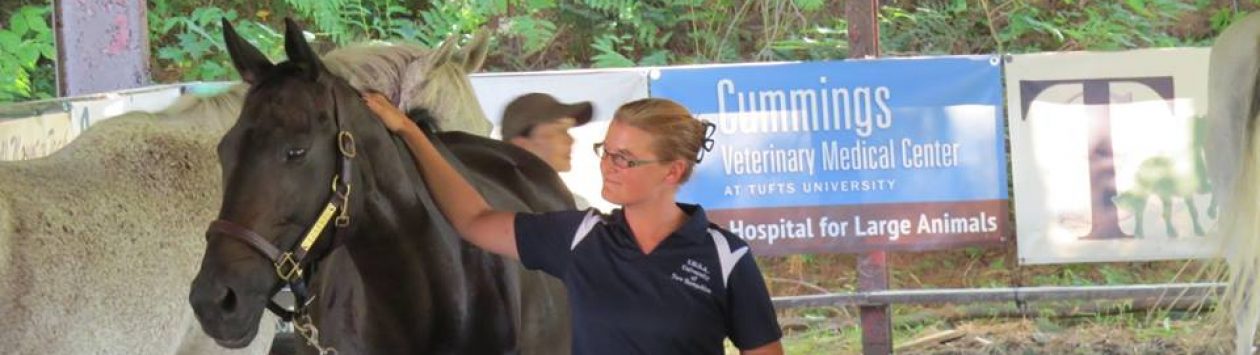

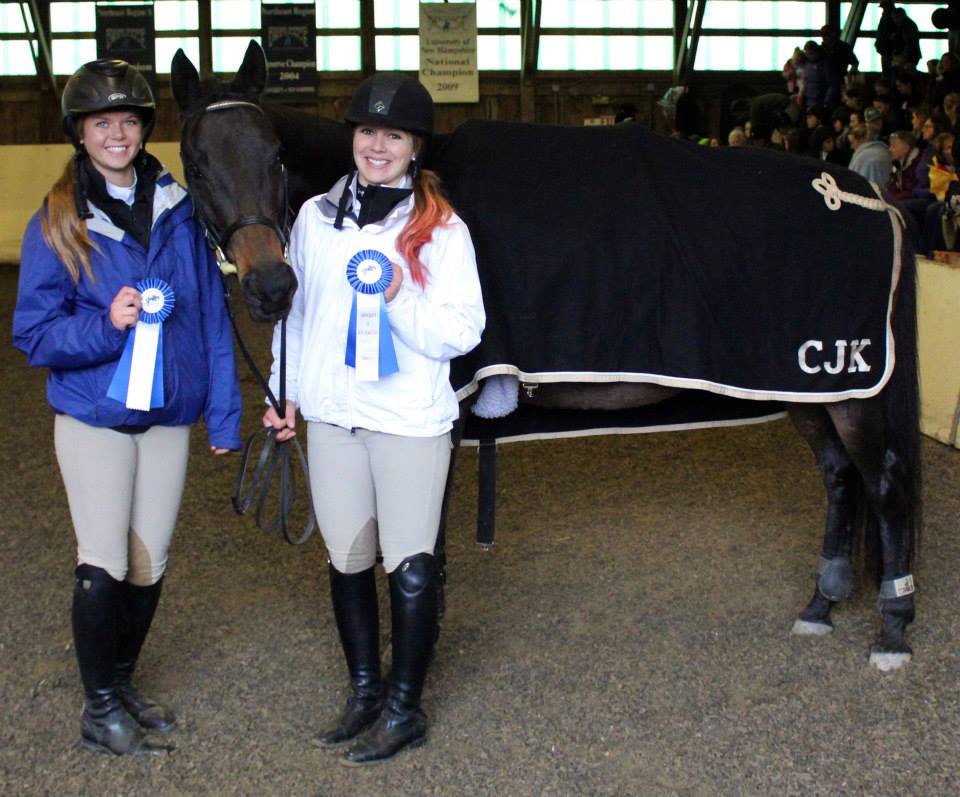

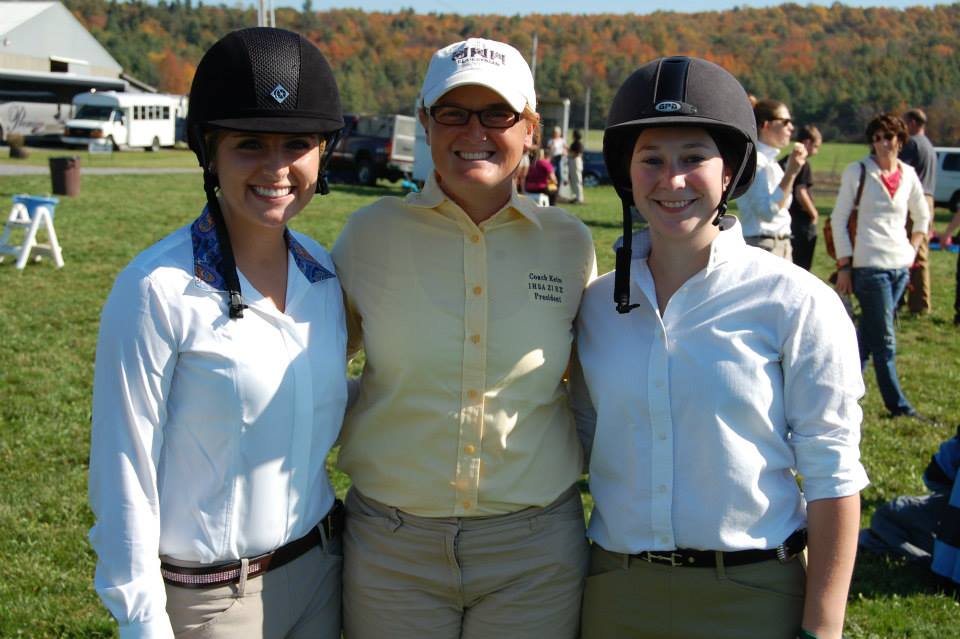

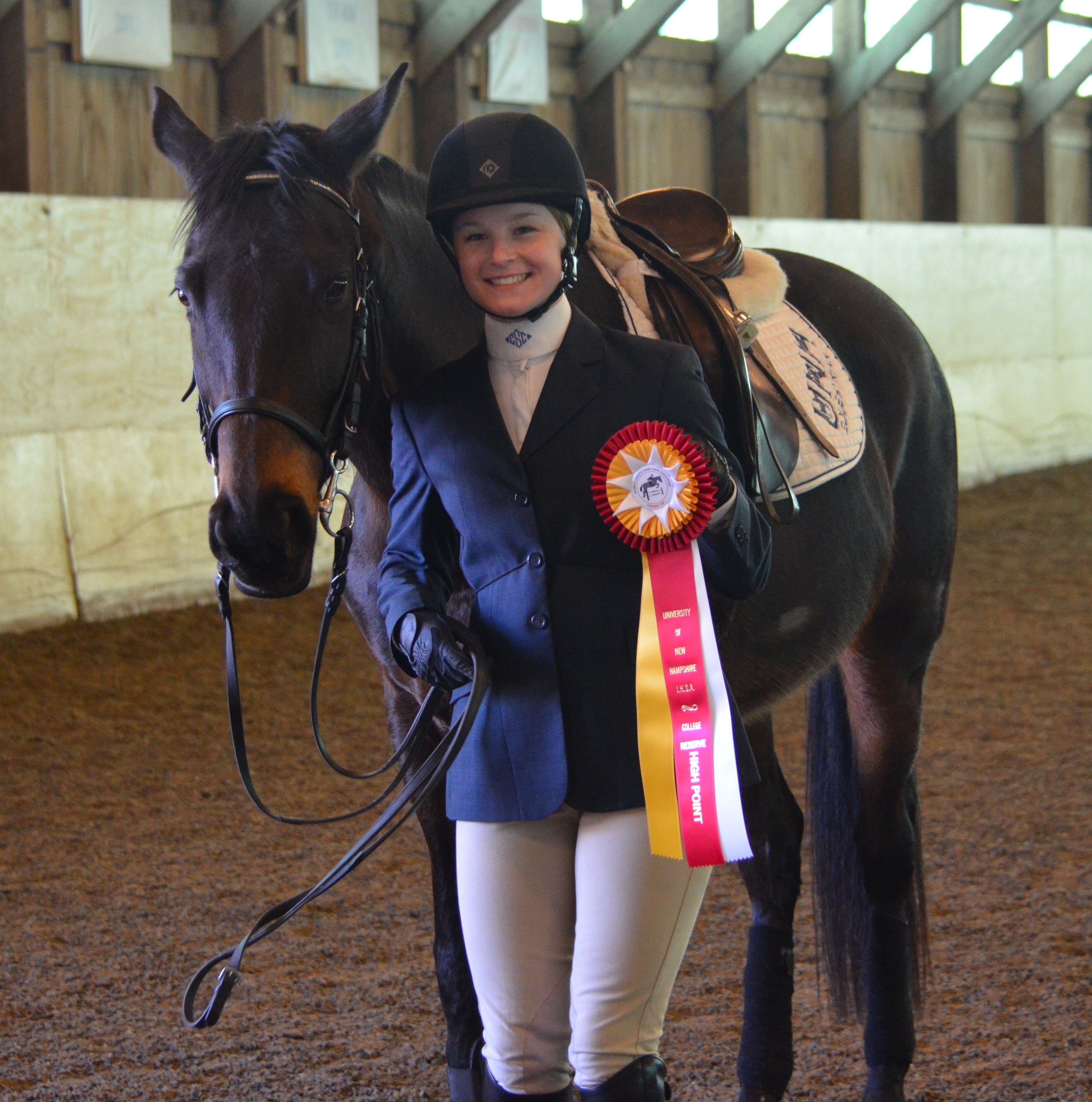

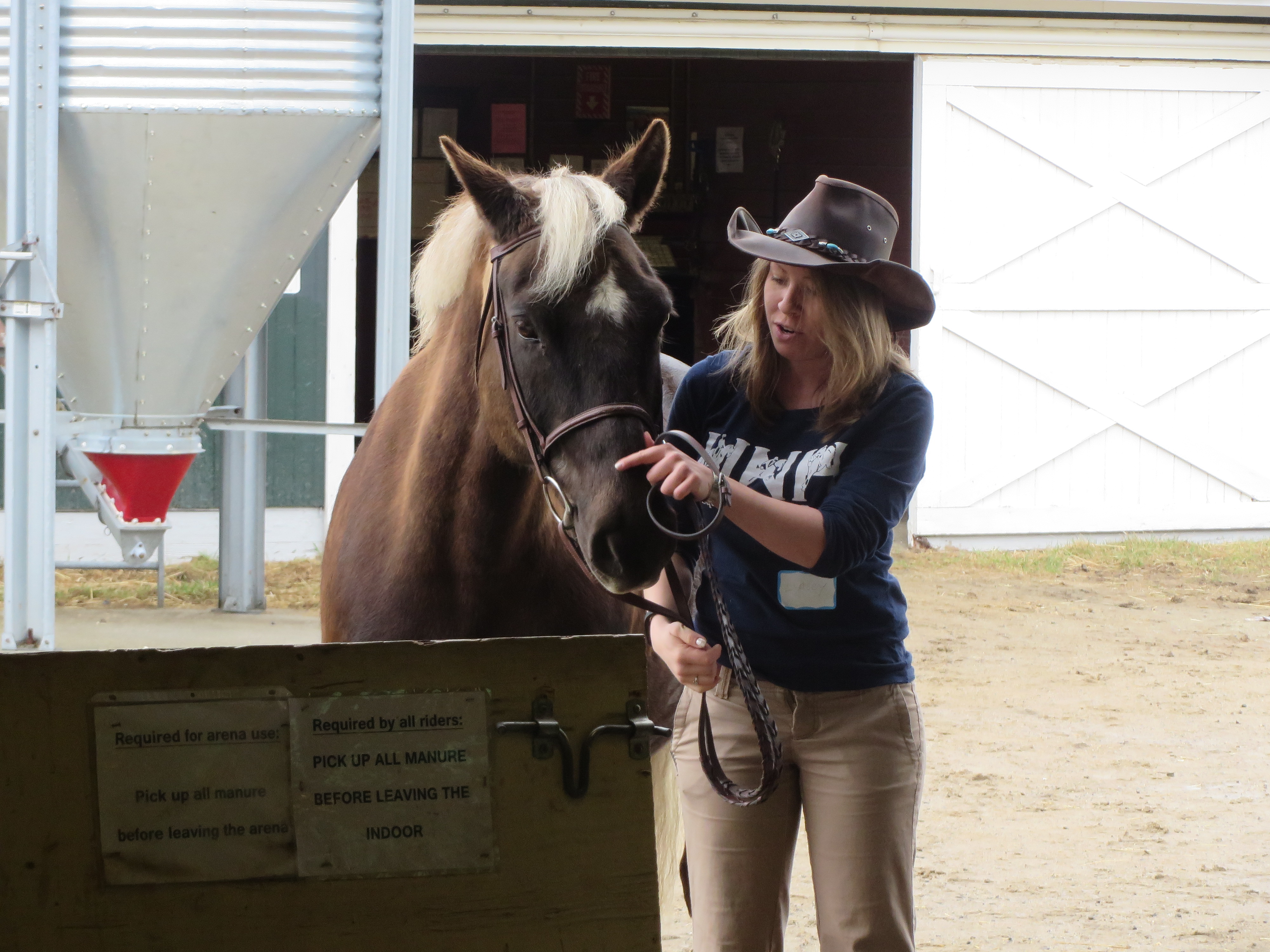

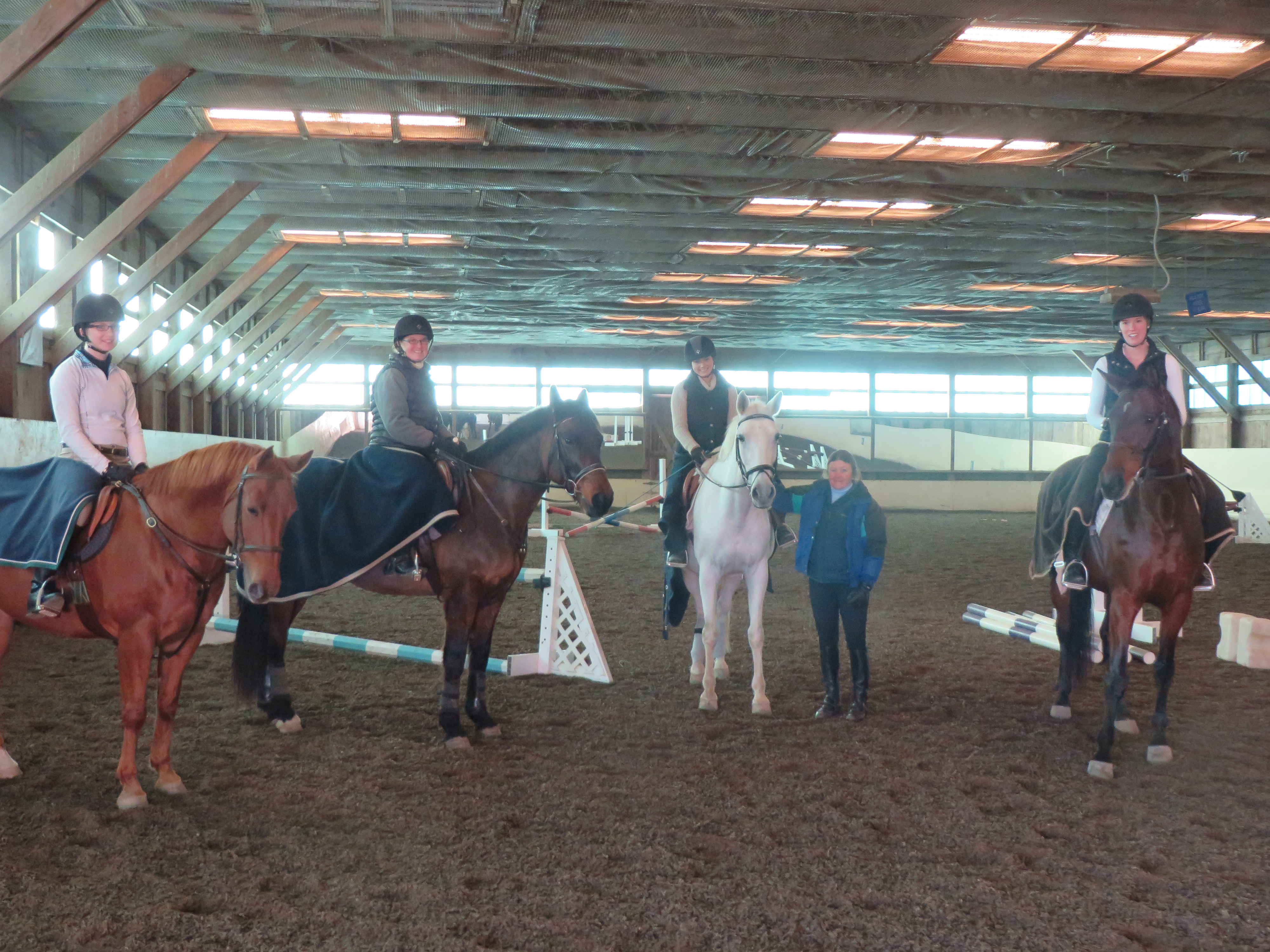

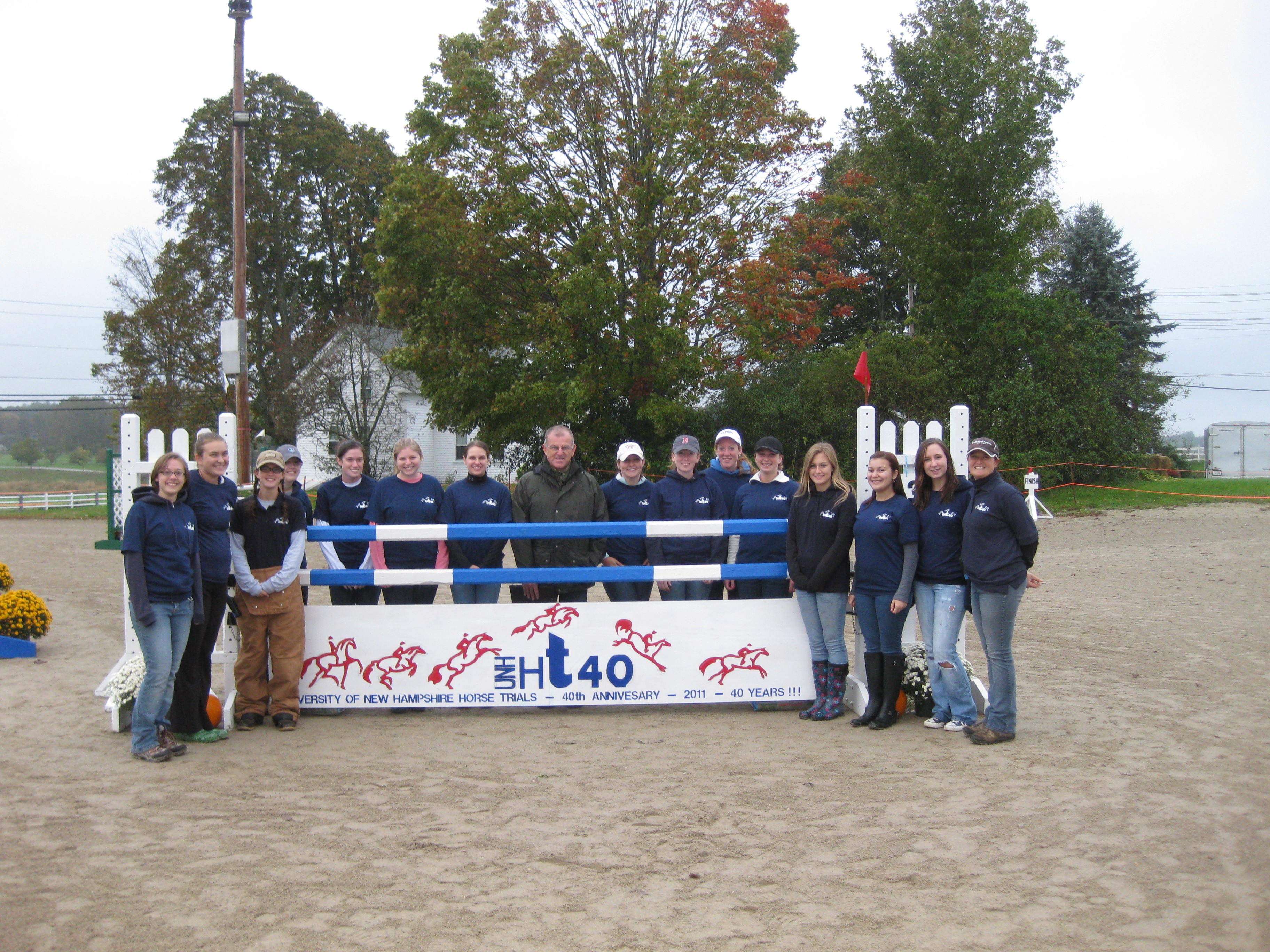
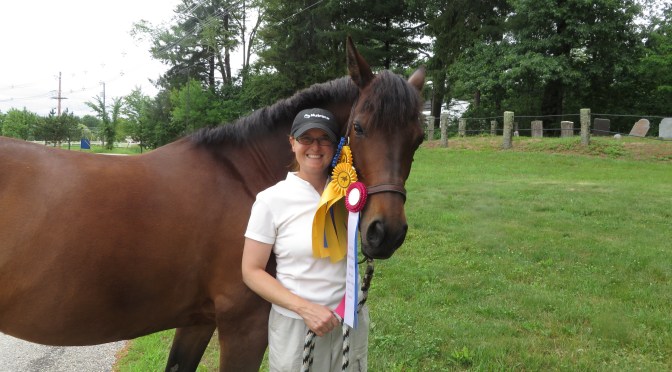


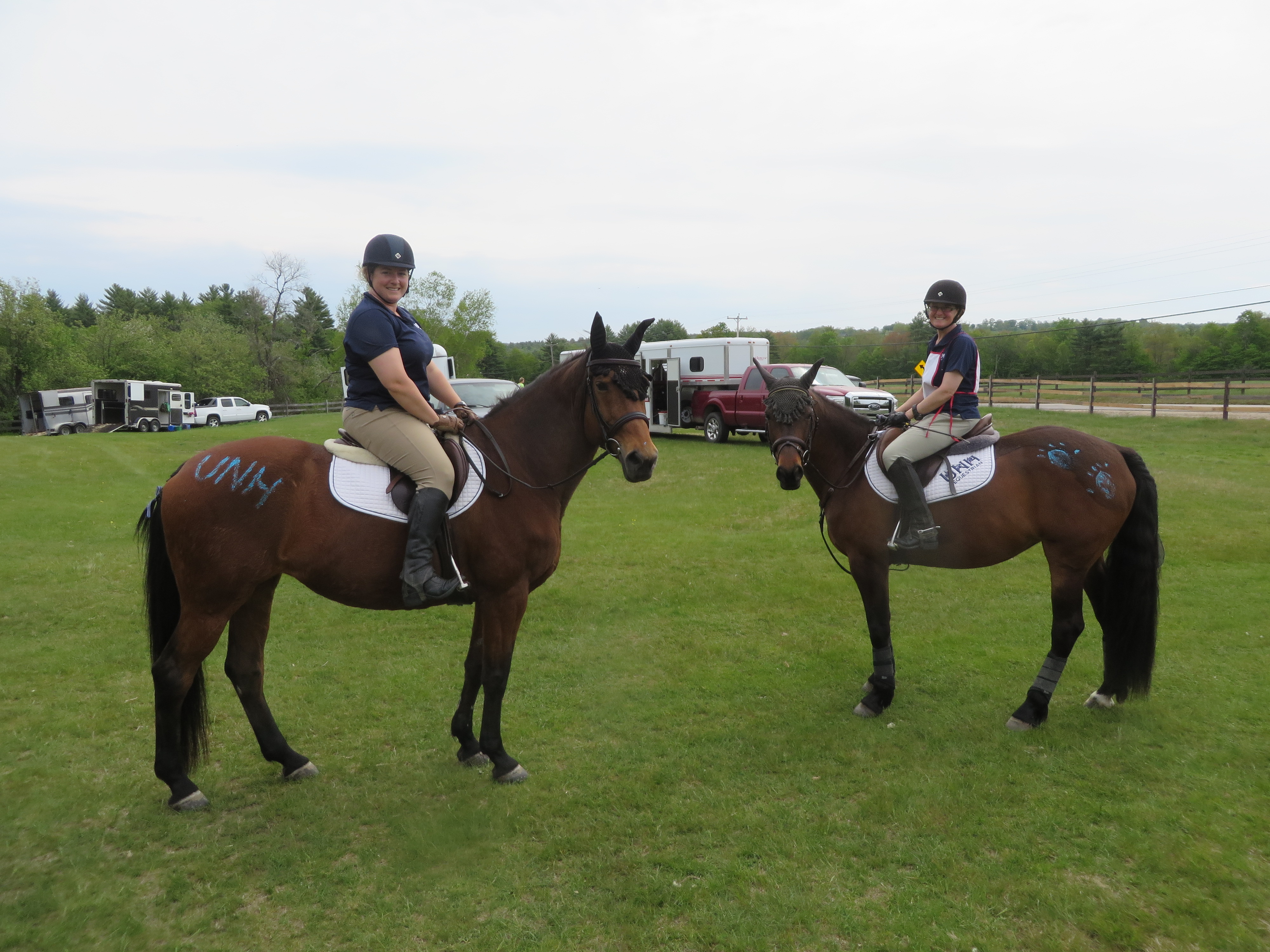


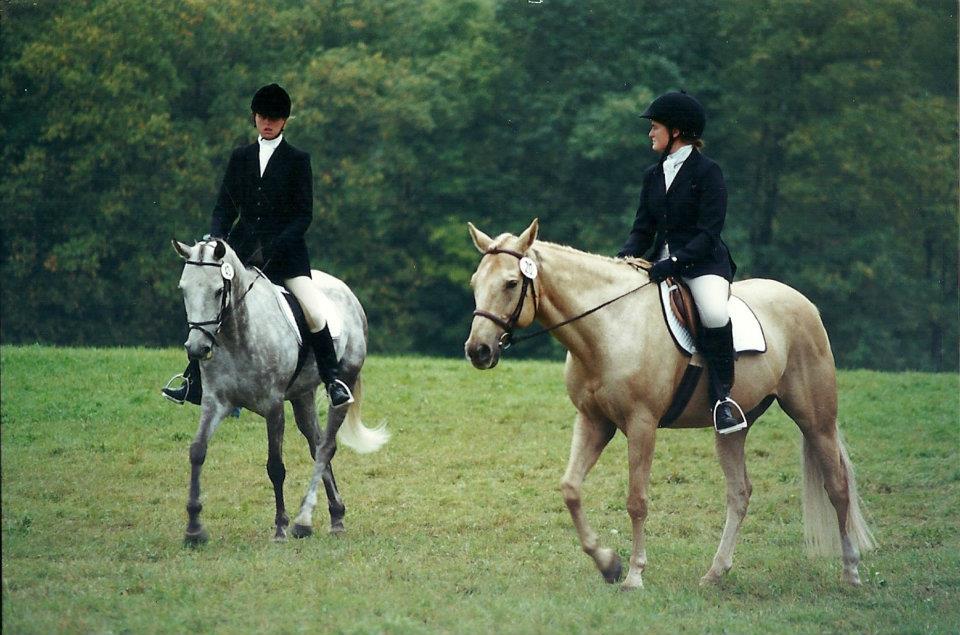

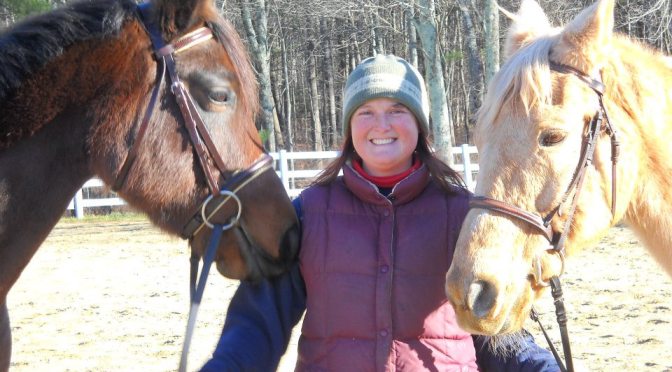

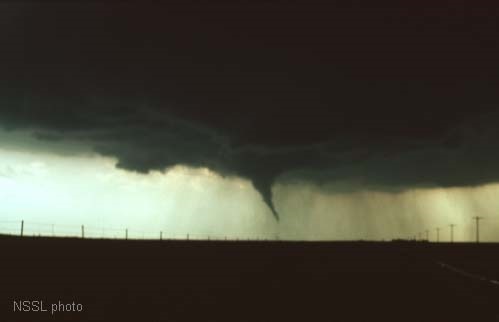

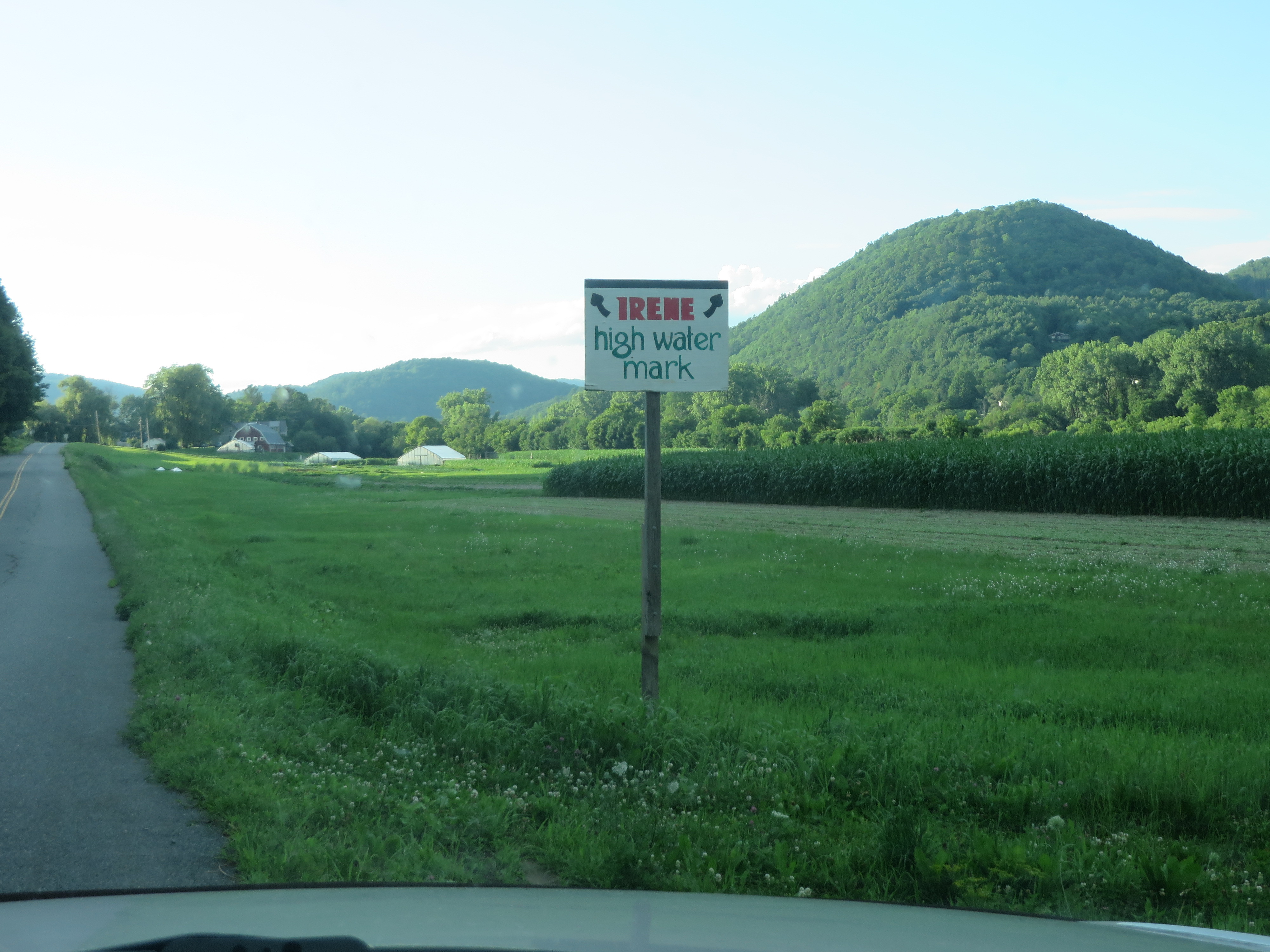

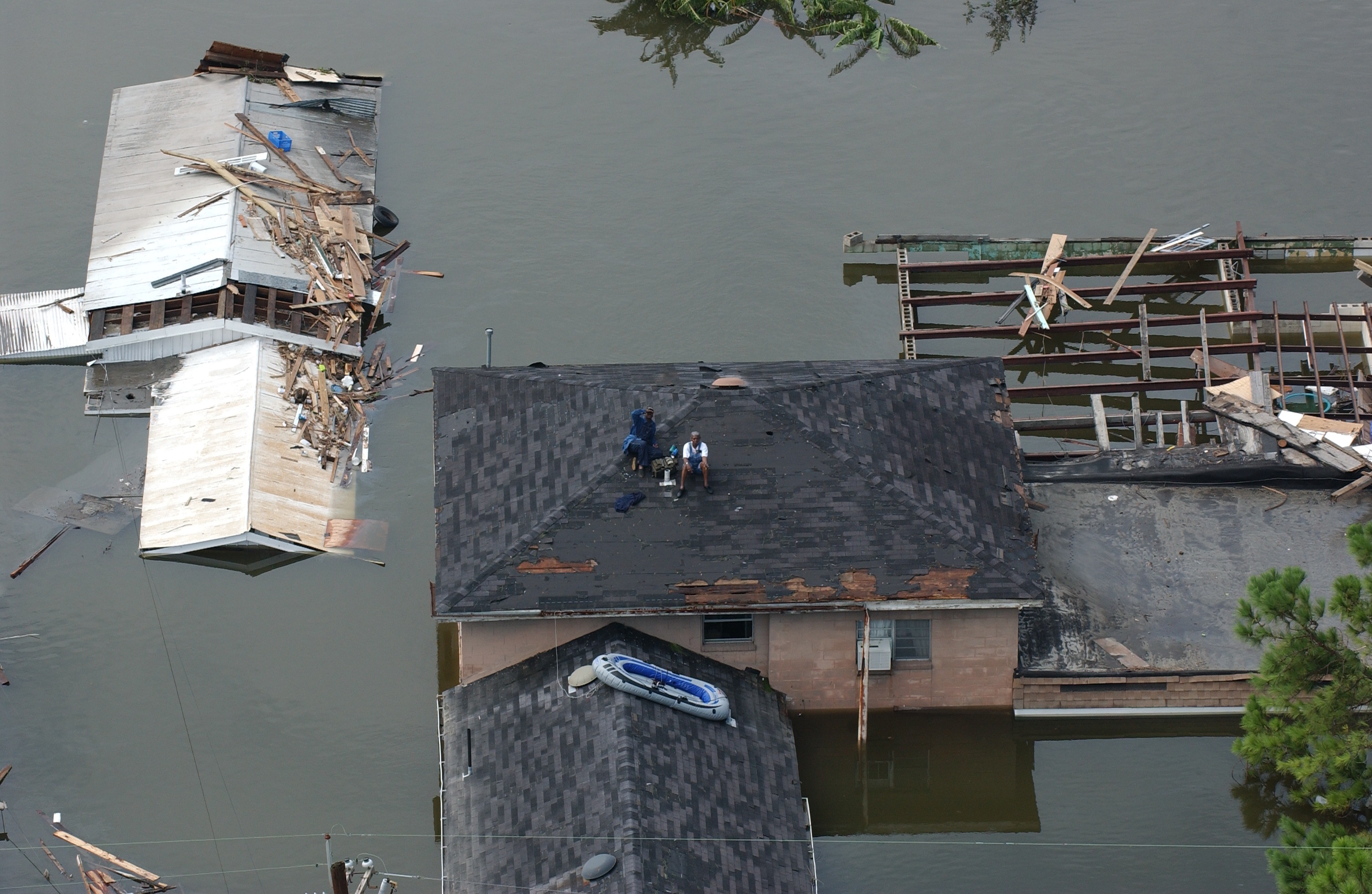
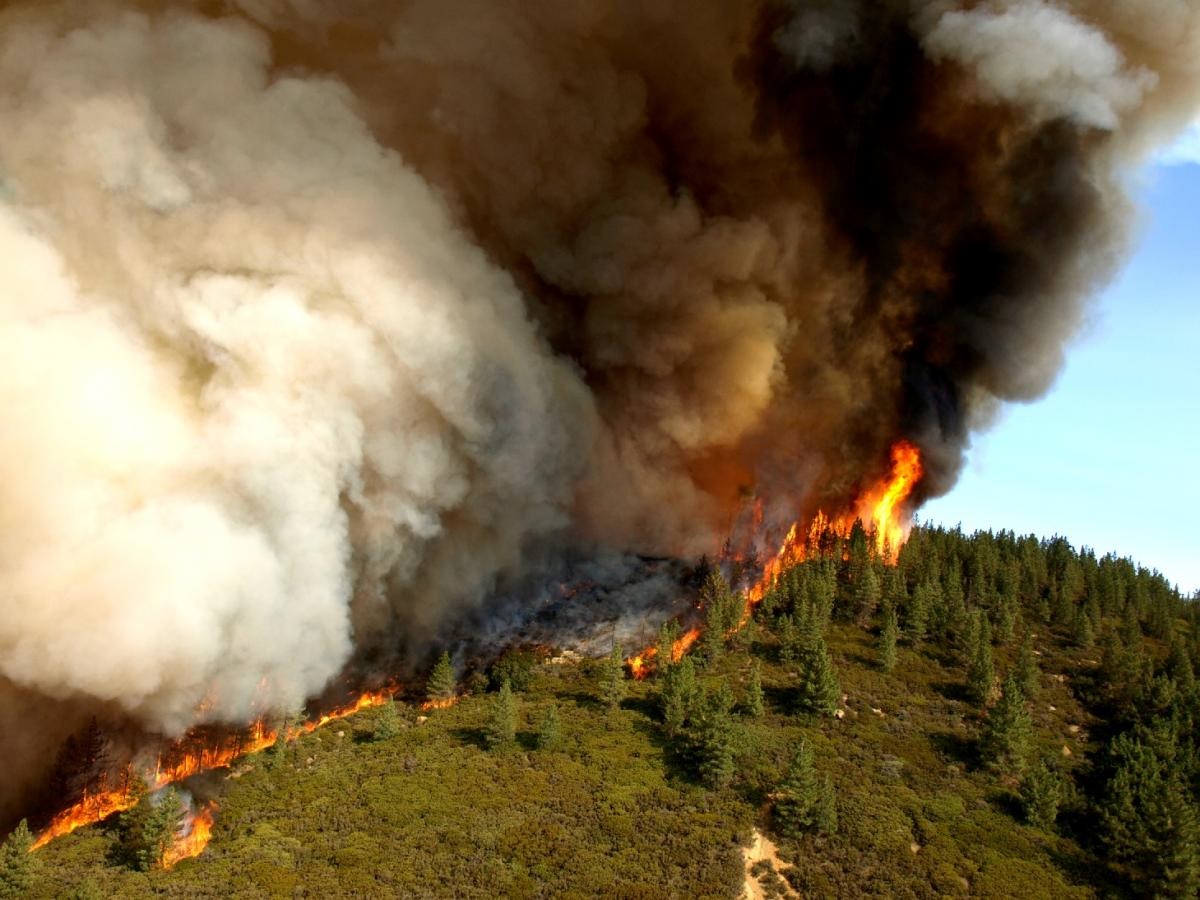
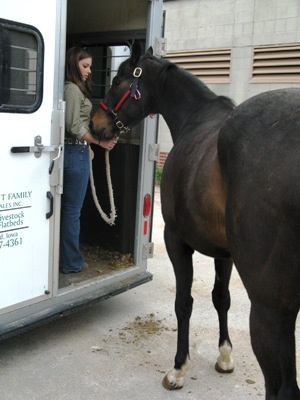


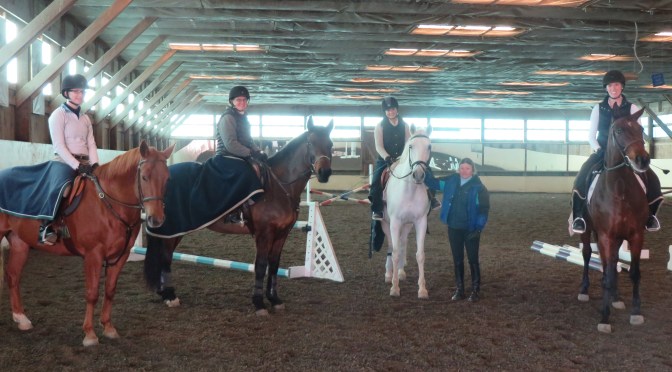
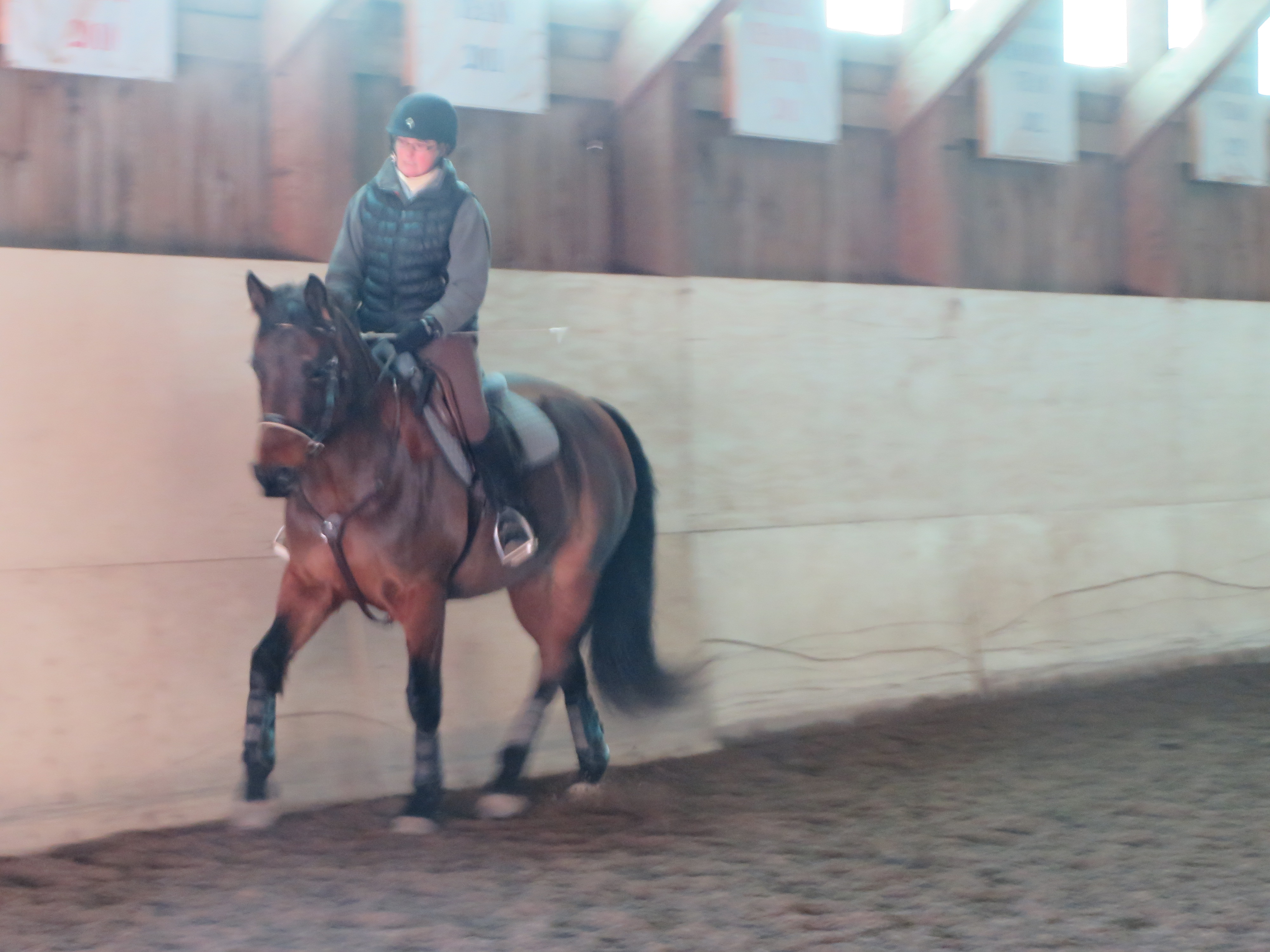


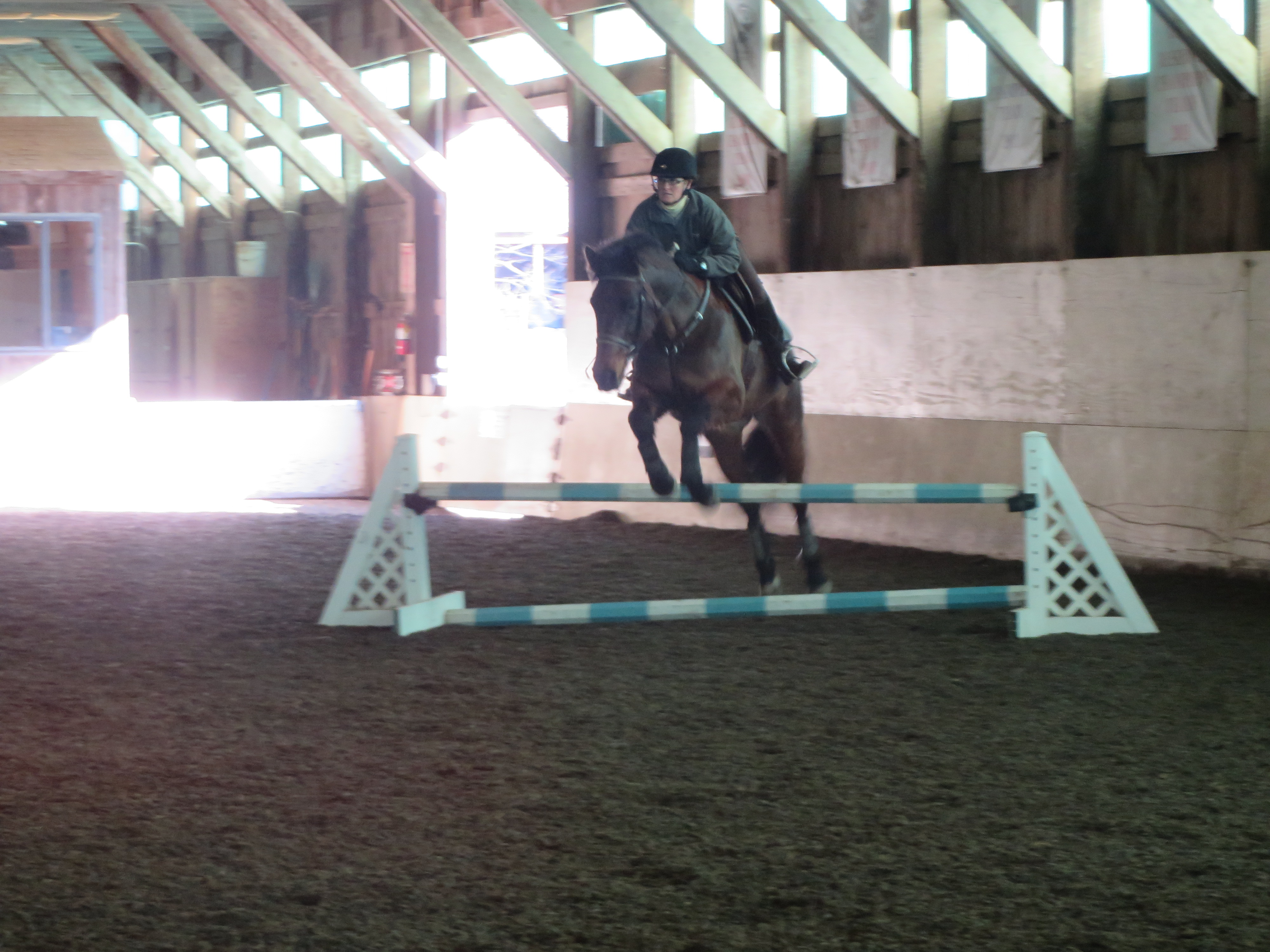
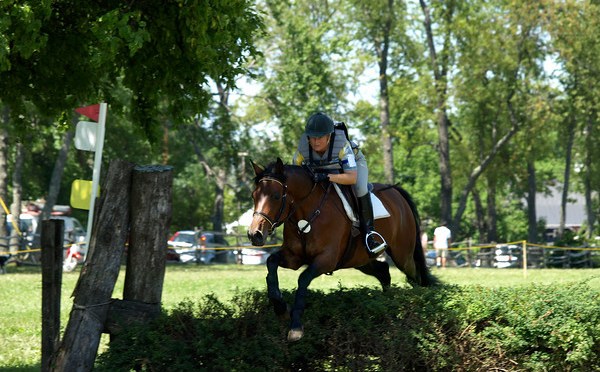

![The lead pair of a six horse hitch of black Clydesdales. By Blodyn (Own work) [CC BY-SA 3.0 (http://creativecommons.org/licenses/by-sa/3.0)], via Wikimedia Commons](https://christinakeim.com/wp-content/uploads/2015/01/black_clydesdales.jpg)


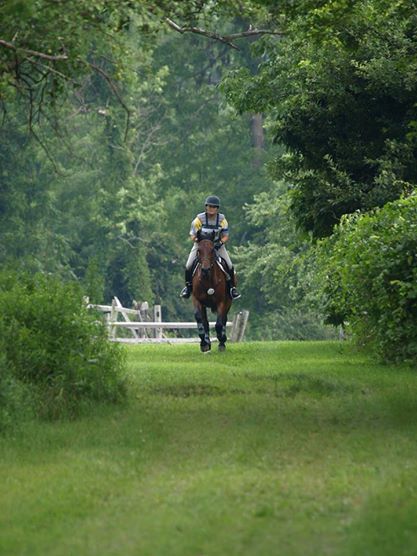
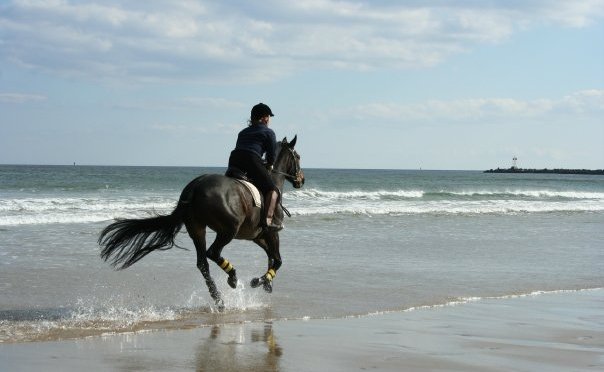


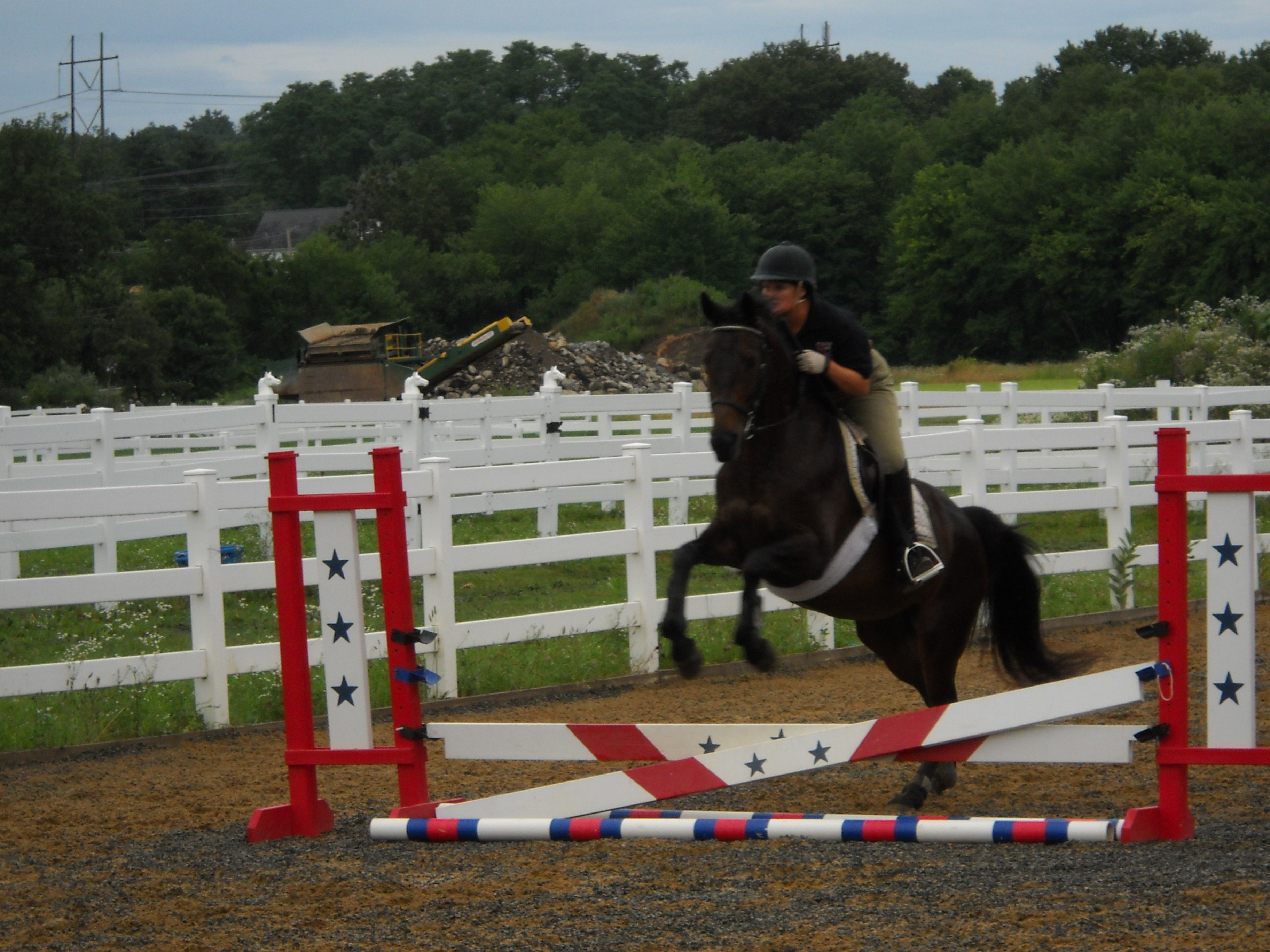




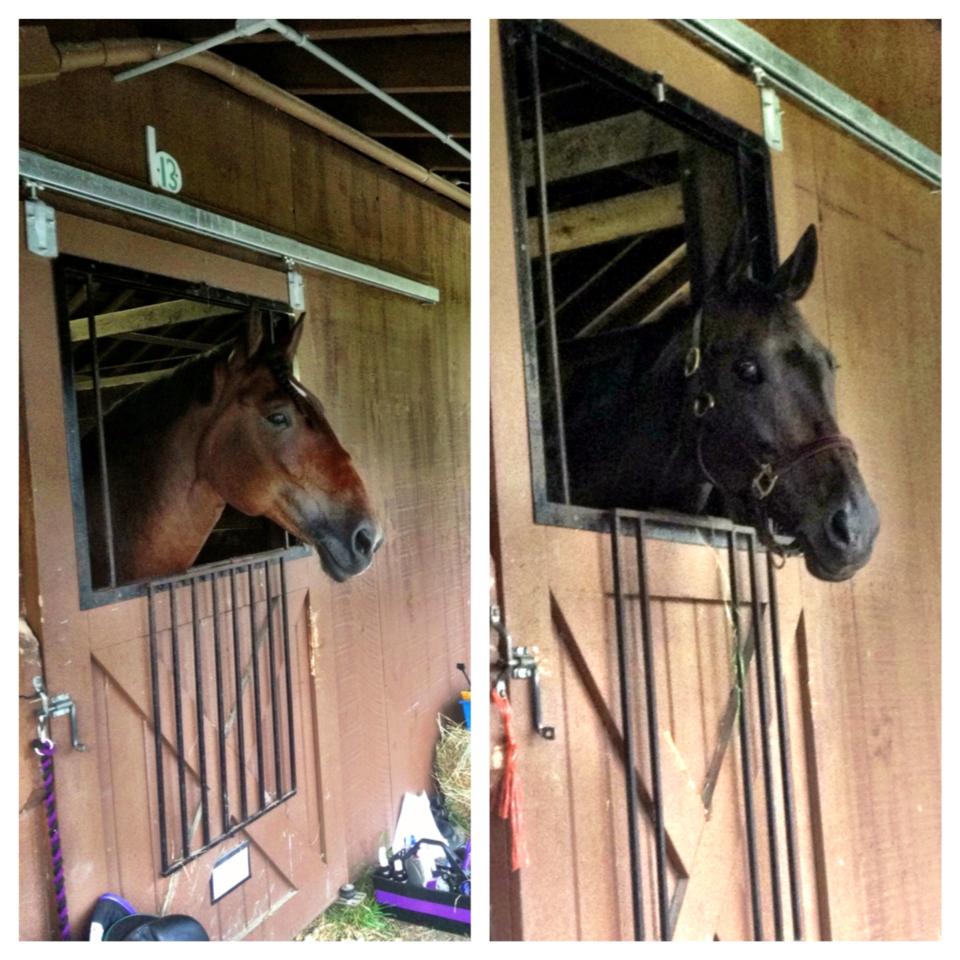
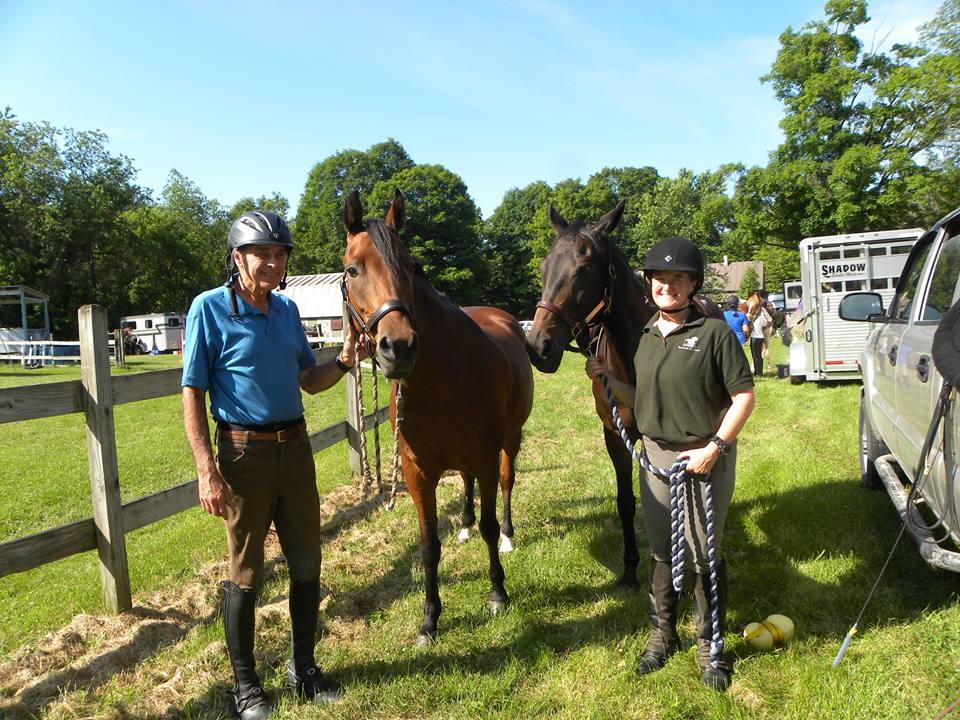
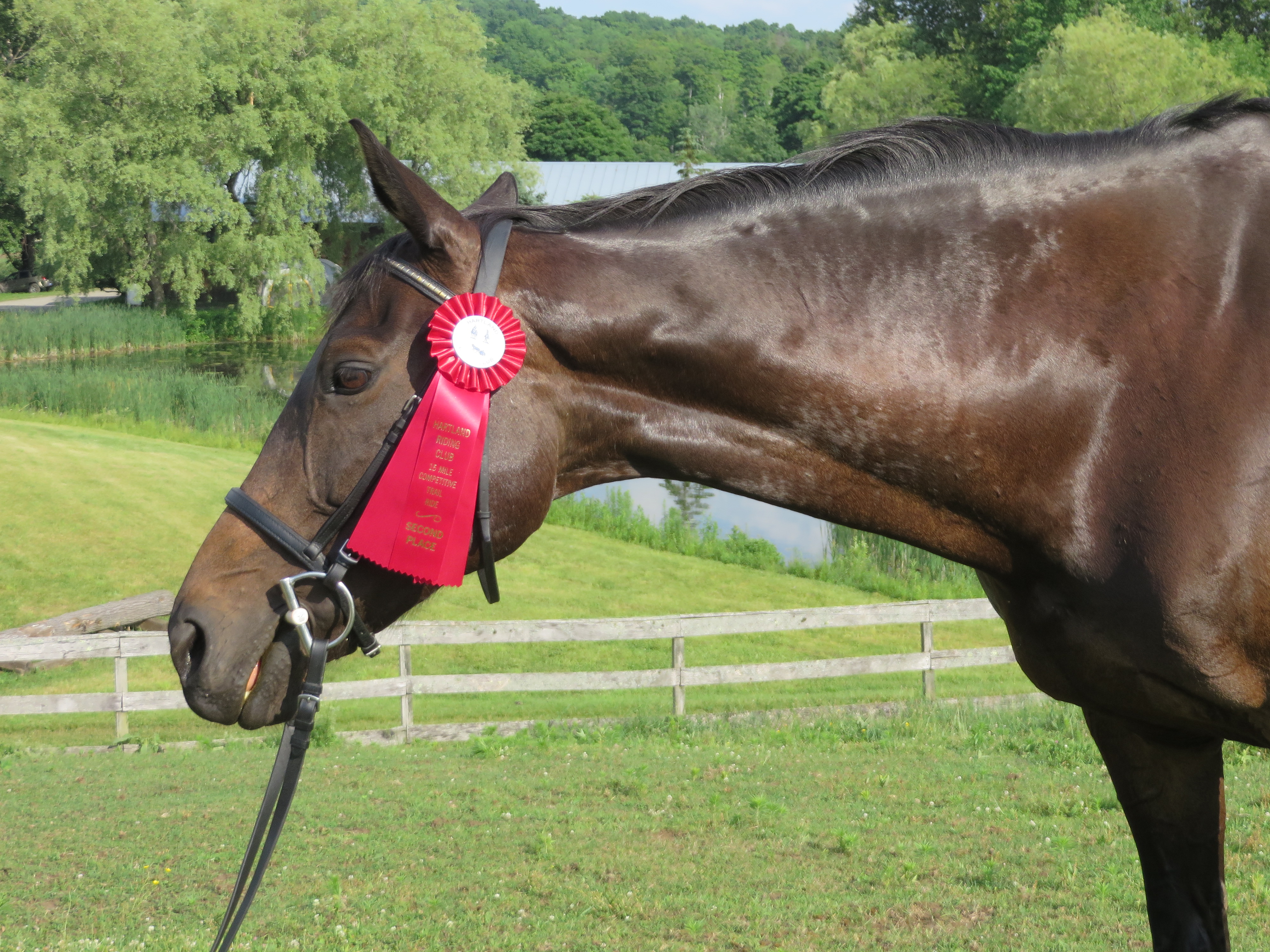
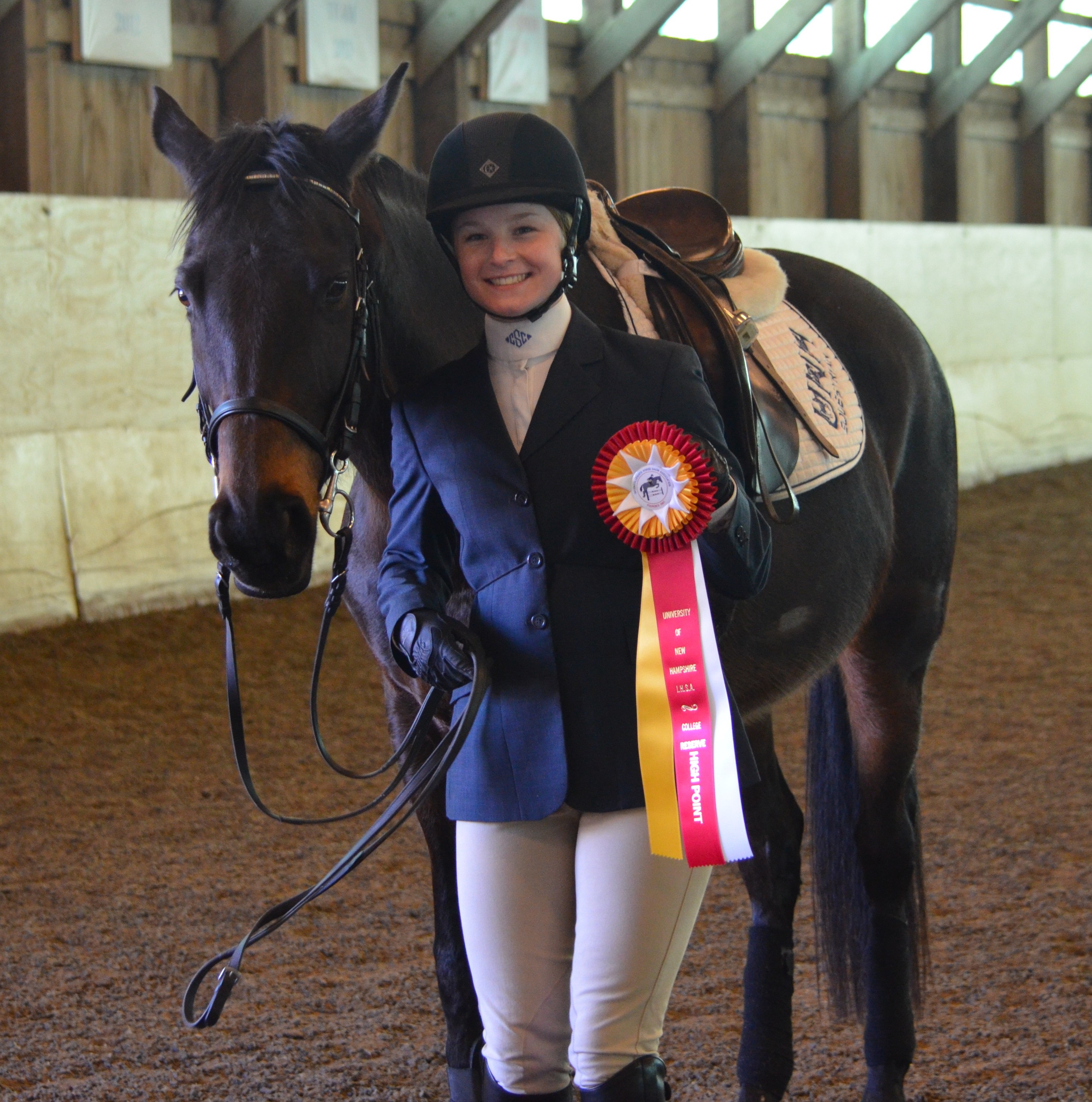


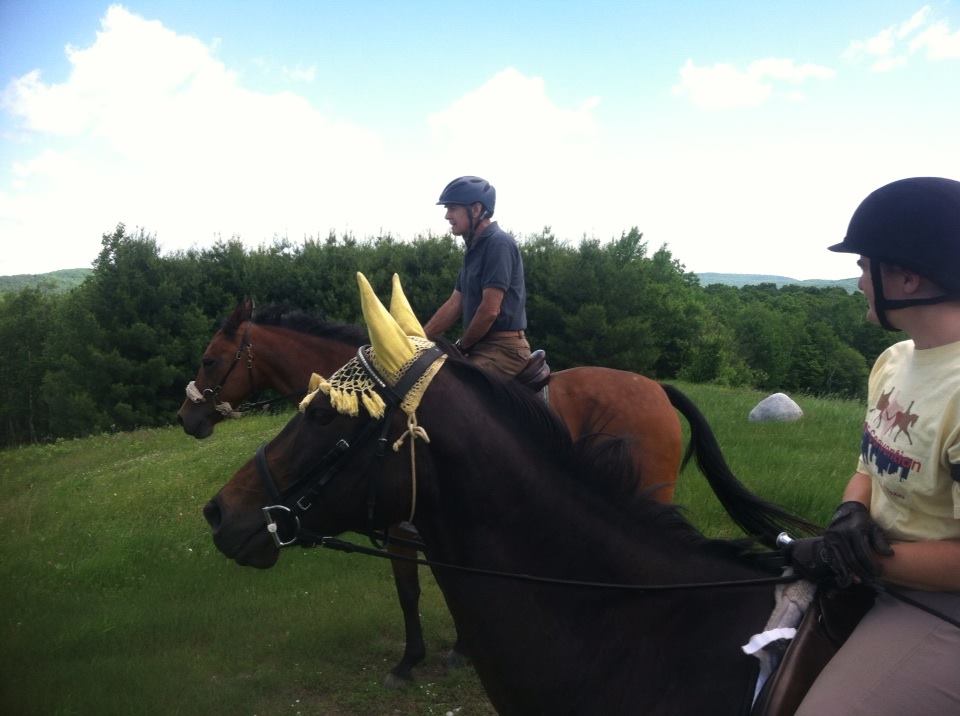

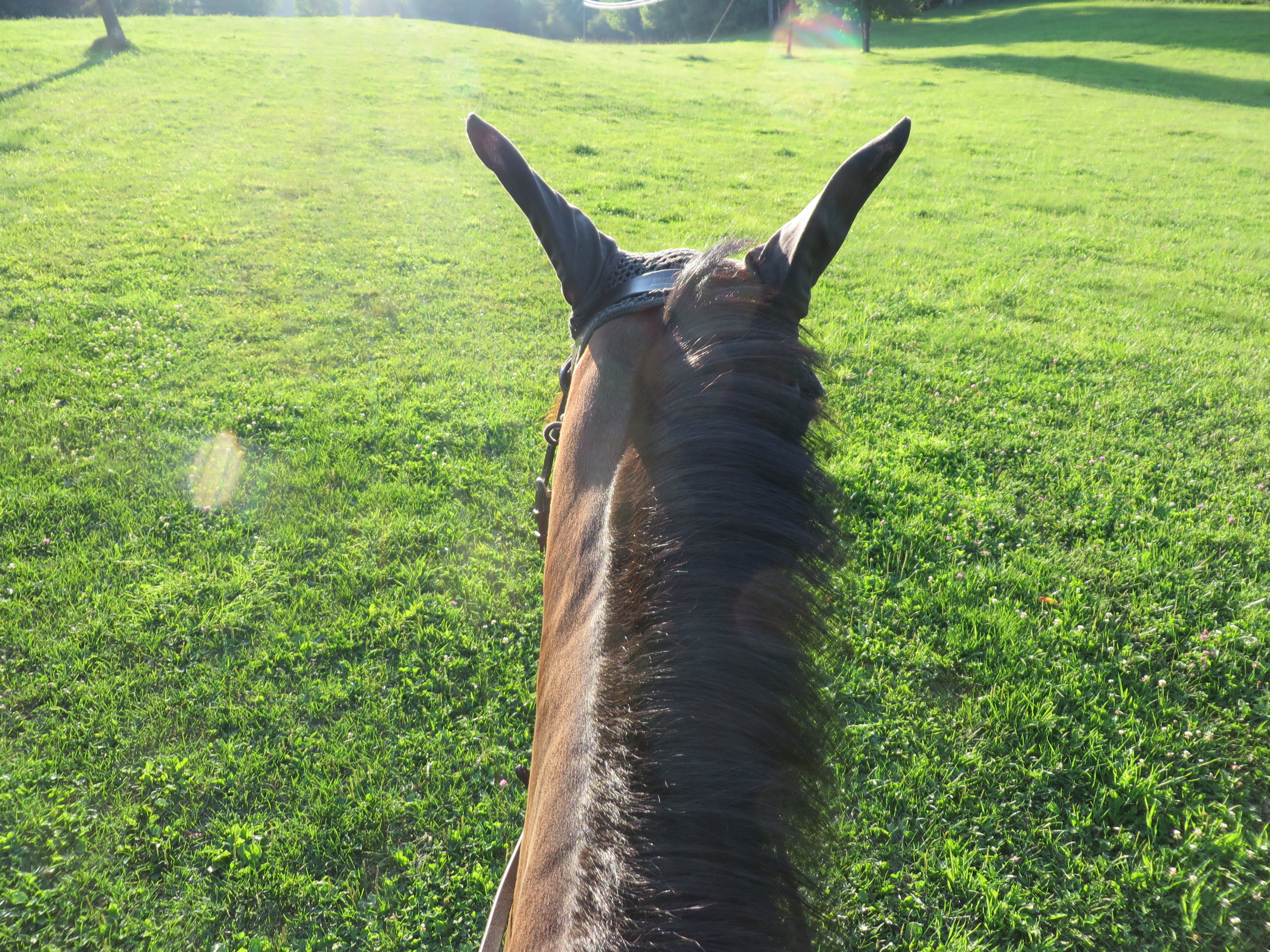


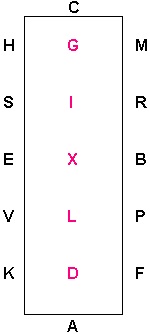
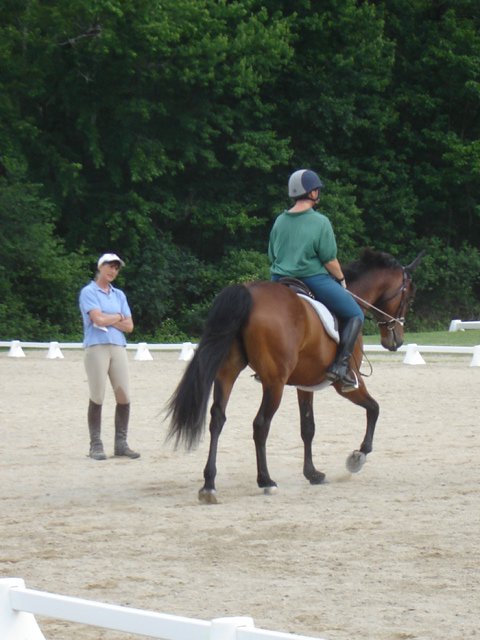



 The Academic Equestrian
