This past May, I had the opportunity to attend a two day musical freestyle symposium at The Equestrian Center at Pineland Farms in New Gloucester, ME. Day one focused primarily on the judge’s perspective (see my previous blog on this subject), while day two allowed participants to dissect the ingredients of a freestyle which will guarantee to impress the judges. The weekend was facilitated by FEI judge Lois Yukins and Klassic Kur founder Terry Ciotti Gallo, who has designed for some of the best riders and horses in the world.

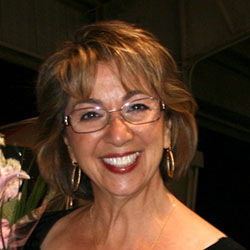
“Riding a freestyle is not just for the judge’s entertainment,” says Yukins. “It is for you—the rider—and the audience.” Putting together a freestyle requires a great deal of time, creativity and patience, and it is important to enjoy the process as much as the performance.
Choosing Your Music
Perhaps the single most important aspect of making a freestyle that works is to choose the perfect music. According to Gallo, the right music will match the footfalls of the trot and canter, is suitable for the horse and appeals to the taste of the rider. It is equally important that the selections for each gait are cohesive in genre, theme or instrumentation. Once the perfect music is chosen, it will further enhance the quality of the freestyle by using seamless editing (either done professionally or on a home computer) so that the entire program sounds like it all goes together.
Gallo explained that in order to choose the correct music, it is important to know what the average tempo is for the horse for each gait, expressed as beats per minute (bpm). This can be done by having someone take video of the horse performing the required movements at the level for later review or it can be done in live time. Count the number of steps taken in sixty seconds; for the trot and walk, count the steps of each front leg, but for the canter, count only the leading leg of each stride. Using a metronome can be a huge help, as the listener can set its pulse to the beat of the movement. Many smart phones have free or inexpensive metronomes to download. It is then easy to play the metronome set to the horse’s beats per minute against a prospective musical selection to determine its appropriateness. In this way, the rider can easily test many more samples of music at once than by playing them with the live horse riding around the arena.
The basic gaits of most horses fall within a similar range.
| Gait | Range (in BPM) | Average BPM |
| Trot | 132-168 | 145 |
| Walk | 98-112 | 106 |
| Canter | 92-105 | 96 |
| Passage | 105-116 | 110 |
The horse’s tempo in each gait will change as they progress through their training, and may even vary through those movements which are still harder for the horse to execute correctly. Therefore, Gallo recommends that riders set their horse’s tempo only when the horse is going the way they will in the competition arena. If the horse seems to be between two tempos, use the lateral movements to help figure out which tempo is more appropriate.
Sometimes, the music’s tempo can act as a training tool, encouraging riders to ride their horses more steadily all the time. As the horse gets stronger and the moment of suspension becomes more enhanced, the horse’s tempo will slow down, and music may need to be modified. This is one of several reasons why the right music for a horse’s First Level freestyle may not be the right music for them at the FEI levels.
Notice also that there is some overlap in the average beats per minute for the walk, canter and even passage. This means that it may be possible to use the same piece of music for both the walk and the canter, but something in the musical phrasing must express a change of gait.

How do I find this “perfect music”?
For someone who truly enjoys music, mulling through various selections could provide hours upon hours of entertainment. But it can be hard to know where to start, as the number of options seems limitless, and the best music might truly come from any genre.
Gallo says that it is important to keep an open mind—the best music for the horse might be a surprise. Your own personal music library is of course a great place to start, but don’t forget to ask friends for some of their favorites as well. Gallo recommends checking the selections at college and public libraries, online stores such as iTunes or Amazon and also radio stations, especially those like satellite, Pandora, etc. As you listen to a selection, try to feel the beat, or keep a metronome handy. iTunes can be useful to pull up nearly every available version of a song, which can make it easier to find arrangements of favorite tunes recorded in a certain instrumentation or without words. Pandora’s grouping feature will make it easy to search all of the music which sounds like a particular artist.
Music that is within ten beats of the horse’s usual beats per minute may be usable with the help of a good sound artist. As you listen to selections, set up a catalogue to organize them by their beats per minute. Notebooks, recipe cards or computer databases all work well for this.
Gallo mentioned that some music is recorded using a “click track”, which is a metronome that plays when musicians are recording. These songs tend to have a consistent beat; music recorded without a click track can have a range in the beats per minute that makes it harder to follow.
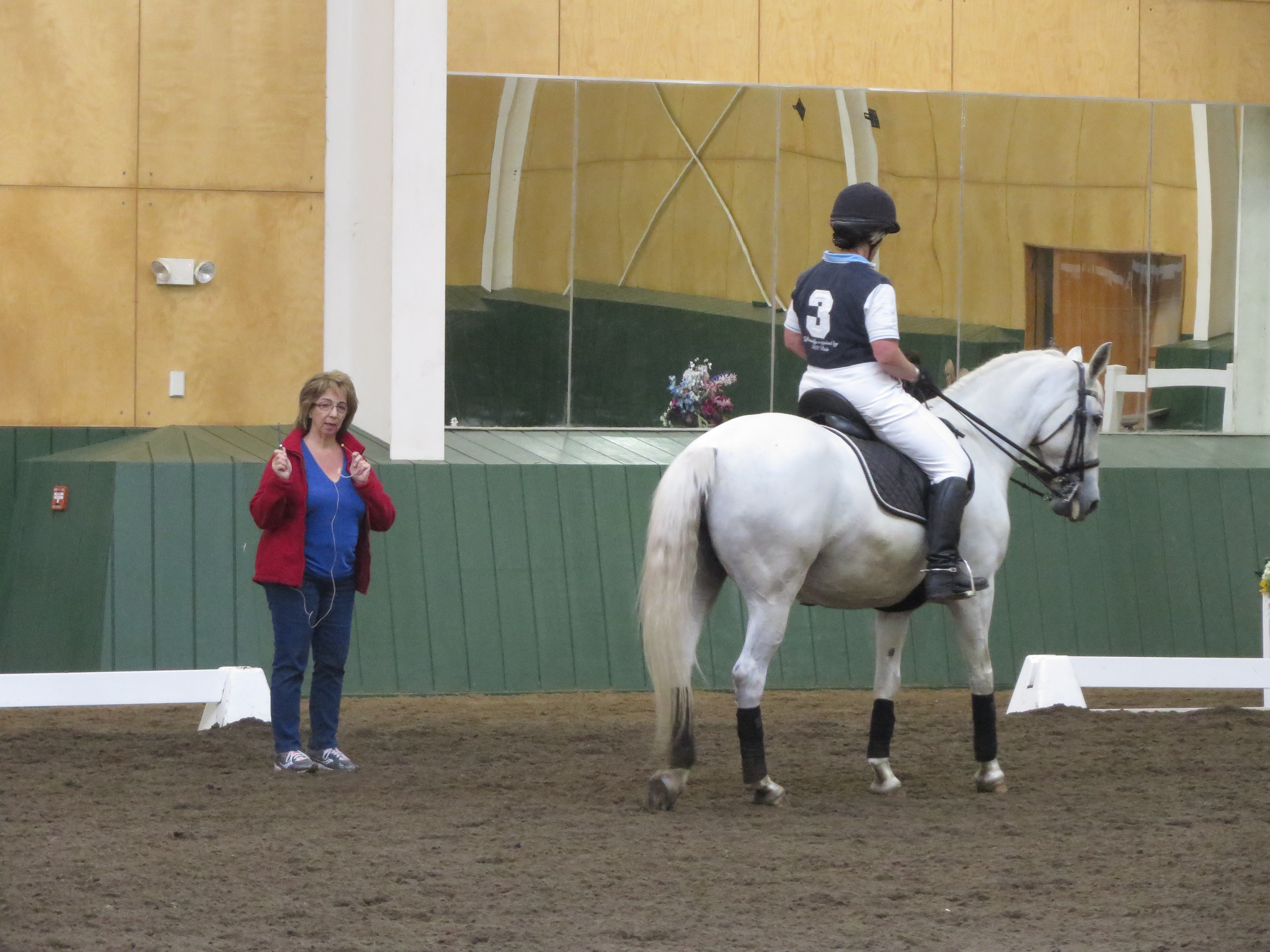
Lower level horses generally are better suited to lighter music; many dance styles work well. It requires the big and powerful movement of an upper level horse to carry off stronger musical selections or music played by a full orchestra. Gallo mentioned that it is totally acceptable for younger riders to choose more modern musical selections.
Lyrics (words, voice) are permitted, but it is conventional wisdom that they are to be avoided when possible as they can distract from the performance. Some music features vocals that sound more like instruments (ooh’s and aah’s), which may actually enhance the performance and should not be considered to be in the same category as full lyrics. Gallo has chosen to carefully use vocals in select freestyles, but says it is like “sprinkling your latte with caramel as opposed to creating a crème brulee.” Songs which heavily feature vocals may have versions available that are wholly or significantly instrumented, which might work better for freestyle design.
Gallo further cautions that heavily syncopated music is not always good, as it can be hard for riders to follow the beat. “When the beat is very clean, it is an aid to the rider,” says Gallo.
Suitability and Cohesiveness
Just because a piece of music matches your horse’s tempo doesn’t make it the right or best choice to use in your freestyle. Riders must consider suitability and cohesiveness as well.
Suitability means that the music enhances the horse’s way of going, and makes their movements appear to be light and effortless. Big, powerful horses performing upper level movements can carry big, powerful music; lower level horses which lack some of that suspension and power will be better with lighter music that makes their movement appear to be lofty. To check whether a piece of music is suitable, play it while you ride, and either video it or ask a friend to tell you how your horse looks. Does the horse seem to be light or heavy? Are their movements sluggish or frantic, or do they seem to be relaxed? Does the horse seem happy, or burdened? Each piece should suggest the gait that it is used for.

Cohesiveness means that the music is all from the same genre—the selections have an obvious theme. The instrumentation might match, or the sound between the pieces is similar. Sometimes a single instrument is highlighted in each selection. While you would never design a freestyle to one complete piece of music, you want your edited music to sound as if it could come from one piece. The music used in a freestyle should overall be pleasing to the ear.
Of the three gaits, the walk is the most relaxed, and it is not critical that the beat of the music matches the footfalls—unless your horse has an 8 or 9 walk, in which case you should try to match them after all! The walk is a section of the freestyle in which the rider can catch up to their music if needed. While the music choice may be more relaxed, it should still have energy.
Riders can choose to have entry music or not. The freestyle judging doesn’t officially begin until the first halt and salute, which must be performed somewhere on center line. If the rider chooses to have entry music, it should come from within the program, be a fanfare related to the program or introduce the theme of the program. Entry music must start within 45 seconds of the bell being rung, and the rider must enter the arena within 20 seconds of it starting to play.
Exit music is not allowed in competition freestyles. The music must cease with the final salute.
Planning your Choreography
Choosing the right music is just one part of creating a winning freestyle. Riders must also design a pattern for the ride which highlights the horse’s best qualities and showcases each of the required movements. The results of this planning are scored by the judge under the artistic impression scores for choreography (for USDF tests, a coefficient of 4) and degree of difficulty (for USDF tests, a coefficient of 2, but x4 for FEI levels). Gallo recommends designing the choreography first, in most cases, and then editing the music to suit the choreography.
Before the rider can begin to plan the choreography, they must know which movements are required for the level. Note also those movements which must be performed on both reins. Omitting a movement is just giving away a score. Included on the lower left corner of each test sheet is a list of those movements which are considered “above the level”, which are not allowed. While some riders might think that showing their horse’s talent for half pass in a Second Level freestyle would be an opportunity to increase the degree of difficulty, it is in fact a significant point penalty because the movement is above the level. Riders must also consider that certain movements could be hard to interpret, depending on their placement; for example, shoulder in is virtually invisible to the judge at “C” when ridden on the short side of the arena.
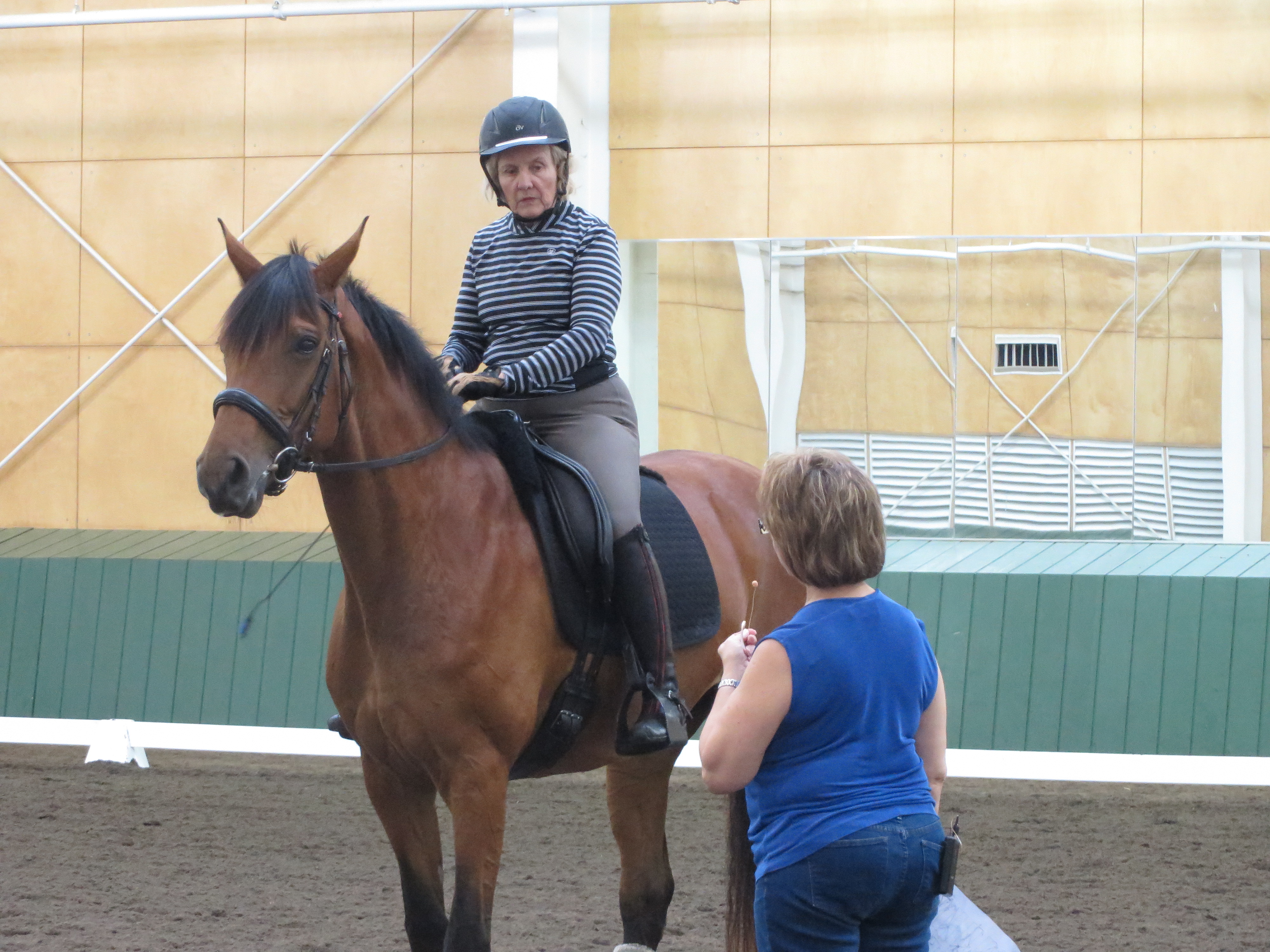
Degree of difficulty is certainly a consideration when planning the choreography for a freestyle, but both Gallo and Yukins cautioned that riders must only do what they know they can really execute well—or else both the artistic and technical scores will suffer. “Simple and correct always beats complicated and messy,” says Yukins. “Don’t compromise the basics of the horse to add difficulty.”
Gallo says that the overall degree of difficulty is one of the first things she considers when designing choreography for a client; this mostly applies to the configuration of movements at the trot and canter, unless walk is being included in a transition. With only a coefficient of 2 at the USDF levels, degree of difficulty is not as critical a factor as it is at the FEI levels. Another important factor is the horse’s experience at the level. The design and difficulty should not exceed what the horse can manage at that stage of their training.
Degree of difficulty is shown by doing things like performing a movement at a steeper angle than is required at a standard test of the same level, placing movements off the rail or on center line, doing demanding transitions (such as a canter lengthening to walk on the same line), challenging combinations of movements, reins in one hand, or tempi changes on a broken or curved line.
Another decision which must be made related to choreography is what order the gaits should be featured in. The choice made here will ultimately affect the amount of editing required for the music.
Riders must consider the point of view when placing their movements in the competition arena. Here is the chance to really highlight something your horse does well—a pirouette right on center line, close to the judge, for example. The rider can also de-emphasize movements or transitions which are harder for the horse. In most cases, movements can be completed moving towards or away from the judge; always consider, though, what the view looks like from “C”. Half pass is usually most elegant when seen from the front. Design cohesiveness is important; the judge should never be left wondering what a particular movement was meant to be.

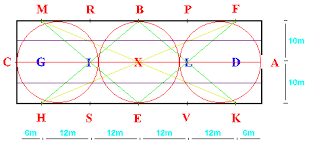
Well-designed choreography uses the entire arena well; movements are spread out within the ring, and there is a sense of balance in terms of both time spent on each rein and where movements are placed. One way to check this is to physically draw the movements out on paper; if the lines look all clumped together, then they will also appear that way in the ring. These drawings can also be a helpful tool to ensure that all compulsory elements are included and that no “above level” movements are present.
Good choreography is creative and shows design cohesiveness. Many riders get caught up in the idea that movements should not be “too test like”. At the lower levels, however, it is challenging to come up with wholly new or unique ways of combining movements together. Choreography should not closely replicate anything contained within a current USEF test, but it is acceptable to use combinations of movements that may have been included in previous editions of tests at that level.
Gallo suggests using direct and indirect combinations of movements to increase the creativity in the choreography. A direct combination is when the pattern goes straight from one movement to the next, for example, from a lengthening to a 10 meter circle. An indirect combination is when the choreography accommodates a few steps of rebalancing, straightening or regrouping to prepare for the next movement, such as when riding a lengthening to straightening to a shoulder in.
Try to shake off “riding a test rigor” and explore less common lines, such as riding from the rail to the center line, shorter diagonals and using the quarter line. Asymmetry in freestyle design is acceptable; you don’t have to do exactly the movements on each rein, so long as you are keeping the patterns logical and clear.
Reading the regular tests from First Level through Grand Prix can help to familiarize with existing common patterns. It can also help to watch other freestyles at shows or on video to get ideas. Being “creative” doesn’t mean that you are the first person to ever think of the combination or pattern of movements; it means that you are putting the movements together in a unique way that highlights your own mount.
The only way to know if an idea on paper will work for your horse is to get into the ring and experiment with it. Olympian Michael Poulin, who demonstrated a Grand Prix freestyle on day one of the symposium, commented that it is critical to take your time and not over do the horse during the creation of the choreography. “Do part of your regular training, then play with a part of the choreography,” says Poulin. “Do this a few times. Don’t try to do it all in one day.”
Considering Musical Interpretation
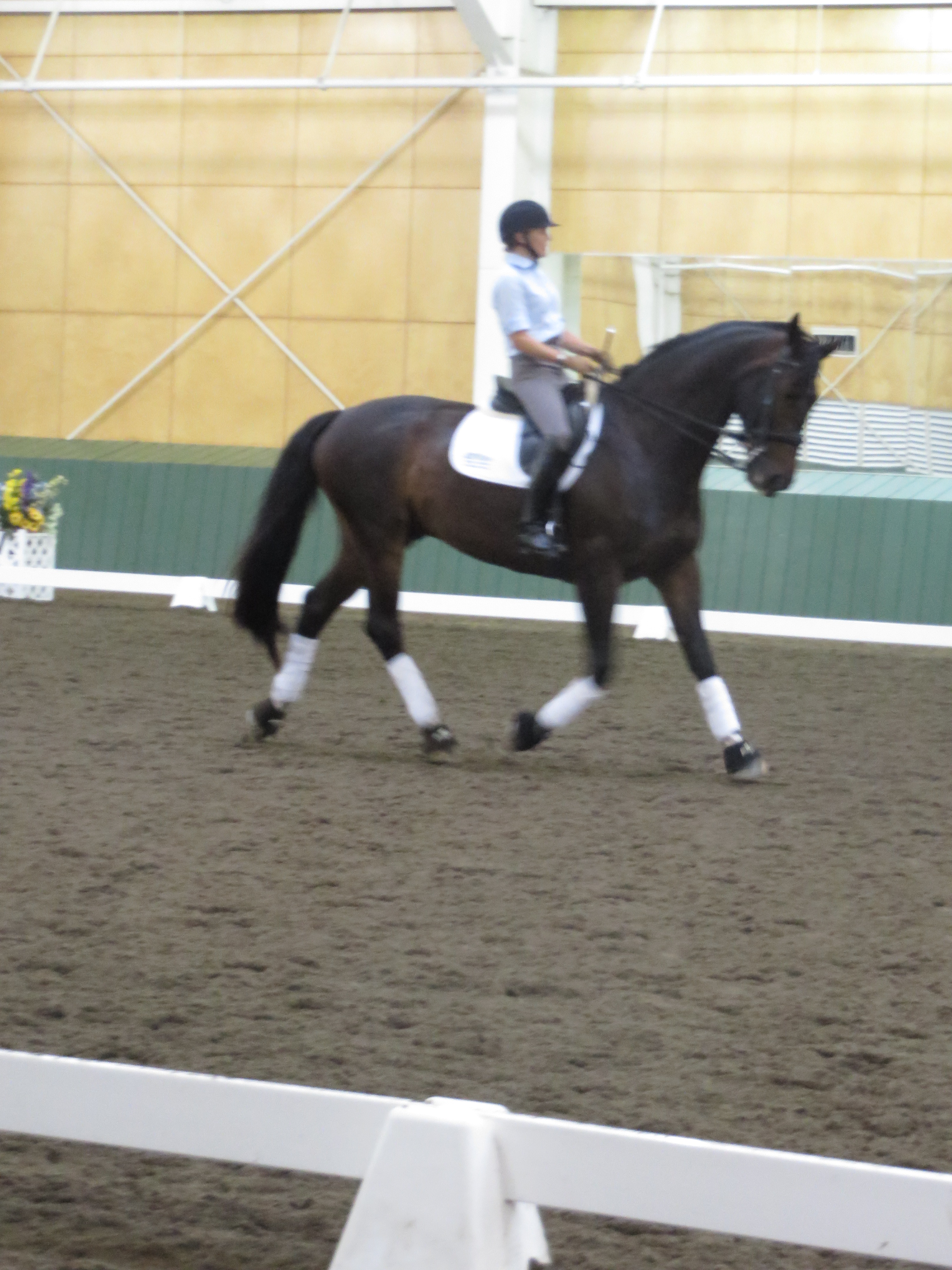
The concept of “interpretation” as it relates to freestyles is that the choreography expresses the phrasing and dynamics (loudness vs softness) of the music. When the rider is able to coordinate transitions and movements with these musical elements, the performance becomes more like a dance performance, as the movements “go” with the music.
In the early stages of learning to design and ride freestyles, it can be an additional challenge to consider interpretation in the performance. However, working towards improvement in this area is a sure way to improve the overall artistic score, and it is a “must have” when riders enter the upper levels.
Judges are trained to reward riders who are able to coordinate the following moments specifically with their music:
- Initial halt/salute
- First change of phrase
- Trot lengthening/mediums/extensions (depending on level)
- Canter lengthening/mediums/extensions (depending on level)
- Gait transitions
- Final halt/salute
Part of scoring well in the area of interpretation (which is worth a coefficient of 3 at the national levels) comes from having chosen appropriate music which suggests the horse’s gaits. When the music plays, the beat should suggest the energy of a walk, trot or canter. The next step is learning to ride with those beats. During the practical portion of the clinic, when Gallo and Yukins worked directly with horses and riders, a common theme was how strongly the tempo of the music playing would influence the rider. Riders can unwittingly speed up or slow down their horse’s tempo to match the music.

Know Your Rules—the official and the unwritten
It is easy to review the rules and general guidelines for the musical freestyle available through the USEF or USDF website. Failure to adhere to the rules when planning the freestyle at the outset can create more work or lower scores in the long run. Here is a short list of official rules that competitors should be mindful of:
- The minimum and maximum time allowed (FEI: 4:30 minimum, 5:00 Maximum (except for Grand Prix and para); USDF: no minimum but 5:00 maximum)
- The halt/salute can be performed anywhere on center line, but must be done facing judge at “C”
- It is required that the rider demonstrates straight strides into and out of the pirouettes
- Movements that are at or below the level are allowed
- Movements “above the level” are forbidden
In addition to the stated rules above, there are some “unwritten rules” which will help to improve the quality of the freestyle.
- Extended trot must be performed on a straight line. It will be considered a medium trot if performed on a curve or circle. Medium trot may be performed on a straight or curved line.
- Transitions do not have to be at letters (best if they are with musical phrases)
- Lateral movements must cover twelve meters minimum (but eighteen meters is better)
- Show a minimum of twenty continuous meters of walk
- Avoid “embellished” entrances
- Don’t include long lines of trot or canter with no purpose
- Asymmetry is acceptable
Final Thoughts
Musical freestyles are amongst the most popular rides at a show, and inspire riders and non-riders alike. They provide the ideal means to highlight the artistry that goes into the performance and execution of dressage. But like any artistic endeavor, having a strong understanding of the technical aspects of the craft will enhance the quality of the final product, and can result in a freestyle that appears harmonious and effortless.






 The Academic Equestrian