
A few months back, I was reading some older issues of Practical Horseman, and I pulled an article titled “Learning from Olympic Pressure”, by Melissa Roddy Wright, from its May 2012 issue. The article was about a talented and ambitious young professional, Clark Montgomery, who had seen himself short listed but ultimately unsuccessful in making the team for the 2008 Beijing Games. At the time of this article, he was working towards the goal of being selected for the 2012 London team. If you follow eventing, you will know that he wasn’t—he made the short list again—but just a few weeks ago was named to the squad for Rio on his longtime partner, Loughan Glen.
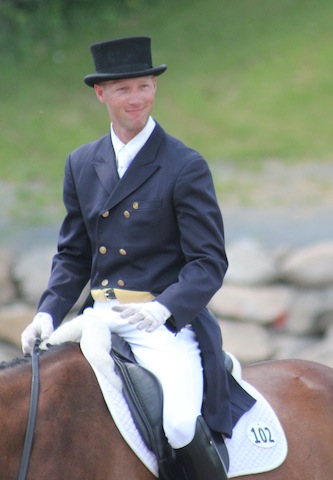
I have read many “spotlight” articles on riders from different disciplines, and I almost never find the stories so captivating that I save the article for future review. But this one about Montgomery was different, and when I saw that he was chosen for the 2016 Rio team, it seemed a fitting opportunity to tell you why I found his story compelling.
Montgomery was just 26 when he was on the short list for Beijing; he had enjoyed a great deal of success early in his career, including completing Rolex. His top horse at the time, Up Spirit, was green at the upper levels but had been consistent enough to place well at certain key events. According to the article, Montgomery recognized that his horse was greener than others, and he “pushed through the summer to make Up Spirit faster across country.” (All of the quotes included herein come from the article.)
“Instead, their Olympic bid ended with a cross-country runout at the Barbury Castle International Horse Trials CIC*** in England, a mandatory early summer outing for the American short listed riders. The following spring, Up Spirit’s season and potentially his upper level career ended with a fall at The Fork Horse Trials CIC*** in North Carolina.”

While all riders and trainers make mistakes, not all learn from them. It seems like for Montgomery, missing out on the team and then experiencing a fall which resulted in a serious injury to his mount caused him to reassess his entire training philosophy.
“I tried to make [Up Spirit] gain more experience and get better than he was over the summer. It fried his brain, and he lost his trust in me. Up until then, I’d never really lied to him about a distance or pushed him for a quicker pace than he was comfortable with. But I decided he needed to get faster cross country; I started putting my leg on him, and he started putting on the brakes.”—Clark Montgomery
We all encounter resistance in our mounts occasionally, and one of the hardest parts of training is knowing when to push more, when to back off, and when to stay the course. When you add into the mix a goal—and most equestrians I know are goal oriented people—or a deadline, you have a recipe for pushing too hard, too fast or too much. If you are lucky, your horse forgives you for your momentary loss of sensitivity or intuition, but more often we end up creating a really engrained training problem. And worse, we diminish the relationship which we have with our horse.
With Up Spirit injured and a few other setbacks at home, Montgomery says “Suddenly I had a lot of time to sit around and think how I got to that point. I decided pushing a horse for competition isn’t worth it….Before, I think what I loved was competing, but now, I love the horses more. It’s a beautiful thing to have a relationship with a horse, so they can go cross country with a bond and with trust. That’s how I’ve approached riding from late 2009 forward.”
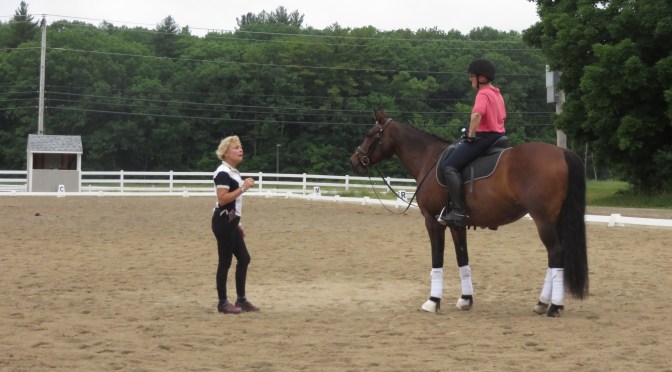
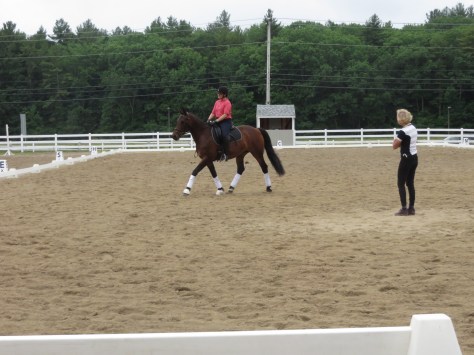
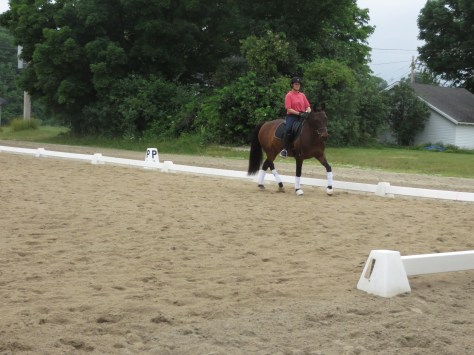
I personally am nowhere near as driven or competition oriented as those riders with international ambitions. But if I am honest I have still struggled with this balance with my own horses. Anna will hopefully make her Second Level debut next week; her medium gaits lack uphill balance and need better engagement, her connection is not steady enough, especially in the canter, and she could be more supple. We have been consistently in the 60’s at First Level for two years, though, and I just feel like it is time for us to move on and to push to demonstrate the requirements of the next level. The perfectionist part of me wants to wait until all the details are in place. The practical part of me says that you have to get your feet wet sometime, and in dressage, usually the worst that happens is you get a low score.
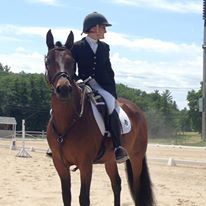
Ultimately, I decided to go for it—because I think that for Anna, increasing the challenge improves her focus and her willingness to try. In preparing her for harder work, it is necessary to really wake her up a bit, but she is never resentful or shows any signs of stress or being overpressured. We are still working to figure out exactly what routine works best to initiate her forward thinkingness, and it is clear that some of the approaches which work well with other horses don’t work with her. She has challenged us to be more creative and me to be better about how I use my aids and where I sit.
“The most important thing you can do as a rider is try to understand your horse both physically and mentally, and base your training on that horse’s natural abilities…Treating each horse as an individual also means understanding that you may need to experiment with several different paths to the same training goal.”—Clark Montgomery
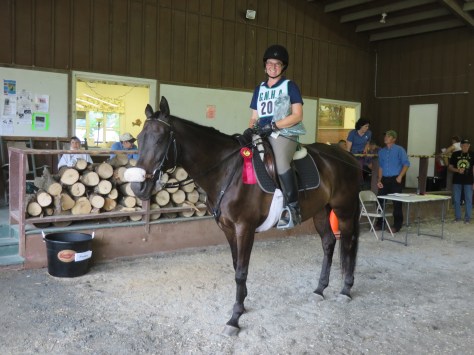
With Lee, I am still aiming for the long term/big goal of completing the three day 100 mile ride at GMHA in early September. We didn’t have the early spring prep that I had hoped for, with a stone bruise, a cancelled ride, and a longer than expected period of adjustment to the arrivals of new equine residents to our farm this spring. I had to regroup and reassess, and while I am still hoping to try for the 100, I am fully prepared to stand down and refocus if she requires it. We are entered in the two day fifty in Vermont in early August, which will be our final competitive ride before the 100. Again, it has been and will continue to be critical to watch her behavior and demeanor to see if she is responding well to the increased demands in fitness. Montgomery says, “In day to day life, that means watching each horse carefully for the signals they send, both under saddle and in the barn.” A true horseman knows their mounts inside and out.
“You do have to put enough pressure on horses when you are moving them forward to make them better, but not too much that you lose the trust…You have to have goals, yes, and put pressure on horses to get better, but you can only go so far with that. The horse has to enjoy being worked, enjoy being pushed. If it isn’t, then you have to back off. That may mean not going to the Olympics this summer, but at least I’ll still have a horse in the fall.” – Clark Montgomery
So while I am not on the hunt for an Olympic berth, it was really inspiring to read how such a talented and seemingly reflective professional at that level was able to learn from his mistakes in a way which allowed him to find a better path. I guess it doesn’t matter whether your goals are international or local in nature, all horsemen have an obligation to do their best by their horses. Treat your horse as an individual. Have goals but be ready to revise them. Try to really listen to what your horses are saying. They are only horses, after all. Our ambitions are not theirs. But their willingness to cooperate with us to reach our goals is a pretty amazing and special gift, if you really think about it.
Literally while I was writing this blog, I received an update on Facebook about the current standings at Great Meadow International CIC0***. Read here to learn more.




 The Academic Equestrian