So I may have missed #GivingTuesday with this blog, but in the spirit of the season I wanted to take a few minutes to reflect on some of the amazing non-profits which I have had the opportunity to be involved with this past year. Any or all of them would be worthy recipients of a seasonal donation, should you be so inclined. Alternatively, choose a group that YOU believe in and support, close to your own home. Donations don’t have to be monetary (though I am sure that is always appreciated)…donations of goods and services often also fill a need. And so many non-profits rely upon the dedication and commitment of good volunteers. Really, there is just no excuse to not get behind a cause that is important to you!
Earlier this year, I wrote a piece for UnTacked magazine about Detroit Horse Power, a 501(c)3 nonprofit founded by David Silver. DHP’s mission seeks to use horses to provide opportunities for Detroit’s underserved youth, and in the long term, to establish an equestrian center within city limits which will provide the residents with a center for community events and equestrian services. The story of the path which led David to the creation of DHP was really inspirational to me; I have so much admiration for people who identify a problem, see a solution, and then actively set themselves on the path to put the plan into action, despite some seemingly insurmountable hurdles. You can read more about Detroit Horse Power here or visit their website at www.detroithorsepower.org.
Detroit Horse Power Summer Camp participants from a 2015 session; founder David Silver is in the red polo on the right.
The United States Pony Club is still a group near and dear to my heart. USPC states as its mission that it “develops character, leadership, confidence and a sense of community in youth through a program that teaches the care of horses and ponies, riding and mounted sports.” USPC is represented by its graduates in many walks of life, from the upper levels of equestrian sport, to related fields such as veterinary medicine, to leadership roles in various equestrian organizations. Perhaps as significantly, USPC graduates cite their experience as Pony Clubbers as being influential in contributing to their success in other, non-equestrian, ventures. Visit www.ponyclub.org to learn more.
The Equine Land Conservation Resource(www.elcr.org) is one of the most organized and effective advocacy groups supporting the cause of equestrian land preservation. Since 2007, the organization has assisted in protecting more than 200,000 acres of land and more than 1,200 miles of trails. They maintain an online resource library, with free information on topics such as conservation tools for horse lands, best management practices, and more. The ELCR keeps tabs on local threats to equestrian access across the country, and helps to provide solid facts and figures to present to key stakeholders. Through their partnership with My Horse University, the ELCR provides free webinars on topics such as manure management, developing a private trail system, and more. As a community, we MUST be attentive to the long term management of public and private lands which allow equestrian use. We can all list places where we used to ride; once equestrians have lost access, it almost never returns.
Just recently, I had the chance to write a Charity Spotlight on the Standardbred Retirement Foundation for an upcoming issue of UnTacked. This group was founded in 1989 by two women closely affiliated with the Standardbred racing industry, and since its inception they have helped to place over one hundred horses per year. As with many racehorses, some animals are left with injuries and other limitations which make them unsuitable as riding horses; the SRF will retain ownership of these animals and provides them with care for the rest of their lives. The organization remains involved with all of the horses which it places, requiring twice yearly follow ups on the animal’s health and well-being, signed by the owner’s veterinarian. In addition to saving literally thousands of horses in its twenty six year existence, the SRF has assisted with programs for at-risk youth, exposing them to the sweet, gentle personalities of the Standardbred horse. Executive director Judith Bokman commented in her interview with me that their limiting factor, always, is funding. With more funding, they could take in more horses and expand their youth programming. To learn more, visit www.adoptahorse.org.
Standardbreds are uniquely identified via their freeze brand, seen here. Their gentle personality and willing nature make them wonderful riding and companion horses.
Finally, an introduction to All Better Pets, a Manchester, NH, based nonprofit with the mission of providing care to abandoned and homeless pets. This organization is affiliated with the Center for Advanced Veterinary Care, a small animal emergency and referral hospital. Many of the animals which come to the clinic are in need of medical attention for treatable conditions; without intervention, however, euthanasia would be the only option. Since 2010, the organization has helped over 200 animals get well and find new homes, and has provided assistance to hundreds of others through affiliations with other groups. I am a little partial to All Better Pets because my cat, Nieva (nee Willow) is an alum. She is pretty much perfect. Visit www.allbetterpets.org to learn more.
Nieva
These are just five worthy organizations for your consideration this holiday season. Please comment with information about YOUR non-profit organization of choice. Even small donations add up, and in this season of giving please do not forget to consider the importance of supporting the efforts of these grassroots groups.
Lessons Learned from the 80th Anniversary GMHA 100 Mile Ride
***Warning…this is a long post…but the 100 mile is a long ride…so I guess it all evens out!***
On September 2-4, 2016, Lee and I tackled the grueling GMHA three day 100 mile competitive trail ride (CTR) for the second year in a row. We came to the ride this year a bit more seasoned but also perhaps a bit more battered; last year, nerves were due to worry about the unknown, while this year, they were the result of knowing exactly what was to come. After finishing the ride as a complete and total rookie in 2015, I knew that both my horse and I had what it would take to do it again in terms of grit and stamina. But at seventeen years old and on her third career, Lee carries a lot of miles (literally and figuratively) on her frame, and I think the theme for our distance season this year was learning to ride the fine line between fitness and soundness.
The GMHA Distance Days weekend, now in its third year, has become a true festival of distance riding. Trail riders of many persuasions (short, middle or long distance, competitive and non) come together and enjoy the always breathtaking scenery of central Vermont in the late summer, along with the joy that comes with friendships based on shared passion. The South Woodstock area has been described so thoroughly and poetically by others that I won’t even try to match their words; suffice it to say that for me, visiting there has yet to lose its appeal.
Lee and her stall display at Distance Days 2016
Initially, doing the 100 mile ride again with Lee was not my intention. I was (and am) so proud of her for finishing the ride in 2015, especially wearing a saddle that I later realized totally and completely did not fit her now uber fit frame (more on the quest for the perfect distance saddle in a later blog). Last year, she suffered from welts and heat bumps, both under the saddle panels and in the girth area. I was determined to try to avoid such issues this season, even if that meant staying at shorter distances.
GMHA is known today for being an organization that supports multiple disciplines at its facility, but what many people may not know is that it was originally founded to promote trail riding in the state of Vermont. For its first ten years, members of the fledgling organization worked to create a network of bridle trails which spanned the state to all of its borders. In 1936, GMHA hosted its first long distance ride of 80 miles, to “stimulate greater interest in the breeding and use of good horses, possessed of stamina and hardiness, and qualified to make good mounts for trail use.” This ride grew to cover 100 miles, and for eighty years it has run continuously (save for 2011, when Hurricane Irene came through). This ride has a rich, historical legacy unmatched by any other ride of its kind in the country. Chelle Grald, trails coordinator at GMHA and the 2016 ride manager, calls it the “granddaddy of them all.” What serious distance rider within striking distance WOULDN’T want to be a part of the 80th anniversary ride?
Besides, if you entered, you got a commemorative belt buckle. I mean, you could buy the buckle on its own, but what was the fun in that?
The Commemorative Belt Buckle, supported by Lee’s Perkion Award for best scoring Thoroughbred.
This past year has been one of (mostly good) transition, and neither Lee nor I are at the same place we were a year ago, in all ways you could define it. While still on her recovery days from the 100 mile ride last year, I moved Lee to our new home at Cold Moon Farm. She spent the next nine months as its sole equine resident; we did some extensive exploration of the local trail network during the late fall, and then she enjoyed two months of total rest during the depths of winter. It was the most time off she has had since we met when she was six years old. During this break, I began researching distance saddles, and with the help of Nancy Okun at the Owl and the Rose Distance Tack, located a lightly used Lovatt and Ricketts Solstice, along with a new Skito pad. This lightweight saddle fit Lee’s topline much better than the old all purpose I had been riding in, and the Skito pad allowed her to have extra cushion.
I was pretty excited to get started with the distance season this spring, and I entered the Leveritt 25 mile CTR in April. Lee hadn’t seen another horse since September, and I wasn’t sure what her reaction was going to be. I was also worried that Lee wouldn’t be quite fit enough at that stage of the year to handle 25 miles, and I kept telling my friends that I wished it were only a 15 mile ride. As it turned out, I got my wish. The hold was about 15 miles in, and I had to pull there because Lee was a little bit off on her right front. She was sound once we got home, and some mild sensitivity to hoof testers at her next shoeing indicated that she had likely just hit a stone or something similar.
At Leveritt, I rode with my friend Robin on her lovely Morgan, Flower; we had made up two thirds of the now mildly well known “Team PB & J” on the 100 mile in 2015. Robin was super excited about working towards the 100 mile ride again, and I will admit that some of her enthusiasm began to rub off on me. At the same time, having to pull at the Leveritt ride put a little sliver of worry into my mind; namely, was Lee sound enough to keep working towards the maximum level that the sport of CTR offers?
Flower, Quinn and Lee resting up for the start of the ride.
In 2015, I relied on some of the CTR’s themselves to incorporate additional distance and duration into Lee’s conditioning plan. I looked at the Leveritt ride as a fifteen mile conditioning distance; the miles might not “count” in terms of her lifetime total, but they did “count” in terms of increasing her overall fitness. I fleshed out a schedule of gradual loading and increasing distance that would include several spring rides, a break in mid summer, and then a ramp up to the 100.
But then I had a rider qualify for the IHSA National Championships, an outstanding honor, and travelling to Lexington, KY for the competition meant missing the next planned CTR. Then, the ride I had planned to enter at the end of May was cancelled. I even tried to get to a hunter pace with a friend, thinking that would give us at least thirteen miles of new trail; it was rained out. And suddenly I was scheduled to be back up at GMHA for what should have been a back to back 50 mile in June, having not completed ANY of the step up prep rides that I had anticipated.
Concerned now that she wouldn’t have the necessary fitness, I opted to do just one day of the June GMHA distance weekend, the 25 mile CTR. I still felt woefully unprepared and worried relentlessly about both her fitness and her soundness, despite positive feedback from my farrier and two vets. We reset her shoes and added a new, more cushioning style of packing under her pads. Reunited with Team Peanut Butter and Jelly for the first time since September, Lee really did do great. She felt strong and sound and came through the weekend with flying colors, scoring the best mark she would get all season.
Team Peanut Butter and Jelly after finishing the June 25 mile CTR at GMHA.
After the ride in June, I felt more positive about our prospects for the 100. The judges had had utterly no concerns about Lee’s soundness or her back at the June ride, and she felt strong and forward. Thus encouraged, I decided to aim for the GMHA two day 50 mile CTR in early August; based on how that went, I would make my final decision on the 100.
During the gap between the June ride and the August 50 mile CTR, I had no plans to compete Lee, only condition. I made one trip up to Tamarack Hill Farm in Strafford, VT, to ride with my mentor, Denny Emerson; ironically, during the summer of the worst drought in years, the day we planned to meet saw pouring rain. We made it around anyway, dodging rain drops. At home, I continued to balance long, slow distance rides mostly at the walk with sets in the arena to maintain her cardiovascular fitness.
About three weeks before the August ride, I decided to try a new girth with Lee. It had been recommended by my saddle fitter, and the extremely contoured shape was one favored by riders whose horses have sensitive elbows or who are prone to girth galls. I had been using the girth on Anna with great success for months, and tried it on Lee for an easy one hour walk.
I was horrified at the end of the ride to find that the girth had caused the worst chafing that I have ever seen on Lee. Both armpits were rubbed raw, and the left side in particular was swollen and tender. I couldn’t believe it; there had been no indication that the girth was pinching or loose. Regardless, the damage was done, and I saw both our short and long term goals for the season sliding away.
The raw rub on Lee’s left armpit area. It is crazy that this came from just one ride, at the walk.
I reached out to my distance friends and learned about an old timey product called Bickmore Gall Salve. You can pick it up at some of the chain feed stores or in my case, the local one. I religiously treated the rubs up to four times per day for the three weeks up until the fifty, and I was really impressed by how quickly the product got them to dry and heal. Even though the label claims you can “work the horse”, I didn’t think that putting a girth on was the best plan. So for three weeks, Lee longed. I worked her up to fifty minutes, moving the longe circle all over our arena and changing directions every five minutes. The longeing didn’t increase her fitness, but it kept her legged up and allowed me to watch her move. And that was how I decided that she seemed—ever so slightly— funny on the left front when she warmed up. It always went away after a few laps at the trot. But I was sure there was something there.
This stuff was a game changer. Just don’t read the ingredient list too closely….
Between the girth rubs and the “slightly funny left front”, I was feeling like maybe it just wasn’t in the cards for us to contest the fifty mile ride this year. Then, the day before we were scheduled to leave, my truck began making a funny whining noise. I tried to convince myself that I was being paranoid, but the noise just seemed too odd to ignore, and a quick trip to the mechanic revealed that the power steering pump was caput. Now I really began to wonder if this was a sign.
Yet I am stubborn.
I have one friend with a truck that I feel comfortable asking for a loan; one phone call later and we had wheels. So thanks to the generosity of a good friend, we headed up to GMHA, with me feeling a little bit fatalistic about things. “Whatever will be, will be,” I told myself.
I longed Lee lightly when we arrived at GMHA to loosen up, and I wasn’t sure how she would look on the uneven footing of the pavilion where we were to vet in. However, we were accepted at the initial presentation, and I decided to start to ride and see how she felt. When I got on board Lee the next morning, it was the first time that I had sat on her in nearly three weeks. I kept a close eye on the girth area and carefully sponged it at most opportunities. There was a nearly record entry for the weekend, and it was clear that excitement about Distance Days was building. For many entries, the two day 50 was the last big test before beginning the final weeks of prep for the 100 mile ride.
Overall, I thought Lee handled the ride well. I was certainly in a hyper-critical state, and analyzed every step she took. On day two, I felt that she wasn’t her best, and I seriously considered pulling up, but the more she moved the better she felt. While we made it through the ride and received our completion, I knew that she wasn’t yet ready for the 100 mile ride. Something was bothering her and I needed to resolve that.
I scheduled a visit with Dr. Monika Calitri of Seacoast Equine to check over Lee. She felt that her back had become super tight (a lifelong problem for her) and saw mild positivity to hock flexions. We opted to inject her hocks, and I contacted my saddle fitter for an adjustment on the Solstice and Skito pad prior to Distance Days. Overall, Dr. Calitri thought that Lee looked sound and fit, and remarked that the tightness in her topline was the most significant finding in her inspection.
My entry for the 100 mile sat on my kitchen table, with both the 100 and 60 mile options highlighted. After Dr. Calitri’s visit, I circled the 100 mile distance, wrote the check and threw it in the mail just a day or so before closing. I figured I could always drop back to the 60 mile ride, even right up until the last minute, but since the 100 is what we had been aiming for, we might as well give it a go.
The Heart of the Thoroughbred
The 80th Anniversary 100 mile ride was scheduled to cover the traditional white (40 mile), red (35 mile) and blue (25 mile) routes. While the white and blue routes would mirror closely the trails we had covered the previous year, the red route would be a totally new one for me; it took us across the Ottauquechee River, through the Marsh Billings-Rockefeller National Park, along the banks of the beautiful Pogue, and across the Taftsville Covered Bridge.
On trail, day two. Photo courtesy of Sue Achenbach.
Day one, at forty miles, is quite a day. Horses must traverse the rocky terrain of Reading, notorious for its difficulty in allowing riders to make time. Lee felt great, totally 100%, but at the half way hold (25+ miles in), the vet judge commented that he thought there was a slight head bob at times, not significant enough to spin her, but enough to quell any feelings I had of security in Lee’s soundness. At the end of day safety check, the judging team worried that Lee’s back was too sensitive, contributing to her occasional uneven step. I was required to present again in the AM before starting on day two.
I worked with Lee in the afternoon of day one, hand walking, massaging and stretching. By morning, her topline sensitivity was much reduced and we were cleared to start day two.
In celebration of the ride’s 80th anniversary, dozens of past riders were in attendance for special events at the Woodstock Inn Country Club, the Landowner’s BBQ and the Longtimer’s Brunch Reunion. Unbeknownst to me, Lee’s breeder (and only other owner), Suzie Wong, was in attendance, along with her sister Sarah and their mother. Suzie joked that for years, her family had tried to breed a distance horse, but they always turned out to be better hunters, jumpers and eventers. In Lee, they had tried to breed a high quality hunter….and ended up with their distance horse! Suzie hadn’t seen Lee in years, and their family and friends quickly became our cheerleaders, appearing at most of the major viewing areas and both holds at days two and three.
Lee’s breeder, Suzy Wong, rode in the distance rides at GMHA in the past. Lee shows her usual enthusiasm for posing for photos after finishing on day three.
On the red day, I was pretty excited to tackle some amazing and new to me trail. The much discussed crossing of the Ottauquechee River was pretty easy, given the drought. The route through the Marsh Billings Rockefeller National Park was well groomed and fun to canter along, and the steam from early morning still rose off the Pogue as we rode past. I found it hard to completely enjoy the scenery, though, as I began to worry more and more about my horse. She felt powerful, forward and willing…but not the same between right and left. Not lame, just….different. Once the seed has been planted in your head that your horse is moving ‘funny’, it can be hard to remain confident that your horse is truly ok.
Once we exited the park, we had to tackle several miles of hard top road. First, there were cows to spook at near the park headquarters. Then, there were bikers, joggers, pedestrians, and cars galore. I was left thinking that despite the historical tradition of using this route, perhaps its time had passed, due to the hazards of the modern era. Riders are left with no option but to trot along the hard top while being fairly regaled with hazards from all directions. We had to push forward into the hold, where Suzy and her friends waited for us.
Suzy inspects as we prepare to head out from the hold on day two. Photo courtesy of Sue Achenbach.
The hold on red day was stressful. Lee pulsed right down, but the vet judge was not happy with how she was moving in the jog. Again, not lame, but not completely even. They asked me how she felt, and I replied that she felt strong and I was being hyper aware of any sign of lameness. They had me jog back and forth two or three times, before suggesting that I pull her saddle and jog again. When I did so, they were much more satisfied, and told me that they suspected that it was her back which was bothering her again. They cleared me to continue and I promised to closely monitor her progress.
Presenting to vet judge Dr. Nick Kohut, President of ECTRA, at the hold on day two. Photo courtesy of Sue Achenbach.
It was just about one mile after the hold that our trio crossed the historic Taftsville Covered Bridge. The original was swept away during the aftermath of Hurricane Irene, but the new one was built to be a close replica. A “fun fact” that I learned about covered bridges is that they were originally built so as to look like a barn, horses being more willing enter a barn than to cross a scary open bridge over rapidly moving water. I am not sure how thrilled Lee would have been to make a solo crossing, but with her friends Quinn and Flower around her, she was a willing follower. In some of the photos of us, the past meets present, as a car is sitting at the mouth of the bridge waiting to cross after us.
After finishing the thirty five mile long red trail, it came as little surprise to me that the judges yet again held Lee. By now, we were all paying close attention to her back sensitivity. One of the good things about CTR is that the judges and the riders work together as a team to monitor the horses’ condition. While we all would like to finish our rides, none of us wishes to do so at the expense of our horse’s well-being. Even though Lee felt mostly ok under saddle, it was clear that she was starting to push through some discomfort. After seventy five miles, even the most fit of animals is likely to be feeling some effects of the experience; the question becomes whether they are crossing over the line and their overall well-being is at risk.
I woke quite early on day three; the stars were still out in full force as I dressed in my trailer and made my way to the barns. While Lee ate her morning grain, I gently, and then more firmly, massaged the muscles over her back and encouraged her to stretch. I then took her for a nearly forty five minute walk. At that time of the day, the air is clear and the sky brilliant. Once your eyes adjust, it is amazing how much you can still see; at the same time, your sense of hearing heightens. The faintest whisper of dawn was just visible in the sky as it came close to time to present to the judges. I did several in hand transitions, and when I could barely stop Lee I knew that she was ready.
Once again, Lee trotted off brilliantly for the judges under the lights of the pavilion. It seemed clear that whatever was bothering her that weekend wasn’t a true lameness, but instead something which improved significantly with an overnight’s rest. We were cleared to continue.
“The look of eagles”. I took this while out on one of our post ride “walk abouts” during the 100 mile ride this year.
Day three, the blue trail, is a twenty five mile route, and I was reminded again of just how much shorter that feels after tackling forty and thirty five mile distances on the preceding days. Despite this, twenty five miles is still plenty of trail, and anything can happen. As we rode into the final half way hold of the weekend, our “trail boss”, Quinn, lost a shoe. While the farrier and his rider, Kat, worked to address that situation, I prepared to present to the judges. I proactively pulled Lee’s saddle and jogged her in hand without it, and much to my surprise, they were happy and let us go without a second look. At the end of our twenty minute window, Flower and Robin and Lee and I were forced to leave Quinn and Kat behind, as the shoe was still being replaced.
Neither Flower nor Lee is a huge fan of being the leader, and after nearly ninety miles, no one’s sense of humor is at its best. Without Quinn, we struggled to gain momentum. But then the most amazing thing happened. It was as though Lee switched her gears, dug in, and then she suddenly powered forward and LED, for several miles, without me bidding her to. It was as though she said, “I’ve got this, and we are going to get it done”.
It was without a doubt the “heart of a Thoroughbred” in action.
Lee coming out of the hold on day three, 90 miles into the ride. This is, hands down, THE BEST photo I have ever seen of her. Ever. It says it all. Photo courtesy of John Miller at Spectrum Photography.
We eventually caught up to a few other riders, and our mares were willing to fall into step with them as the miles continued to tick down. Much to our surprise, Quinn and Kat were able to catch up to us just a few miles from the GMHA grounds, and it was again with a feeling of extreme pride that we returned to the announcement of our names as we entered the White Ring as a team of three.
We had done it. Again.
Lee lost a number of points from her score for the sensitivity in her topline at the final presentation, as well as a few points for “lameness consistent under some conditions”, but she had earned a second completion in as many 100 mile rides. Thirty horses had started, and just over half completed. Of those to finish, Lee was the second oldest.
The entry list for each year’s 100 mile ride stays up for one full season. This is the 100 mile entry for 2016.
As we stood at the awards ceremony, surrounded by horses and humans who I have come to admire and respect, I knew that my horse had earned her place among those in the ring. She was awarded the Perkion Award for the second year in a row, given to the best scoring Thoroughbred or Thoroughbred type, and she was also awarded the Spinner Award for the best non-registered trail horse. We finished sixth in the middleweight division, the only group of riders which saw all entrants complete the ride.
Lee at the awards ceremony. She looks pretty good for a horse that just went 100 miles, I think!
Far from being defeated, Lee remained alert and engaged after the ride. Overall, she weathered the experience well. But I knew that my horse had had to dig in to get the job done, and that she had finished the ride largely due to her Thoroughbred heart. What an amazing experience to know what it is like for your horse to bring you home on their own drive and grit.
Lee is now officially retired from the 100 mile distance. It wouldn’t be fair to ask this of her again. I still plan to compete her in distance rides, so long as she tells me that is okay, but we will stick to the “shorter” mileages. As Denny said of her in 2014, “that is one tough horse”.
During the Rio Olympics, my Facebook feed was utterly blowing up with comments regarding Dutch dressage rider Adelinde Cornelissen, and her choice to retire mid-test on her veteran partner, Parzival. Just a day or so earlier, Parzival had been found with a fever and swollen jaw, determined to be the result of a bite from some foreign bug. Under the supervision of FEI veterinarians, the horse was treated with fluids; as the swelling and fever reduced, Parzival was given clearance to compete. However, Cornelissen felt that her horse did not feel right and that it was inappropriate to continue to push him to complete the demanding Grand Prix test.
Initially, Cornelissen was lauded as a hero for putting the needs of her horse ahead of medal aspirations. But quickly the backlash began. Accusations of horse abuse were rampant. Implications that the true cause of the swelling was a hairline fracture of the jaw as the result of Cornelissen’s training methods became a common chant.
Cornelissen and Parzival have been staples on the Dutch international team for years. They were the alternates for the 2008 Beijing Olympics, and at the 2012 London Games her team earned the bronze and Cornelissen, the individual silver. They have had numerous other successes in the international ring, but also some lows. The most notable of these occurred at the 2010 World Equestrian Games, when the pair was eliminated due to blood in the mouth, allegedly the result of the horse biting his tongue. The 2016 Rio Games were almost certainly intended to be the 19 year old horse’s final competition.
Parzival was disqualified from the 2010 World Equestrian Games after blood appeared in his mouth.
I am not a huge follower of international equestrian sport, but I watch and see enough that I usually know the key players and the major events. Since the days of the great rivalry between Van Grunsven and Werth, the Dutch riders have frequently been criticized for the use of rollkur in their training system. Of course, the Dutch say that the method they use is different than rollkur—I think they call it “low, deep and round”—and for people who live in that world, the similarities and differences between the two techniques could be debated for hours. For the greater equestrian community, the 98% of us who do not exist in the world of elite dressage performance, the line between the two methods is very, very blurry. The FEI was finally forced to take a firm stance against the use of rollkur largely as the result of public pressure. Low, deep and round is still allowed, within certain parameters; this ruling still rankles some within the equestrian community.
From what I understand, Cornelissen has been frequently accused of using rollkur, and many negative statements have been made specifically in regards to her riding style and performances with Parzival. Given the quite passive and osmosis-like manner in which I absorb information about most of these elite riders, I do feel that it is significant that the impression I have always had of her is that she perhaps uses less than classical training methods. I have utterly no foundation on which to base the impression other than the trickle of comments which come through social media, bulletin boards and occasional articles. But yet, the impression is there.
Photos like this one, easy to find on the internet, do not do much to ease Cornelissen’s public image.
So when the whole situation in Rio started to unfold, I initially noted that this particular rider was making (negative) headlines again. But it wasn’t until nearly every other post on my Facebook timeline was deriding her that I began to look more closely at the details. And the more I learned, the more I scratched my head over the kinds of comments I was seeing—strong, vicious statements such as, “I hate her” and “She shouldn’t be called a hero. She has been abusing that horse for years.”
Wait a minute here. Regardless of anything you might have thought or do think about this rider….she felt as though the horse was not right. She stopped performing her test. It is almost a certainty that her decision to retire put the Netherlands out of medal contention as well. She chose to retire anyway—and I am sure the pressure to produce a winning test was extremely high, given that the Netherlands is a nation which actually enjoys and follows equestrian sports. In spite of all of this…she stopped. How could this one decision alone not be considered a heroic act?
The video of Cornelissen and Parzival’s test up until she withdrew seems to have vanished from the internet. It was out there for a bit, and I watched it with great interest, because apparently some of the Armchair Quarterbacks know far more about dressage than I do, and I wanted to see what they saw: “You can tell from the minute he entered the ring that he was lame.” (What? He looked sound to me.) “He is obviously unhappy. Look at how much foam is coming out of his mouth.” (Yes, he was a bit more foamy than average, but certainly I have seen other horses look similarly and no one is saying that those horse are unhappy; some foam is actually considered a good thing. The person commenting wouldn’t know the difference.) “He just looks miserable. I feel so bad for him.”
I must say, I wish that I could take a clinic or lesson with some of these Armchair Quarterbacks. Because I will freely admit that I just didn’t see all of these horrible things that everyone else did in the video I watched. The horse is in good weight, muscle and tone. He appears healthy and willing. He was not swishing his tail, pinning his ears, visibly sucking back or showing other signs of overt resistance. I understand that at some point in the video, Parzival does start to stick out his tongue—this is a classic symptom of a contact/connection issue, and it certainly can indicate an unhappy horse. However, I was unable to see that in the footage I watched. I have seen some photos of him from Rio with his tongue out; they were all taken after the horse had left the ring.
I saw a lovely horse performing the Grand Prix, whose rider sensed was not himself, and who was pulled up. We know he had had something wrong with his face before the competition– a fact that Cornelissen doesn’t deny and in fact shared freely with fans. There is a perfectly reasonable explanation why the horse was not at his best, especially in the connection. Let’s not forget, he was cleared to compete by some of the best vets in the world.
I must really not know much about horses or dressage. But these Armchair Quarterbacks really do seem to know EVERYTHING about the training, management and performance capability of this foreign based pair. I found the amount of energy spent condemning Cornelissen to be, frankly, disappointing. One woman actually is threatening to sue Cornelissen over her alleged abuse of Parzival. I wish I was making this up.
There is an article which I use in one of my classes called, “Can Horse Sports Face the Central Park Test?”. The article looks at common practices within several prominent equine disciplines through the frame of a comment from former US Equestrian Federation president and current US Eventing Team Coach, David O’Connor. “Could I go through the middle of Central Park with an NBC camera following me around as I get my horse ready to go into a competition?” O’Connor asks. “Will you show anybody anything you’re doing? If you can’t, there’s a problem.”
This article really resonated for me, because in my years in the industry I have certainly heard tales of “those things which happen behind the barn”. The stuff that no one talks about but people know about. It happens in all equine sports, at all levels. And it is not right, and just because it is the “norm” in a certain sphere doesn’t make these activities ok. This isn’t about saying one discipline is better than another. This is about good, basic, horsemanship.
Is it possible that Cornelissen has inappropriately used rollkur, or strong bits, or other less than ideal methods to achieve a training end with Parzival? Sure. I don’t know one way or the other, because I have never spent time watching her work, or touring her facility. But I do know that the horse at 19 was sound enough in brain and body to be chosen for the Dutch squad and then flown half way around the world to represent them. So I surmise that he must have a pretty good crew of people taking care of him to get to that point—Cornelissen included.
If you want to pick on Olympic riders, maybe we should condemn all of them, and our federations while we are at it, for choosing to bring their horses to compete at a Games in an area with an active glanders outbreak? Certainly exposing some of the best in the world to this nearly unheard of disease is worthy of outrage?
Years ago, as a working student for Lendon Gray, she would really get after me for using a “half way aid”. She argued that it was far kinder to a horse to make your point once—give them a clear aid with a particular expectation of a response—than it was to nag, and nag, and nag. This lesson has really stuck with me. The fact is that daily training can be cruel too—too tight nosebands, excessive or uneducated use of spurs, aggressive use of training aids like draw reins or bigger, harsher bits, heck, even ill fitting saddles, can all cause pain and frustration in our equine partners. And let’s be honest—a rider who chooses to show mid level dressage but can hardly sit the trot, someone who wants to jump but refuses to learn to see a distance, the pleasure rider who doesn’t bother to learn about basic conditioning…are these not their own forms of cruelty to our beloved horses?
The honest to gosh truth is that if you really feel fired up and want to make a TRUE and IMPACTFUL difference to the lives of animals…start with yourself. Educate yourself. Learn from the best that you can afford. Practice. Eat healthy. Stay fit. Reach out to your friends, your neighbors, your colleagues and your clients….help them to be the best that they can be too.
There are absolutely examples of truly heinous training methods which are employed by riders to extract a certain performance from their horse. But for the Armchair Quarterbacks to vilify someone the way they did Cornelissen, without first taking a good, hard look in the mirror, is to me as much of a crime.
I only can hope that this vocal contingent can take some of that energy and direct it closer to home—where it can make a real, meaningful difference.
I have been lucky enough to know Cindy Canace, a USDF Gold Medalist and USEF “S” dressage judge from New Jersey, for many years. However, this past week was my first opportunity to actually ride with Cindy in a clinic setting, and it was a great occasion to learn more about her training philosophies.
Cindy has made a career out of working with difficult, spoiled or otherwise challenging horses that others would not, and turning them into successful and happy performers. In order to do this, she has established a system which she adheres to in terms of use of the aids, rider position, and progressive exercises. By being clear and consistent, her horses respond with increased confidence to the rider’s aids.
Annapony and I had just ridden several tests in front of Cindy at the recent University of New Hampshire dressage show, so she had a current picture in her mind’s eye of where things were at with us in the competition arena. Cindy pointed out that a clinician’s main job is to provide a fresh set of eyes, and not to usurp the place of a regular instructor. Specifically for Anna, Cindy wanted to challenge the honesty of her connection to the bit and work to achieve increased throughness.
For a horse competing at First Level, Cindy says that she would rather see a more open position in the neck with good energy and balance than a horse which has been pulled into too tight or restricted of a shape in the neck. This is probably one of the reasons why Anna has scored well in front of Cindy, but as we are working towards moving to Second Level, it is necessary to achieve a greater degree of roundness and uphill balance. Anna would prefer to be too open in the throatlatch if left to her own choices; because the purpose of Second Level is partially to confirm that the horse is “reliably on the bit”, we will need to work to erase this.
Cindy had me move my hands closer together along Anna’s crest and ride with a much shorter rein than where I would tend to carry it. “Put the bit where you want your horse to go” was a message repeated many times during the session. She emphasized that the rider needs to keep her arms elastic, her shoulders down, her neck soft and her hands forward. Cindy wants the horse to truly be seeking contact with the bit; it is the horse’s job to reach towards the bit all the time, rather than the rider taking the bit back towards their own body.
One of my greatest challenges is that most of the time I ride on my own; when you do this for too long, it is easy to pick up little bad habits. One of my current ones is using too much inside rein, which blocks the inside hind and causes too much neck bend. To help “reprogram” my aids, Cindy had me ride a diamond shape. Imagine a square set within a circle, with points placed on the center line and equidistant from these points on the walls in between. To turn Anna at each corner of the diamond, it was important to keep the inside leg at the girth and to bring the outside leg slightly back, pushing her around primarily with the outside aids. I then used the inside leg to stop the turn and pushed Anna slightly out towards the outside aids again while aiming for the next point. We did this at the trot and the canter, decreasing the size of the circle as we became more proficient.
Can you tell how awkward I feel with my hands this forward?
For me, the hardest part was to keep my hands out and ahead of me (‘put the bit where you want your horse to go’), even when Anna became less round or didn’t turn as crisply as I wanted. The thing is, when your horse has gotten used to you supporting them in a particular way and you stop doing that, it takes them a few repetitions to sort things out for themselves.
Many horses have learned to balance on their inside reins; therefore, they can be taught to balance on the outside rein instead. However, the correction takes time and dedication on the part of the rider. “Keep your hands together and think forward,” said Cindy. “The horse must step up to this. Think of always pushing the reins out there.”
Cindy reminded me that whenever I am tempted to pull on the inside rein that I needed to engage my inside leg instead. At this, I had to chuckle—I must give this instruction myself many times per week, but it is good to know that even we instructors need reminders! Cindy also had me use a little sense of leg yield into the downward transitions to increase the connection to the outside rein, another technique which I like to use regularly. It is always good to know that your instincts are on the right track.
Cindy is wonderfully complimentary towards the rider’s horse; having ridden in many clinics, I think this is an important quality. Clinicians only get a snap shot of a horse and rider, and it is nice to hear what their immediate impressions are of the partnership. While I usually think of Anna as not being super forward thinking, Cindy commented that my pony has a good overstep in the walk and trot; the more elastic and forward thinking that I keep my arm, the better Anna reaches through her topline and into the bit and the better the overstep gets.
While discussing the importance of overstep (when the landing of the hind hoof reaches past the print of the front hoof on the same side), Cindy reminded auditors that there is a difference between fast and forward. She says that in her judging, she sees too many horses which are being ridden so energetically that they move with a fast, quick tempo, causing the quality of the horse’s balance to literally go downhill. While activity in the hind end is required to get true reach through the horse’s back, it cannot be accomplished at the cost of balance.
“We all like to micromanage,” said Cindy. “Remember to ride the horse with leg and seat to create the bending. Really use the outside rein to turn, even to the point of pushing the inside rein towards the horse’s ears.”
Cindy’s overall theme was one of consistency and clarity in terms of expectations for the horse and intended outcomes. When the horse is trying to sort out what it is that the rider wants, she emphasized that staying steady was of the highest priority. It is much less confusing for the horse than if the rider suddenly switches her aids before the horse has answered the original question. “Don’t change the rules of the game,” said Cindy. “Don’t trade one problem for another—keep your aids consistent until you get the correct answer.”
Many thanks to On the Bit Events and the University of New Hampshire Equine Program for co-hosting this clinic!
Most of us who are involved with horses and horse showing prefer to be seen as both good horsemen and good sports. If you stay in this game long enough, you will learn that when your success is predicated on the cooperation of a 1000+ pound flight or flight animal that also has a seeming proclivity for self-destruction, it is important to stay humble and not become too greedy.
With that being said, doing your homework, carefully prepping, setting goals and hopefully achieving them are all totally reasonable expectations. In fact, these qualities are probably ideal in terms of making any sort of progress at all. It is pretty easy to be a good sport when things are going your way, and you feel successful. But where you are really put to the test is when the deck is stacked against you or the outcome isn’t what you had hoped for. It seems that for some people, the ability to persevere and to continue to demonstrate the highest levels of sportsmanship and horsemanship comes naturally; nature vs. nurture, maybe. Others of us have to dig a little bit deeper and consciously choose to maintain our best selves in these difficult times.
I have been reading a stack of old Dressage Today magazines, and I came across an “On Deck” column in the November 2007 issue written by a young lady named Holly Bergay. At the time, Holly was just 15 years old. She wrote about her first experience competing as a junior at the NAJYRC. Now, I know what you might be thinking (because my brain would go there too)—to make an NAJYRC team, riders have to be talented and have access to both high quality horses and coaching. It is easy to assume that these riders enjoy a certain amount of support and privilege that others do not; that their path has been made easy for them. But when you start really talking to each individual rider, you will quickly learn that for most, there is a veritable army of people helping, contributing, supporting, fundraising, loaning horses, offering coaching, etc. Holly was one of these riders; based in Arizona at the time, the expense alone of shipping all the way to Virginia for the competition must have been daunting for her middle class family.
Holly Bergay (photo credit Phelps Photos)
And there is one other detail about Holly. She was born with no left arm below her elbow, making her “the first disabled rider to ever compete at NAJYRC against able-bodied riders” (her words).
Holly tells the story of her and her teammates’ experiences at the competition; she rode for Region 5, and all of her teammates came from the west coast (Colorado, Arizona and Utah). Though they were used to competing against one another, the riders didn’t really get to know each other until the trip east. You might think that the hard part was qualifying for the Championships and then making their long trek to Virginia. But the Region 5 team’s challenges were far from over.
One rider never even got to make the trip because her horse colicked before leaving home.
Another horse failed the initial jog (fortunately only due to an abscess, but still, what rotten timing).
Yet another rider arrived for day one of the mounted competition to find that her horse had ripped his eyelid open on a bridle hook, necessitating medical treatment which precluded him from competing.
I am sure that for these riders, who had invested so much of themselves in getting to this point, these events were terrible disappointments. Yet according to Holly, her teammates showed “phenomenal horsemanship” in dealing with these blows and “made us all truly appreciate the opportunity to show”. They learned to cheer for those who were still riding in the competition, even though with only two Young Riders left, the region’s team was ineligible for awards.
Holly talks about the tremendous pressure she felt competing as a junior; she wanted to do well for her team, for her trainer and for her horse. She had come in with the lowest qualifying score of the team and was afraid of having a bad show. But Holly had an additional weight to carry: “I felt that if I didn’t do well, I would be letting down not just myself but the entire disabled community.”
Can you imagine feeling that way, at just 15 years old?
Holly and Lilly at the NAJYRC (taken from her Facebook)
Holly’s story goes on to relate her own personal success on her mare, Lilly, and her team’s joy over their seventh placed finish. Her language frequently includes words like “accomplishment”, “opportunity”, “proud”, “excitement” and “privilege”. You would think that the team had all won gold, but in reality no one took home a medal. Holly ended up placing the highest of any rider from her region, making the top ten for the junior freestyle. But you have a sense that she was modest about the achievement, and took greater pride in the fact that she had set out to accomplish her main goal—showing that a disabled rider could hold their own at the NAJYRC. And in her own words, “I did not medal in the competition, but I took back things that were much more valuable than just a medal. I learned both horsemanship and sportsmanship. I met amazing people. I formed an even stronger bond with my horse and, most important, I proved that I am not limited by my disability.”
I found Holly’s voice refreshing and her attitude moving. Interested to know where Holly was now, I Googled her name (isn’t the internet wonderful)—and what came up showed me that the young girl of fifteen has matured into an inspirational young adult of twenty four. And in the years between her debut at the NAJYRC and now, she has faced her own share of highs and lows, success, challenges and disappointments.
Holly and Grand Ballerina (taken from her Facebook page).
After returning to compete in the NAYRC in 2008, Holly became internationally ranked in para-equestrian; in 2012, she was named to the World Equestrian Games team on the horse Grand Ballerina. The mare unfortunately went lame just prior to the competition and so she was unable to compete. After the financial investment incurred during the qualification process, followed by the disappointment of having to withdraw, Holly gave up riding altogether for a period of time.
But she returned to the sport and with the assistance of owner Violet Jen, Holly began to ride and compete the Hanoverian stallion Rubino Bellissimo. The team entered the 2014 Para-Equestrian National Championship ranked second in the nation, and were considered strong favorites for selection to the World Equestrian Games team set to compete in Normandy, France.
Holly and Rubino Bellisimo (taken from her Facebook page).
Over $10,000 was raised to get Rubino and Holly to the New Jersey competition. Just days before they were set to compete, Rubino began to exhibit signs of discomfort. According to a story in the San Diego Union-Tribune, Rubino’s condition quickly deteriorated and he was diagnosed with a malignant tumor that had begun to spread to muscles, nerves and bones. With no hope of recovery and a rapidly declining quality of life, he was euthanized with Holly at his side.
I can’t even imagine going from the expectation of success and possibly achieving a dream such as qualifying to represent your country in international competition at that level to the devastating loss of a partner and friend in just a few days’ time. It takes some kind of degree of sportsmanship and horsemanship and heck, just sheer grit, to keep pushing through that kind of challenging emotion. And when you add to that the fact that your bank balance doesn’t rival that of a rock star or internet mogul, and you know just how much others have invested in your goals to support you—it weighs on you.
In the same Union-Tribune article, it says that Holly went to her family’s home in Colorado to grieve the loss. Then she planned to return to her business in California, the San Diego Saddle Club, to regroup and possibly begin again. She specifically mentioned the amazing community of horse people in the San Diego area, and that she either hoped to find a young horse to bring along or find another opportunity. I can find no mention of her for 2015, so I have no idea where she stands today.
While you and I might not be on the short list for Rio, each one of us goes through some version of this struggle each and every day, don’t you think? Learning to take the highs and the lows, to make the best decisions for ourselves and our equine partners, and to do our very best to just be grateful that most of the time, we even have the opportunity to do the amazing things we do with our animals. To try to find the balance between our competitive ambitions and the needs of our horses, and to know when it is ok to push a little harder versus when it is better to call it day.
I certainly admire Holly’s perseverance in the face of multiple challenges, and you just have to hope that if she can hang in there a bit longer, some of her fortunes will turn. I have never met Holly, but perhaps if she ever reads this she will know that her story has touched another horseman and that I am rooting for her, wherever her equestrian pursuits might take her. Our sport needs horsemen and sportsmen like Holly.
Whether as a volunteer or paid staff, I have been involved with the organization or management of hundreds of horse shows or clinics. Whether large or small, sanctioned or schooling, public or “in house”, some similar themes always seem to apply. At the same time, each gathering has the opportunity for new (mis)adventures.
This past weekend, I went up to the Green Mountain Horse Association (GMHA) in South Woodstock, VT, to volunteer for the day in the show jumping phase of their spring horse trials. I spend so much time organizing, judging or coaching at horse shows that on the few occasions that I can go be a regular volunteer, I am sort of picky about which job I am willing to do. I offered to scribe for the show jump judge, a position from which you can watch the horses jump the course, but one that didn’t require running around on my feet all day.
So as I was getting ready to head up on Saturday morning, I debated my footwear. I mean, I wasn’t really going to be around the horses directly, or standing, so I could just wear something casual and comfortable, right?
Then I remembered Chapter One from my someday to be published book, “Tales of a Horse Show Organizer”. And I threw my paddock boots in the car.
Chapter One: Consider Your Footwear
The University of New Hampshire Equine Program runs several sanctioned shows each year; at one point, we ran three US Eventing Association horse trials and two US Dressage Federation dressage shows. My role at the dressage shows was usually more behind the scenes than the front and center one of manager for the horse trials; most often, I helped set up the arenas and then assisted with scoring during the show itself.
One particularly notable year, we were positively stuffed to capacity with entries. Eighty stalls of temporary stabling were full, with overflow in the main UNH barn and even a few stashed at neighboring facilities. To accommodate these riders, we set up a fourth dressage arena. The facility layout is a little bit sprawling, with most of the show (secretary’s tent, scoring, awards, three arenas and one large warm up) clustered together; stabling is out of sight from this, around the corner and down the road. Ring four was set adjacent to stabling, so for the competitors down there, I would imagine it felt like they were at a completely different horse show. Though we had radio communication with the group up the road, for the most part we had little awareness of what, specifically, was going on down there.
I was scoring as per usual; my two pugs and I were stationed in the air conditioned trailer, surrounded by computers, calculators, printers and white out. Historically, our dressage shows seem to be plagued by high temps, humidity and sometimes disruptive thunderstorms. While I wore my traditional khaki shorts and UNH polo, in deference to my scheduled role as scorer and the heat, I only had a pair of Crocs with me. Not even Crocs– some sort of cheap knock off that I picked up at a discount store. Definitely not “Pony Club approved footwear”.
Sometime towards late morning on the first day of the show, we received a call that the EMT was urgently needed down at the warm up for Ring Four. A rider had been bucked off and landed quite badly; I can’t remember if she was conscious or not, but was certainly concussed. The speaker reported that the horse had headed down the road towards us at the main show at a pretty good gallop.
Everyone leapt into action; the EMT was mobilized, the TD notified, show staff buzzing here, there and everywhere. I kept waiting to hear on the radio that the horse had been caught; the call never came. The horse never appeared in our area of the show. I picked up my own radio and asked if anyone had caught the horse or knew where the horse was. No response.
I left the scoring booth to see that the secretary’s tent was now being staffed only by our intrepid secretary, Liz. I asked her if she knew anything about the status of the horse. We concluded that he/she was MIA, but had last been seen speeding towards the Dairy Facility…which borders busy intrastate Route 4.
The horse was loose. No one was looking for the horse. The horse was heading for a busy highway.
I hopped into Liz’s car while she stayed at the tent and sped off for the Dairy Facility.
When I arrived, I don’t even know that I closed her car door before one of the dairymen, all casual like, said to me (in a true New Englander accent), “We were a-wondrin when when ah you hoss ladies was gonna come looking”.
“So the horse came through here?”
“Ayuh.”
I glanced around and saw neither tracks nor a horse.
“Which way?”
“It upset the cows, ya know.”
“I am sorry about that. Which way, please?”
One of UNH’s dairy herd. I don’t know if she, specifically, was bothered by the horse in question.
They vaguely gestured off towards the edge of the facility, towards the wooded tree line. I took off in that direction at a jog. Somewhere in this process, I had thought to call our barn manager and have her notify the local police. She was reluctant at first, but it was clear to me that we had a real public safety risk if the horse had managed to reach the highway. As I neared the trees, I caught sight of horse tracks—the horse was clearly still moving at speed, and headed straight into the woods. I plunged into the overgrown tree line, stomping down the underbrush, fronds poking through the holes of my Crocs. I tried not to think about how much poison ivy I was running through or the scratches my bare legs were incurring from the brambles.
The path taken by the horse became quite clear once I picked up the trail. He/she was breaking through footing that had been undisturbed by something as large and quick moving as a horse, and with some recent rain the track had easily yielded to the horse’s momentum. The ground cover quickly changed from a leafy forested area to a bit of a wetland, replete with cattails and other associated swamp like features. I was still running along the horse’s trail, hearing the sound of the highway increasing in proximity with each step. I should add at this point that there are very few circumstances in which I will willingly run. I am one of those people who, if you seem them running, you should too as likely something quite bad is coming behind me.
So there I am—running after a loose horse (which I still have not seen), towards the highway, in my Crocs, in a swamp. And all of a sudden I just sort of sunk in—my foot slid into a print from the horse and the next thing I knew I was stuck almost hip deep in the muck with one leg. I managed to extricate both my leg and my trusty Croc, and soldiered along, slipping in a few more times. I was totally covered in swamp mud. My colleague Sarah had now caught up to me; she was a distance runner and had jogged the entire way over to the Dairy, catching up to the same farmer and then following me into the brush. Together, we made our way out through the rest of the swamp and broke out onto the shoulder of Route 4. It wasn’t clear which way the horse had turned, so we each headed in a different direction and began running.
I kept waiting to hear squealing brakes, or galloping feet, but instead, after a few minutes, I was instead approached by a cruiser with blue lights flashing. Sarah was sitting in the passenger seat, and the officer rolled down his window. “The horse has been caught, and I saw you two out here, so I figured I would give you a ride,” he said. “Hop in”. I slid into the back seat. Fun fact: the back seat of police cruisers is just a plastic shell, which worked out quite well for my “swamp creature” self.
As the officer drove the cruiser towards the UNH exit, we came upon our naughty dressage horse—a beautiful, flashy chestnut with chrome, still in full tack (bridle, saddle, boots—and no, I never got the brand name of the products which stayed on through the horse’s jaunt through hill and dale)—BEING RIDDEN by a gentleman in his tennis shoes and shorts. The man was clearly a horseman, and rode in the style of a saddleseat rider or similar. The horse’s head was up and he was smartly stepping along as the gentleman purposefully trotted him along the side of the road. We provided police escort to the pair all the way off the highway, down Main Street, and back to the Ring 4 warm up where the whole situation had begun. The rider did not let up on the horse until they had reached the arena, where he smartly dismounted and took the reins over the head.
Sarah and the officer hopped out of the cruiser and headed towards the horse and rider. An additional fun fact: when you are in the back of a police cruiser, you cannot get out unless someone lets you out. So I sat there, covered in swamp mud, in my UNH Equine polo shirt, waiting in the back of the cruiser to be released. I sort of wondered if this would be the one occasion on which our Dean might arrive at one of our horse shows, to find me locked in the back of a cop car.
Eventually, the officer noticed my predicament and came to let me out. I joined the group around the rider, who said he used to show Morgans and was actually the uncle of one of our students. I told him that if he had liked the horse, he could probably get him for a quite reasonable price at that moment in time! I also said that I thought he was quite brave, to get on a strange horse that was running loose alongside the highway, with no riding gear or helmet. He looked at me quite strangely and said, “Well, I certainly wasn’t going to LEAD him off the road!” To each his own.
The horse’s owner did end up receiving off site medical treatment, but her barn mates assumed possession of her horse and we broke up to continue our respective duties of show management or keeping the peace. The advantage of my Croc attire was that with a good hosing, I looked moderately presentable and was only modestly stinky for the rest of my day in scoring.
But I will say that if I had to do the whole thing again, more sensible shoes would have been appropriate. It doesn’t really matter what job you are supposed to be doing at the horse show, I guess there is always a chance you will need to catch a loose horse.
And this is why at GMHA this past weekend, I wore paddock boots for my non-horse involved volunteer role.
I still have the Crocs.
PS: I stole the featured image (of the UNH dressage rings) for this blog from my friend Liz’s page, On the Bit Events, LLC! She loves organizing horse shows so much she started her own business to do it! Check her company out!
Mares aren’t everyone’s cup of tea, but I don’t mind them and without any sort of conscious decision making on my part, I find that I have now acquired a herd of three of them. Little did I know, however, that establishing harmony in this herd would prove to be so emotionally draining for all involved.
For the past nine months, the Dark Mare (Lee) has contentedly been living here alone at Cold Moon Farm. She was pretty settled in her routine, hacked out here there and everywhere alone, and admired the goats which live next door. This all is quite impressive given that at her core, Lee is a pretty anxious and insecure horse who draws a lot of her confidence from the animals around her.
Lee enjoying grass in the new fencing for the summer pastures.
But last week, I upended her little world.
On Wednesday, I brought home our new friend, Spring Hollow Marquesa. Marquesa is a 20 year old purebred Morgan who has been a part of the school horse team at the U of New Hampshire for the past eighteen years. She is still quite full of life—everyone knows that a 20 year old Morgan is merely middle aged—but as far as we can remember, she hadn’t been off the UNH property in nearly fourteen years, and that just to school cross country. Considering all of this, the fact that I was able to quietly load her on my own and bring her home uneventfully is pretty impressive. But even so, the move was a big lifestyle change for her, too.
Spring Hollow Marquesa
Marquesa is a sweet mare, and in my twelve years of teaching off of her, I have never seen her so much as flick an ear back at another horse, never mind exhibit any of the other stereotypical “marish” behaviors that people dislike. I figured Marquesa would be dominant over Lee, who would be happy once again to have an Overlord to tell her where to stand and what to do all day.
I put them in side by side paddocks to meet and greet. There were a few quiet squeals but nothing too terribly dramatic. I left them like this overnight, and then the next day turned them out together for one hour on grass. They seemed to be pretty content with one another, and were clearly taking comfort in each other’s presence—while still exhibiting all of the behaviors of sorting out dominance. And I started to see a side of Marquesa that I hadn’t before; she was acting a little bit like a bully.
Meeting officially.
Marquesa’s main body language cue was the snaking of her neck. Watching her do this motion over and over made my own neck hurt. She walked circles around Lee, arching her neck and snaking it around and around. Lee clearly understood this meant to pay attention and smartly trotted off. I didn’t ride her in those forty-eight hours, but I suspect she easily covered ten or twenty miles being ‘driven off’ by her alpha.
Out together for the first time.
At feeding time, I stood guard between them. Again, the first few meals were funny…Marquesa actually tried to get to Lee’s food, in spite of my presence. I drove her away with voice and body movement, and she reluctantly moved off, snaking her neck the whole time. What had happened to the sweet mare that I had known for twelve years?
This is where my ‘mare drama’ started to remind me of the movie Jurassic World. If you haven’t seen it, the lead male character, played by Chris Pratt, is a trainer who works with a pack of the highly intelligent velociraptor species. If you are a devotee of the franchise, you will know that the “raptors” are clever, communal hunters. They can open doors and seem to be able to use logic to solve complex problems. If you are going to be followed by dinosaurs, raptors are not the ideal. Pratt’s character handles the animals by establishing himself in the ‘alpha’ role; this required a relationship with each individual but in particular the beta raptor, Blue. This alpha role was reserved for him alone; other humans could not step into his place within the hierarchy (which is played up to great theatrical drama in the movie).
Marquesa is allowed to be dominant over Lee, but under no circumstances is she going to be allowed to be the alpha mare.
That would be me.
But I wasn’t done disrupting the peace and harmony previously enjoyed at Cold Moon Farm. Two days after bringing Marquesa home, Annapony also joined the group. Having previously experienced the challenges of having Anna live in the same paddock as Lee when we went to Tamarack Hill two summers ago, I had already decided that side by side living was going to be preferable this time around.
A moment of peace after several days of chaos.
So now there were three raptors. The challenge: figure out how to manage the group so that horses can be handled and ridden safely with the minimum of risk to person, animal or property.
The first forty eight hours after Anna came home were probably the worst. All three horses were acting like feral creatures; unhandled and rank, ill behaved, no respect. I really wondered if it was going to work out.
Right now, the horses spend most of the day in the sacrifice area as they are gradually introduced to grass. Three horses in two paddocks and one human means that in order to get everyone into the grass fields, someone at some point is going to be alone. Anna was the logical choice, and she more or less was good about it—except for one day, when at the end of the lead rope she demonstrated the most amazing array of airs above the ground that I have ever seen from her. I took to wearing my helmet for turn out and turn in.
The first time Anna saw the peaceful goats that live next door…velociraptor snorting and passaging up and down the fence line. So Lee next to her also became concerned about the goats and starting running around to help her feel better. The same goats that have been here THE ENTIRE NINE MONTHS SHE HAS LIVED HERE. Lee’s behavior then irritated Marquesa, who started her neck snaking behavior again. This sort of communal drama played itself out repeatedly.
Lee lays down only on rare occasions. She seems to feel safe with this pack! Note the fence board which doesn’t fit the others. Raptor Repair # 1.
Then came the process of separating the mares for basic care. You know, those unusual sorts of things we like to do with them—daily grooming, riding, etc. Oh the screaming and the calling and the nervous pooping. The two who were left together outside weren’t happy. The one who was inside being tacked up wasn’t happy. The drama. The chaos. I was left truly questioning my judgement in bringing them all together into one place.
With the mild weather, I have been sleeping with the windows open, which meant I could hear every snort or squeal, and every set of trotting hoof beats (no doubt as Marquesa snaked her neck again and set Lee off moving). I tried only to get up when the noises sounded extreme, which took some discipline. Still, I slept with the flashlight by my bed, ready to shine it out on their fields in the front of the house at the first sign of significant drama.
Like any good raptor pack, this group has been religiously testing the fence line. Now, it is on the agenda for the summer to do some replacement of worn boards, run a new fenceline down one side to block off the wet area and finally install some functional electric wire to keep them off the boards. But these edits have not yet been made. So far, we have broken two boards and destroyed the bungee gates which were separating the two paddocks, resulting in all three raptors being out together one morning earlier this week. That ruckus I slept straight through, and in the morning I found them all fairly peacefully existing in the same space.
The new gate. Installed courtesy of YouTube and my interns!
But day by day, the raptors seem to be settling into their new routine. They are almost ready for full day grass turnout, which will give them plenty to do other than test boundaries—and if they do, they will receive a strong electric charge for their efforts. Each horse can now successfully be taken away from the others for their daily care and exercise, with Lee being the last one to come around (it is as though nine months of pent up frustration over being home alone are all coming out in one week of temper tantrums). Sweet Marquesa is back to being her cheerful self and is learning how to be an independent trail horse. And Annapony has really set the bar high with excellent dressage schools and a solo hack two miles down the power line trail and back. Perhaps there is hope for this pack after all.
I wish I could say that I had stayed calm and cool through it all. In reality, I was a nervous, worried mess and could barely focus for my worry. If I had had a friend in my situation, I would have said the same things my friends said to me: “Give it time” “they will work it out”. Intellectually, I knew this but emotionally I stressed.
In the meantime, we continue to adjust to our new lifestyle. The thing about mares is that you can’t force them to do what you want. You must present the question and then give them time to choose to participate.
I think the raptors are choosing to be okay with their new arrangement.
A Day with Side Saddle Expert Rhonda Watts-Hettinger
Considering the diversity of disciplines available for the modern rider, side saddle may seem like it would have become relegated to the annals of history, an antique style without merit to a contemporary equestrienne. But a devoted community of side saddle riders keeps the technique alive, regularly competing aside in nearly every discipline, from eventing and fox hunting to dressage and even western.
Sure, Boyd Martin does it once, a photo gets posted and now all the groupies are fawning over how cool he is for trying it out. But all of us normal folks also had a chance to get to know more about riding side saddle, thanks to a wonderful clinic with Rhonda Watts Hettinger at Fox Brook Farm in Berlin, MA, in early April. The clinic was organized by volunteer extraordinaire Susan Goldfischer to benefit the Old North Bridge Hunt, of which both women are members.
Rhonda and her homebred mare, Cricket, give a brief demonstration.
Rhonda gave us an over view of “side saddle 101” and then many in attendance gave riding aside a try, either on their own horse or one generously provided by facility owner and host, Ginny Zukatynski.
I remembered seeing Rhonda riding side saddle while competing her horse at the UNH horse trials back when I was an undergrad. I thought eventing was hard enough without sitting side ways but she sure made it look easy, and with her formal attire she and her horse cut a sharp image. So it was kind of cool to see her again so many years later and share her extreme passion and commitment to this traditional, feminine style of riding.
Saddle Fit
Rhonda started her presentation by informing the audience that most anything we already knew about riding astride applies to side saddle as well, and this theme certainly recurred throughout the day.
Side saddles are clearly unique from other English style saddles, with a broad, flat seat and just one stirrup, traditionally on the left, or “near” side. The horns are also on the left; the top horn is called the ‘top pommel’ while the lower one enjoys the more colorful title of ‘leaping horn’. Most saddles seem to fasten with whatever your chosen style is of traditional English girth, though Rhonda mentioned that the old fashioned three fold leather girths are still considered a standard appointment and are coveted by modern side saddle riders. Unique to a side saddle is the ‘balance strap’, an additional thin strip of leather which increases the security and stability of the saddle on the right, or “off”, side. The balance strap prevents the saddle from lifting up or pitching back and forth.
Side saddles come in many shapes and sizes.
Rhonda commented that the unfastened side saddle is particularly precarious and can easily slip due to the weight of the horns, which can be damaged should the saddle fall. Otherwise, though, fitting a side saddle is much like fitting any other saddle. The saddle should fit well over the withers and have clearance through the gullet; the seat should be level and bridging should be avoided. To help support the horns on the left, side saddles usually have a longer tree point on the left side, so this area must be carefully checked to ensure it isn’t digging into the horse’s shoulder. When padding is added to improve the fit of a side saddle, it is usually done so on the right side in order to keep the saddle centered.
The stirrup of a side saddle is considered part of the rider, not a part of the saddle, and the rider should detach it when she dismounts. The stirrups do not run up and feature a quick release mechanism, allowing them to snap free if caught.
A variety of different styles of stirrup.
Rhonda commented that many of the best side saddles still available are older antique models; however, many of these were made to fit Thoroughbred types and so have narrower trees. This can provide a fit challenge when working with a modern horse, which also is typically better fed than its more historic counterpart.
Rider Attire and Styling
Most everyone that I know who has gotten into side saddle has done so because they thought that the formal habits just looked smashing, and therefore needed an excuse to wear one. At our clinic, Rhonda was dressed in ratcatcher style, also known as informal attire to foxhunters. However, several versions of habit were on display and ranged from historical recreations to fancy ladies’ dress.
Cricket models her side saddle.
Rhonda offered some practical tips on attire for the aspiring side saddle rider. Side saddle boots are cut short, especially for the right leg, so that the rider isn’t nipped behind the knee by their boot. Riders can get away with wearing paddock boots while they are getting started. Rhonda suggests wearing britches that match the color of your habit; apparently wearing light pants with a dark habit can be quite suggestive!
Side saddle riders have used a safety skirt or safety apron since the early 1900’s; this skirt is specially cut so that the rider’s outer legs are covered, but the seat of the rider and off side have only a minimal amount of fabric hanging down. This makes it easier for the rider to come free should she start to fall, without risking getting tangled in her skirts. Riding trousers were introduced in the 1800’s to be used underneath the skirt, and today are replaced for most women with regular riding breeches.
For a rider interested in showing side saddle, the various appointments are important and could take up a whole article in and of themselves. It would be important to consult with the rules regarding your specific discipline to be sure that you are not in violation. For example, carrying a cane on the off side is permitted in some sports but not others.
Tips and Technique
Unlike most English disciplines, side saddle riders spend most of their time sitting. But just like when a rider sits astride, it is important to ensure correct alignment and posture, and equal balance on both seat bones. If anything, the evenness of the rider’s seat becomes even more critical because the weight of the rider becomes an essential component of communication with the horse. Because of the amount of sitting work, horse should not be started in side saddles until they are four to six years old and already have a base of fitness on them.
When riders first mount, they do so in the traditional manner—on the left side, by stepping the left foot into the stirrup, swinging the right leg over, and settling onto both sit bones astride. The rider should settle here until she has her weight centered. From there, the rider will lift her hands on the reins and bring the right leg up and in front of her, settling it on the top horn. It is important to not shift the seat bones when the rider makes this transition; at first, most riders will find that they have to slide back.
The rider uses the right leg to support themselves, pulling the heel towards the shin of the left leg while simultaneously pointing the toe down. There should only be a small gap behind the rider’s right knee. The position of the saddle causes the rider to sit a little higher and further back than in a regular saddle; the reins will also need to be kept a little longer.
Sitting aside for the first time. Balance strap adjustment!
Clearly, the rider’s weight will have a tendency to shift to the left, since this is where her legs are positioned. In fact, back in the day when ladies rode because it was fashionable to do so, rather than because they really wanted to, many were only taught how to walk and canter on the right lead, because turning right helped to keep the rider more centered and balanced.
Because it is easier to turn right, Rhonda started each of the clinic participants out in this direction. Most riders have been trained to look where they want to go, and so tracking right causes the rider to shift her eye—and therefore her weight—to the right. This also allows for a secure contact of the leg on the horns. The rider should try to keep an equal distance from her last rib to the top of the hips on both sides of their body.
Rhonda told us that anytime you get into trouble in a side saddle, the best thing to do is to pull the right shoulder back, which will automatically snug the rider into the horn.
The First Person Experience
For my first side saddle experience, I had the pleasure of riding Betty Boop, an OTTB owned by Ginny’s daughter. Boop’s first side saddle ride had been with Rhonda in preparation for the clinic, and her second ride was with yours truly. A seasoned hunt horse, Boop was rather unconcerned with the whole affair.
Boop waiting for her saddle. Her owner looks on. Thanks for sharing her!
As with the other riders, we started tracking right, and by keeping my eyes to the right and pulling back the right shoulder, my alignment fell into place. I quickly determined that to be a dedicated side saddle rider, one would develop a fairly good degree of body awareness. I tried to emulate my best yoga posture, but at first this translated into a bit of rigidity. Rhonda reminded me to relax my shoulders and arms enough to follow the horse, which seemed quite obvious— once she pointed it out.
We soon progressed to a little trot. We started in the sitting trot, which feels pretty easy and natural in this saddle. The ‘post’ of a side saddle rider is much less distinct that when riding astride. We practiced this too—a sort of shifting of the rider’s weight from the seat bones onto the thigh. The rider never really comes out of the saddle, but the process does give horse and rider some of the benefits of posting.
Since things seemed to be going well, Rhonda let us try a bit of canter. Here I felt the least secure but I tried to remember what Rhonda had said about keeping the eyes and shoulder to the right. As it turns out, after thirty plus years of riding, my body seems to know what to do on a cantering horse—even if one of my legs is hooked over funny!
Rhonda let us try a little bit of walk, trot and canter to the left as well. She instructed me to keep focusing the eyes to the right, even though we were tracking left, in order to keep the legs secure. Going to the left while focusing to the right may seem counterintuitive, but isn’t super different than other “counter” dressage movements, so it didn’t feel as awkward as one might imagine. The canter to the left definitely was the most difficult of the phases, and it was here that I felt the least balanced.
Having one’s right leg hooked over the front of the saddle does mean that the rider really has to be intuitive about how they are using their seat bones. Rhonda said that the flying change, for example, can be achieved just by a shift in the weight and swing of the seat. This should be true in any well trained horse, but for a side saddle horse, there is no hiding behind a leg aid. Riders can carry a cane on the off side, and Rhonda let me carry one with Boop. But to cue the canter, I thought more about using the inside seat bone and a little kiss sound.
Final Thoughts
Going into the day with limited knowledge of side saddle riding, I found that I have come away with quite a newfound appreciation for this unfamiliar discipline and its supporters. Like Rhonda said, most everything you know about riding astride is also true aside, but I further feel that trying side saddle can only improve a rider’s sense of balance, feel for alignment and coordination while riding astride.
Many thanks to Rhonda, Susan, Ginny and the rest of the crew who helped put this clinic on!
When I started this blog in March of 2016, it was nearly one year ago that the ending began. But to tell the story from the end would not be fair or appropriate, even though the last chapter remains painfully fresh in my mind. We will come there before this post is through, but for the moment, let’s go back to the beginning.
Becoming
I first officially met Carmel when I was in college, but I think I had been aware of him before that, through Pony Club. Owned by the local family, Carmel had been purchased for their youngest child, but after bucking her off several times, a more suitable pony was found and Mel became the mount for their elder boys. Carmel was a familiar fixture at mounted meetings at Mrs. Smith’s Sunrise Bay Farm in Durham, also representing Squamscott Pony Club at rallies and ratings.
Carmel
But by the time I came to know him better, Mel was mostly being used as a school horse by a local riding instructor. The boys had long since outgrown his slender 15.1 hand Appendix Quarter Horse frame, and the daughter now rode her own athletic Thoroughbred. Not yet ready to sell Carmel to a new owner, the family had leased him to Dawn, where he steadfastly trotted around with all manner of student, from beginner “down upper” to those starting their foray into the competition ring. Horseless for the first time in years, I cleaned stalls one or two mornings per week in exchange for tack time, and at some point I was offered the chance to ride Mel.
At that point in my equestrian career, I had attained my Pony Club H-A rating, I had competed up to 3’6” in the jumpers and I had done a little bit of eventing. I had been a working student for Lendon Gray and had ridden in clinics with other “big wigs” of the industry. I had grown up showing in hunter/jumper shows in New York State, competing on any school horse that I could convince the barn owners to throw on the trailer. I had no idea that we were usually outclassed, that my show clothes looked second hand or that some of the people I was riding against were among the best in the sport at that time. I had had so many amazing experiences with horses that probably just shouldn’t have been possible, but happened because someone behaved generously towards me. For the most part, I was borrowing horses, equipment, or both.
Carmel was probably fifteen years old at this point, and mostly what I had seen him do was plod along with little peanut riders. I knew that in his younger years, he had completed several events, including the prestigious Groton House Horse Trials, which he did sans one shoe, having thrown it in the warm up. But it was hard to look at him at that time and see the former athlete. His mane had grown long, he rarely jumped higher than a mini vertical, and his preferred gait decidedly was a shuffling trot. When he cantered, he usually lost his hind lead in the corners. I considered my riding him to be rehabilitative, a chance for him to get ridden by someone a little more experienced so that he could become a little better tuned up for his lesson students.
Applehurst Schooling Horse Trials ca 1999
Dawn is an instructor widely known for her big heart and seemingly unending generosity; she suggested that I take Carmel to a few local competitions. After just one ride on him, she encouraged me to enter him at an upcoming two phase being held at the farm. As it turned out, the two phase was that weekend, and as it further turned out, I probably wouldn’t have time to jump him before the show. But not worrying about such seemingly challenging limitations, we entered it anyway—and Mel won the beginner novice division. As it turned out, he did remember a thing or two about his competition career from so long ago.
For the better part of a year, I continued to ride Carmel and showed him a little bit, and he continued to do lessons with other students for Dawn. It was an arrangement that as far as I was concerned was working beautifully. For the first time since I had had a leased horse in Pony Club, I could do all the fun things that horse ownership allows: hunter paces, hacks to Great Bay, beach trips, local schooling shows. It didn’t bother me that I was probably already riding Mel to the limits of his physical capacity, or that he wasn’t ever going to compete at Training level in eventing or do more than a basic First Level dressage test. I was having fun, and I like to think that he was, too.
But as it goes in life, that summer brought significant changes. The barn where Carmel lived was closing, and the people who were based there were dispersing to several different facilities. Carmel’s family would be moving their horses to a different facility than where Dawn would be, and that meant no more chances to ride my Yellow Horse. I found myself losing the barn community which I had just begun to feel connected to, but more significantly, I was in danger of losing my time with Carmel.
Applehurst Hunter Pace 1998. We were probably waiting for our ride home!
As a recent college graduate without clear long term employment, I found myself at a crossroads in many areas of my life. I knew in my heart that buying a horse—any horse—made no sense at that moment. My life was too unsettled and too much was up in the air. Further, Mel in particular was not going to be the horse to “take me to the next level”, and therefore be “worthy” of the investment of time and money.
For better or for worse, I am often driven more strongly by my emotions than reason. There I was, crying my eyes out over losing the ride on this little horse, but rationally analyzing why I should not spend all the money my grandparents had given me for my college graduation on his purchase. Countless times, I gave myself the speech that my father would have made had he known what was going on–“Christina, this is not a sensible idea. You must be practical. Buying a horse is only the beginning of the expenses associated with that purchase”. And then I called Carmel’s owners and made an offer.
The first lesson Carmel taught me wasn’t made obvious to me until much later. Taking your horsemanship skills to new levels may not always equate to jumping bigger jumps or competing at fancier shows. In making the commitment to this animal, I came to realize that even the most plain looking and seemingly simple horse can take a hold of your heart, and can allow you to develop a deeper relationship than you knew to be possible.
Being
Carmel was the first horse I had ever bought. I quickly succumbed to my inner twelve year old, and he had new blankets, a custom halter and stall plate and a new to me saddle. At first, I continued the existing arrangement with Dawn where he did some lessons to help offset his expenses, but I soon found that now that he was “mine” I didn’t want to share him anymore. We moved to a new facility where I could afford the board on my own, and had a new beginning.
Mel’s years of lower level activity had left him stiff and overall less fit than would be ideal. At an age when many people start thinking of backing down their horses, I was working on bringing him back up. Mel had caught his right hind in his halter as a youngster, doing extensive damage to the stifle joint. At the time, the injury was considered possibly life ending. But as I understand it, Carmel’s steady nature meant that his rehab passed uneventfully, and he was ultimately left with only a slight hitch in the swing of his right hind. I spent lots of time working on improving his strength, suppleness and agility. We learned to long line. I taught him to jump gymnastics in a chute so that he could develop without me on his back to disrupt his movement. We hacked out and rode diligently, never pushing too hard but never backing away, either. Eventually, the hitch almost totally disappeared and I had a sound, fit horse.
Carmel and I at Pembury House HT (2000)
I competed Mel for the better part of three seasons. I may have owned the horse, but I didn’t own a truck or trailer, and so we competed where we could hitch rides. Again, the generosity of others in this era was humbling, as good friends lent me their expensive trucks and trailers for my personal use. We certainly had our ups and downs in the arena, but by and large we had a ton of fun. I had never been able to go out and do the ‘eventing thing’ before, and it was a blissful experience to feel like I was finally a part of the horse show crowd.
Carmel’s swan song with me in competition was finishing second at the Area I Novice Championships out in New York. He got there the same way he did everything…with clear, steady consistency. His dressage was clean and accurate, but only good enough for sixth place. However, he went out and jumped the biggest novice course I had ever put him to double clean, both in cross country and stadium. I had no idea that we had moved up so much, and the look on my face shows how surprised I was.
Carmel, Area I Reserve Champion at Novice, 2000
The next season, Mel turned twenty. I started him up in the spring (we didn’t have an indoor and had only hacked as the footing permitted it all winter) but in my heart, I knew that the horse had given me everything he had left in him the year before. At a competition that year, I had watched helplessly from warm up as a friend’s older horse sustained a serious bow on course, needing to be trucked out in a horse ambulance. I didn’t want that for him—he was finally fit, totally sound, and still had a job to do.
It just wasn’t with me anymore.
Through a friend, I met a great Pony Club family out in New York, and for two years Carmel did D level work with a member of the Lake Effects Pony Club in Western New York Region. In those years, I explored my growing love of dressage and began to expand my local lesson business. I met a family with two young daughters, one of whom was outgrowing her pony just at the time when Carmel’s little rider was becoming more of a gymnast than an equestrian. So I brought Mel home to New Hampshire, and he returned to Squamscott Pony Club at the age of 23.
Mel and his friend Molly
Mel was a staple of both SPC and my lesson program for four more years. He attained several D level ratings with different riders and participated in dressage, show jumping and D rallies, along with SPC summer camp, among other activities. One of my favorite memories of him in this era was when he and Molly did their musical freestyle; I think the music was Pink Panther themed. There was very little “on the bit” going on, but the level of adorable was incredibly high. I was always so proud of how well Mel carried his young riders through their activities.
Awaiting inspection at D Rally with his friend Kaeli
In the fall of his 27th year, Mel had a series of bizarre episodes that I can only guess were some kind of seizure. The last and most serious one started while I was doing yet another little kid riding lesson with him. He started to twitch his head, and his eyelids began trembling. I barely had time to pull the child off and rip off his bridle before bigger movements began. It was terrifying. I told the child’s father to get her out of sight, that I had no idea what was happening. Mel was screaming the terrified whinny that horses do when they need help as he ran backwards, spun in circles and staggered. I thought he was going to drop dead before my eyes. But as quickly as it had come on, the episode stopped. I pulled off his saddle and called the vet, leaving him in the fenced arena. Then I stood and waited with him. He seemed exhausted, and I just sobbed into his neck. I wasn’t ready to say good bye.
Luckily for me, I didn’t have to. We determined that Mel was in the early stages of PPID, pituitary pars intermedia (usually known as equine Cushing’s disease), and that some medication and diet changes were necessary. It was clear to me that he was no longer safe to use for lessons, but the vet urged that low stress exercise would be helpful for him.
So after nearly a decade, it was Mel and I again together. I bareback hacked him for the next six years—he never wore a saddle again. Eventually I didn’t even use a proper bridle, just a hackamore. We never went far—just a twenty to twenty five minute loop several times per week. I usually drank my morning coffee while riding him, and a few times, I multi tasked by walking my dog off of a longe line from horseback (probably not super safe and therefore not recommended). We were fixtures in the neighborhood where my horses lived. Every child and probably most of the adults knew Mel’s name, and we waved at all of the children on the school bus each morning. Life was good.
The second lesson that Carmel taught me is that horses have something to offer all of us, if we are willing to listen to their and our needs of the moment. Carmel offered so many people so much joy. I could have been selfish and kept him to myself—but in by sharing him with others, he stayed sound and loved and always had a job that was appropriate for his stage of life.
Letting Go
Owning an older horse is hard on the heart, because you know that at some point, either something dramatic is going to happen, or you are going to have to make a hard decision. For me, it was always in the back of my brain, and when I arrived to feed the horses each morning, I unconsciously held my breath until I saw Mel’s face poking out at me from his stall.
In mostly retirement (2011)
About a year ago, Mel went off his grain while I was away for the weekend. Never a robust eater, Mel was known for going on “hunger strikes”, seemingly at whim. He was receiving three soupy meals of Triple Crown Senior per day, the only form of grain that he wanted to eat. I figured that this was another round of not liking the consistency of his feed, so I grumbled at him and kept trying to find a formulation that he found appealing.
But as the days passed and he still steadfastly refused to eat anything at all, I became concerned and had the vet out. She thought he looked great, wondered if possibly a tooth was bothering him, and pulled some bloodwork just to check. The results were mostly good, but he had slightly elevated kidney values—however, nothing overt stood out as being a problem.
I continued to try to pique his interest in eating. I took samples of every grain I could find from every barn I was affiliated with. I tried feeding him mashes, dry feed, and chopped up apples. Sometimes, he would perk up and take a few bites. But he never finished anything, and returned to his spot to sleep in the sun.
The days kept going by. And still he refused to eat. His abdomen started to tuck up, and he passed less and less manure, until there were days when none was passed at all. I could also tell that he was barely drinking. My best friend, a small animal vet, resurrected her IV skills from her equine veterinary internship and ran fluids for me, staying till nearly eleven o’clock on a cold early spring evening. My regular vet gave him a steroid injection used frequently post-surgery to stimulate appetite.
And still, he refused to eat.
I am not a vet, but I know enough about biology to know that an animal which has refused to eat for three weeks is not feeling well. Nothing was obviously pointing to the cause, but the question became clear—how long do you let this go on? Because a horse which is not eating or drinking will, eventually, begin to suffer from some sort of metabolic breakdown or develop colic. These conditions cause suffering, something which this horse did not deserve.
April 2015, 34 years old
Every day, I spent time with him. I groomed his winter coat and brushed his mane and tail. I spent every moment with him trying to absorb the essence of his being—every scent, every expression, so that I could commit it forever to my memory. And I cried and cried. I cried until I was dry of tears, and then I just walked around with a hollow feeling inside. Horses only live in the moment, and Carmel only knew that he didn’t feel well. It was only I who was truly suffering.
On April 7, 2015, I stayed with Mel until he exhaled his last breath. He let go with a big sigh, under sedation, his head resting on my thighs.
This fall, I moved to my own farm, the fulfillment of a lifelong dream. Mel has moved here with me, and once spring is in full bloom and I have found the right spot, I will inter his remains in this beautiful place.
The final lesson that Carmel taught me is that sometimes, you have to learn to let go, even if your heart is breaking, because to hang on is pure selfishness. It has taken me a full year to write of this, and the tears still fall as freely today as they did then.
“Goodbye my friend. My light is diminished in your absence, but you left me with your spirit intact and I can feel it shining on me now. Grief is like a pearl, with the warm memories wrapping around the pain at its center, slowly taking away the sting. The tears fall daily, trying to flush away this grief which is lying so heavily over my soul. “ – CJK 4/7/15
Spring has come early to these parts, and with it the itch to get out and about. After a two month rest during the heart of winter, the Dark Mare is working on getting legged up for what will hopefully be a full season of competitive trail riding. My big goal is to successfully complete the 80th anniversary three day 100 mile ride at the Green Mountain Horse Association (GMHA) in South Woodstock, VT, in September, the centerpiece of its Distance Days weekend.
Lee and I completed this ride in 2015, both of us rookies to the sport. It was singularly one of the most amazing and rewarding experiences that I have ever had with one of my horses, and I have been able to meet so many enthusiastic, helpful and fun people as a result of the training and preparation that went into it.
“Team Peanut Butter and Jelly”, GMHA Distance Days 2015– Kat Waters and High Brook Quintessential, me and Lee, Robin McGrath and Aikanes Sunflower. We did the 100 miles together.
The 100 mile ride is the marquee event of the festival of trail riding that is Distance Days. There is truly something for everyone; if you enjoy amazing scenery, challenging trails, the camaraderie of fellow trail riding enthusiasts and the opportunity to pursue personal goals, Distance Days is for you.
Here are five reasons why YOU should plan to ride at the GMHA Distance Days.
1) Become a part of history.
The GMHA 100 Mile ride is, as ride manager Chelle Grald describes it, “the granddaddy of them all”. Begun by the fledgling GMHA organization in 1936, the ride initially was held in Rutland, VT, just over fifty miles away from its current home in South Woodstock. It was the first ride of its kind, and it remains the oldest distance ride in the US, predating the famous Tevis Cup endurance ride by nineteen years. It has run every year without interruption, with the exception of 2011 (you may remember a little storm called “Irene”, which blew through just before the ride weekend, leaving a good chunk of Vermont underwater….).
GMHA was founded as an “altruistic organization” for the purpose of encouraging the breeding and use of horses in the state of Vermont, as well as to develop a system of bridle trails throughout the state. In its early years, over one thousand miles of trails were marked, traversing from the Massachusetts state line in the south to the Canadian border. Dues in the early years were just $2.00, which included a subscription to their magazine.
The 100 mile ride quickly became the highlight of the organization’s annual calendar. Part social event and part horsemanship demonstration, riders came from as far away as Indiana and Virginia in the early years; some riders actually RODE to the ride, covering over three hundred miles before the competition even had begun. Riders ran the gamut—children as young as nine were known to complete the ride, and men and women alike delighted in the thrill and challenge. Mrs. Fletcher Harper, a passionate foxhunter, won the 100 mile ride riding side saddle.
Mrs. Fletcher Harper, who by all accounts was a fearless rider, jumping downed trees on trail while others searched for a route around. Photo from GMHA archives.
All manner of horses have successfully completed the GMHA 100 mile ride—Welsh ponies, mules, Thoroughbreds, Morgans, grade crosses, and of course, the now ubiquitous Arabians. Families would line the route to cheer on the riders; for many of these non-equestrians, it was THE social event of the summer. In its heyday, the ride had hundreds of entrants and a wait list.
Distance Days represents the opportunity to participate in a piece of living history, to add your name to an ever growing list of riders (and horses) who tackled the challenge of traversing the rugged and beautiful terrain of the Kedron Valley.
2) Short Rides, Medium Rides and Team Events
You are quite probably reading this right now and thinking, “well, that sounds pretty amazing, but 100 miles is a LOOONG way.” You are totally right. Maybe you aren’t up for that challenge quite yet….
And that is why Distance Days offers more than just the 100 mile ride. There will be five other ride lengths for competitive trail riders: 15, 25, 35, 40, and 60 miles. The 60 mile is a two day ride, but the other rides are all one day long. The entrants on these rides will be sharing the trail with the 100 milers, and so if you and your horse aren’t up to the rigors of the full 100 miles, you can still get a taste of the ride on these shorter routes.
The 100 mile ride covers the 40 mile WHITE trail on day one, the 35 mile RED trail on day two and the 25 mile BLUE trail on day three. These trails cover terrain in the towns of Woodstock, Reading, Hartland, West Windsor and Hartford, and visit such historic and classic Vermont landmarks as the Marsh Billings Rockefeller National Historic Park and the Taftsville Covered Bridge.
The historic Taftsville Covered Bridge has long been a highlight of the 100 mile ride. The original bridge was destroyed by Hurricane Irene but was restored in 2014. The bridge will be included on the 2016 route. Photo courtesy GMHA.
Another aspect of Distance Days that is super cool is that the ride management has come up with a unique idea for this 80th anniversary weekend: the 100 mile team relay. There are several options, but basically 2-3 riders can make up a team, and by completing the requisite combination of shorter rides, can collectively complete the 100 mile distance. Special awards will be given to the team with the best average score over all their rides. If one rider were very ambitious but didn’t have one horse that could do all 100 miles, they could do each chunk of the distance on a different horse, or do 2/3 on one and the rest on another.
See, you could be a 100 mile rider yet!
3) Non Competitive Fun
Competitive trail riding is sort of unique among horse sports, because you really and truly are competing against yourself; rather, you are trying to use all of your horsemanship expertise to bring home a horse that is no worse for the wear after covering your chosen distance. Horses all start with a perfect score, and at the end of the ride, they are compared to their starting condition. Points are deducted for negative changes.
But some people really just aren’t into competing, and that is totally ok—Distance Days has something for them, too! CTR requires travelling at a faster pace than what many recreational trail riders might choose, and this could be another good reason to go with the Pleasure Ride option held on Distance Days weekend instead.
Lee completes her first two day 50 mile ride at GMHA in 2015, with her friends Roxie (middle, ridden by Denny Emerson) and Camille (ridden by Robin Malkasian).
Pleasure rides will be offered on Friday, Saturday and Sunday of Distance Days. You can do any and all combinations of day(s). On Friday and Saturday, riders can choose from short (6-8 miles), medium (12-15 miles) or long (20 miles) options. On Sunday, riders can pick from 6 or 10 mile options.
Horses and riders which finish the entire weekend’s worth of long options (so 50 miles total) will complete the 50 Mile Pleasure Horse Challenge, and will be recognized at the Sunday awards ceremony.
4) Stunning Scenery
Let’s be honest—there aren’t too many places which can beat Vermont in the late summer when it comes to stunning views, the hint of fall color and crisp, clear air.
The Kedron Valley is an especially picturesque region of the state, with many classic New England style farm houses and barns, stunning estates, covered bridges and burbling brooks. Trails in the area are a combination of the quintessential Vermont dirt road and wooded routes.
Yet another stunning vista in Vermont, looking towards Tunbridge.
And of course, there are the hills. No one will deny that a horse and rider must have a certain degree of fitness to handle them. The route covered during the Distance Days weekend tackles several of the most rigorous in the area, including Cookie Hill and Heartbreak Hill, for a few. But the reward for the climb to the summit is often a panoramic, expansive view, hearkening back to a time when horses were the dominant mode of transportation and the ‘conveniences’ of the modern era were far in the future.
The popular equestrian travel website www.equitrekking.com featured the trails around GMHA in its “50 States Trail Project” as the ‘place to visit’ in Vermont. You can read more about it here.
5) Friendship, Sportsmanship, Horsemanship and Love
The themes of “friendship, sportsmanship, horsemanship and love” are the dominant motivations for most of those who choose to tackle a challenge such as the three day 100 mile ride. Grald has decided to highlight the significance of each of these important values in the commemorative Distance Days Program, which will be given to all entrants. Included in the program will be vignettes from riders past and present, photos and even the recipe for the tasty Cookie Hill chocolate chip cookies.
Distance Days will feature several opportunities to socialize as well as to honor the contributions of the volunteers and landowners, without whose generosity these sorts of experiences would not be possible. The 100 Mile Banquet will be a fancy affair, to be held at the Woodstock Country Club and chaired by longtime Woodstock resident Mrs. Nancy Lewis, who rode in the 1946 100 mile ride. A special presentation by historian and author Dale Johnson at the banquet will spotlight the role of the historic Woodstock Inn Stables in the early years of the ride. Riders have a chance to thank landowners for their support at the catered BBQ on Friday, allowing a fun and informal opportunity to share memories and fun. Between the finish and awards ceremony on Sunday, 100-mile alumni will gather for a Longtimer’s Reunion. Finally, Sunday’s awards ceremony will follow the traditional catered brunch.
This ride has given many future endurance riders their first taste of serious distance riding, and has taught them the fundamentals of good horsemanship that these sister sports require. Judges Dr. Nick Kohut (current president of the Eastern Competitive Trail Riding Association) and Linda Ferguson Glock will bring their extensive experience as riders, organizers and volunteers to the weekend. Dr. Joan Hiltz will work with riders on the 15 mile ride. Each step of the way, horses are closely monitored by their own riders but also by these experienced horsemen, to ensure that the animals’ care and well-being remain of the highest priority.
Denny Emerson is just one of many horsemen who got their start in distance riding at GMHA. Emerson has gone on to complete the Tevis Cup and 2300 endurance miles. Photo courtesy GMHA.
In spite of its legacy, rides like the GMHA 100 mile can only continue to flourish with the support of riders who are interested in participating in the shorter distance events which run concurrently with it. With continued loss of open space to train, amongst other issues, fewer and fewer riders have the time or inclination to commit themselves to preparing a horse for such a rigorous challenge as a 100 mile ride. Events like Distance Days are incredibly important, because they draw together all of the diverse types of rider who are ultimately united through their love of horses and “riding out”.
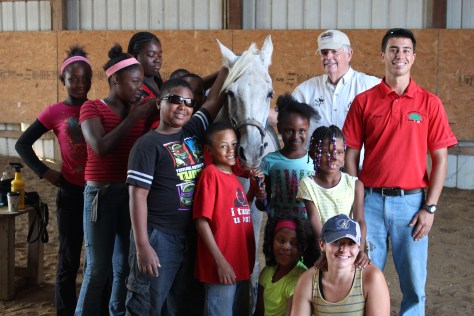



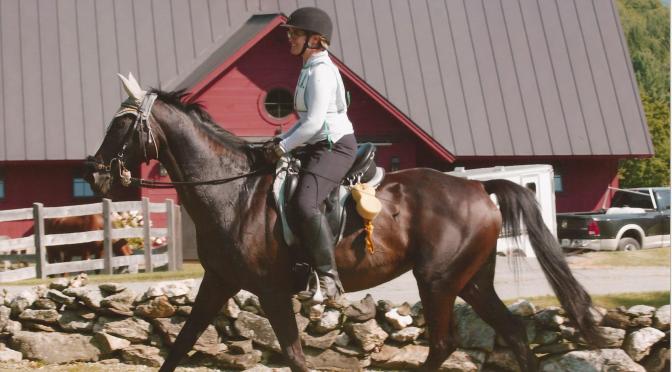

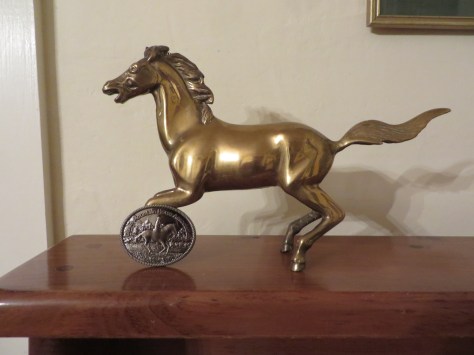
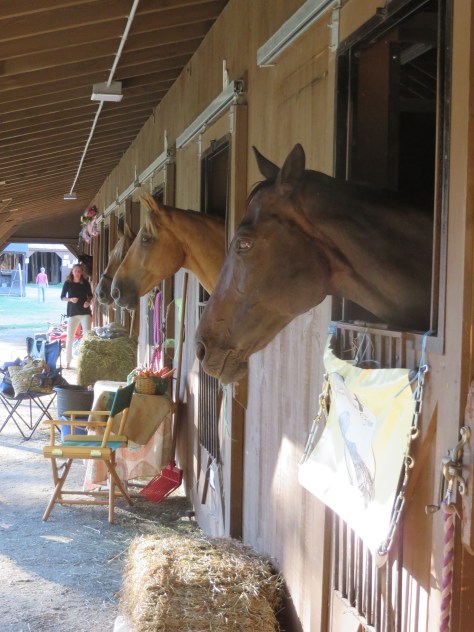


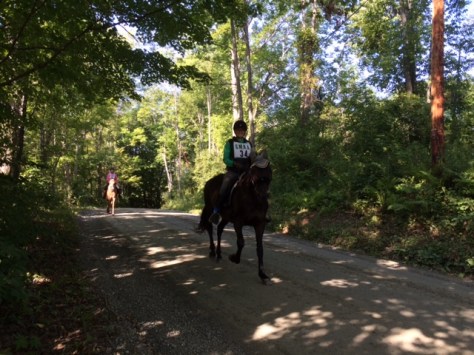

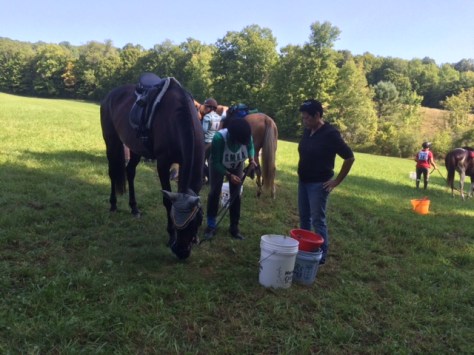


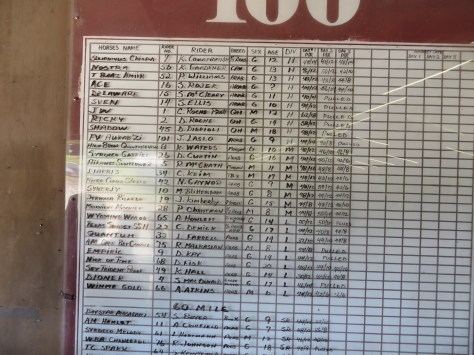


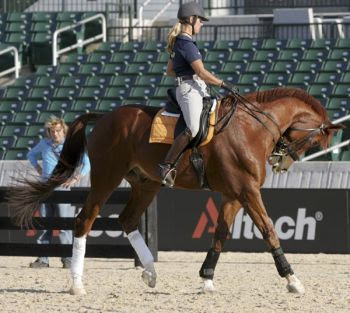
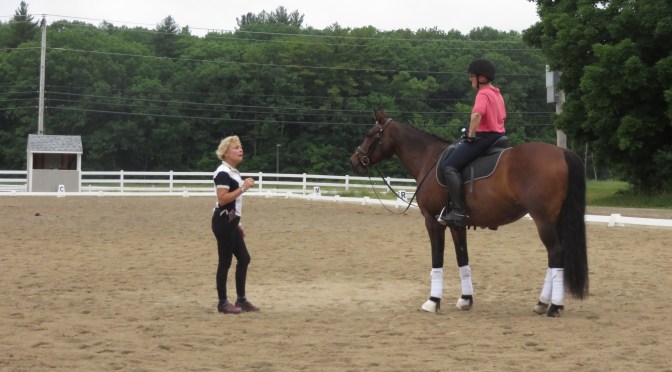

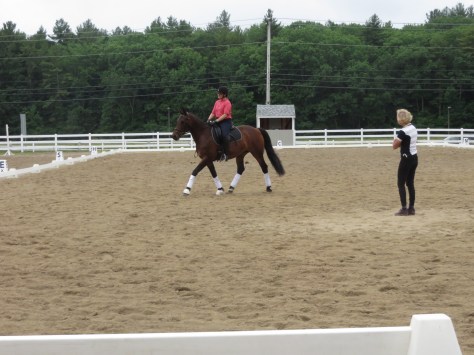


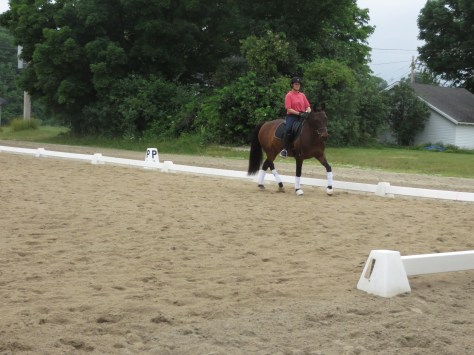


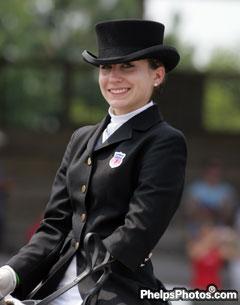

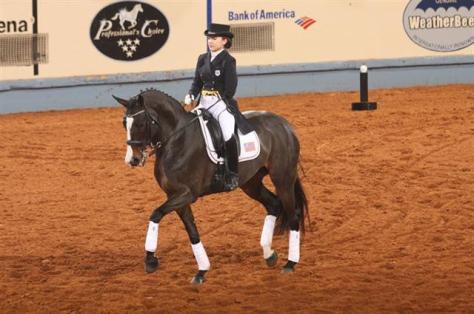
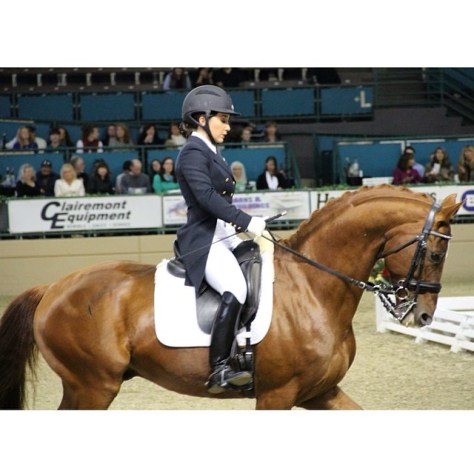


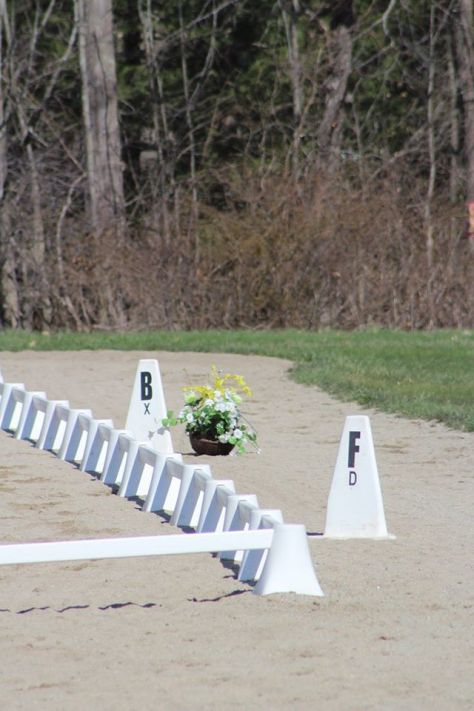
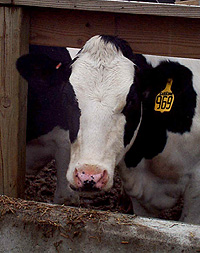

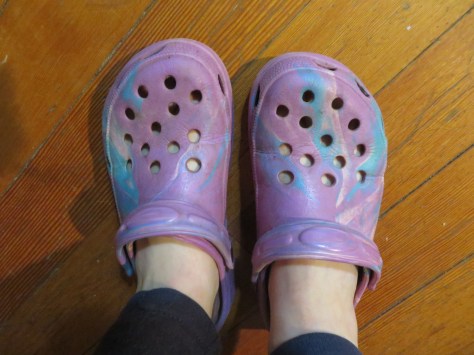
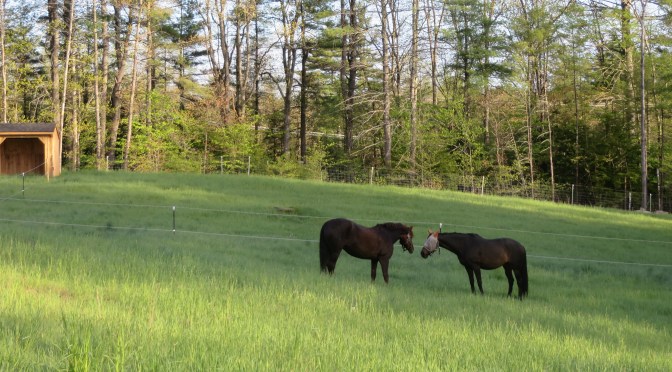


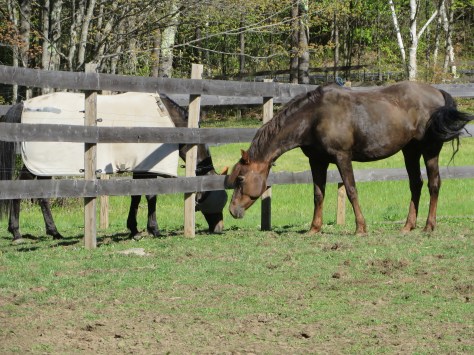
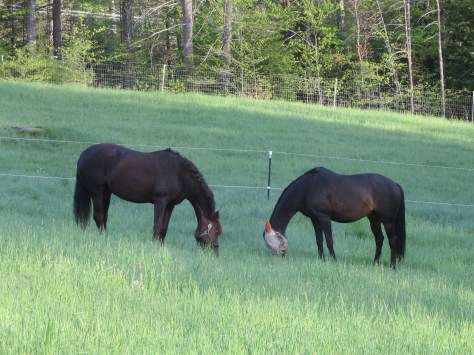

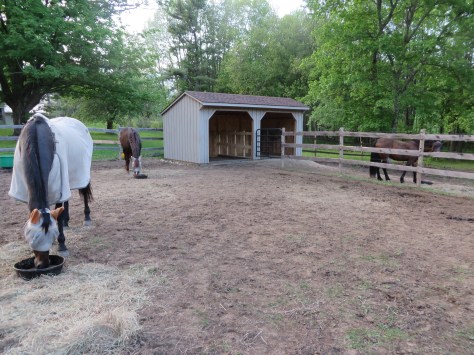


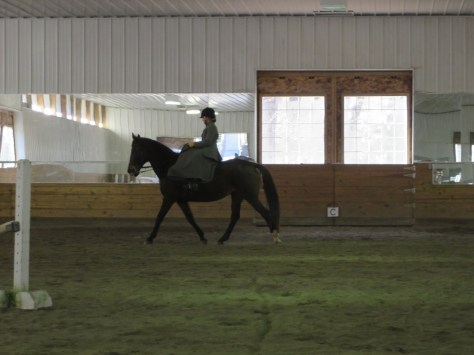
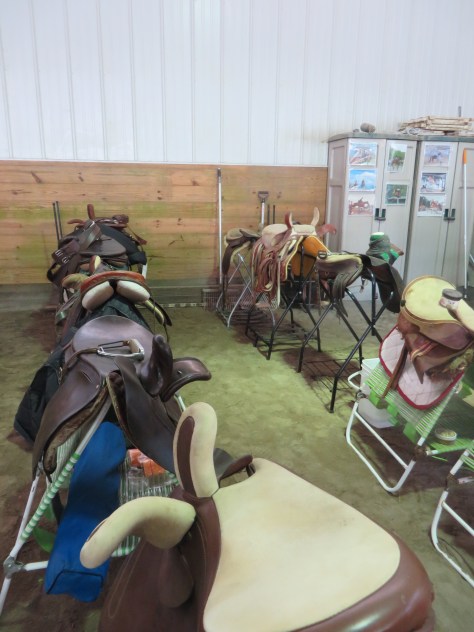
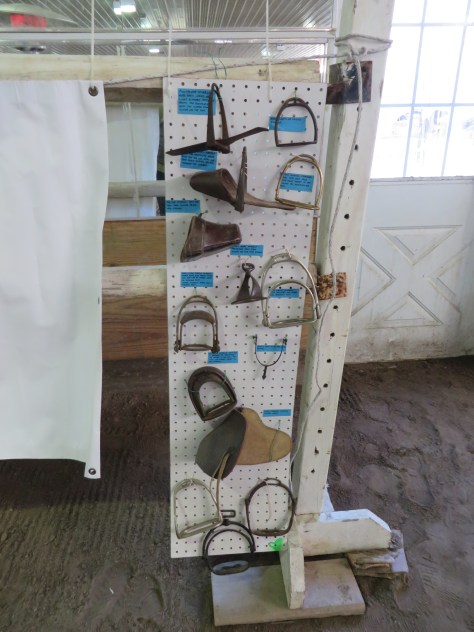
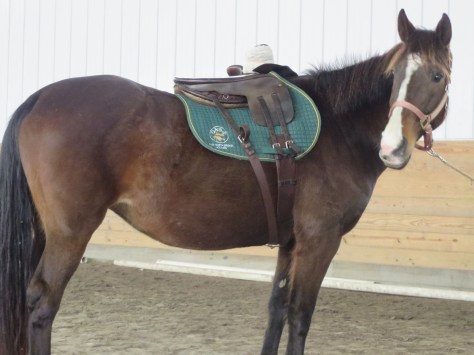

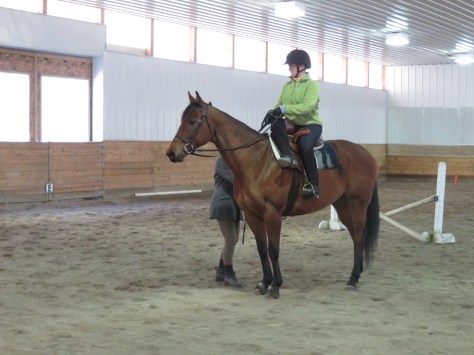
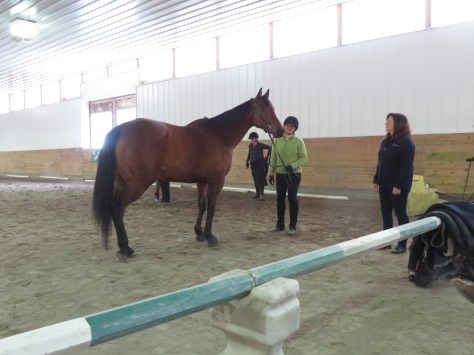
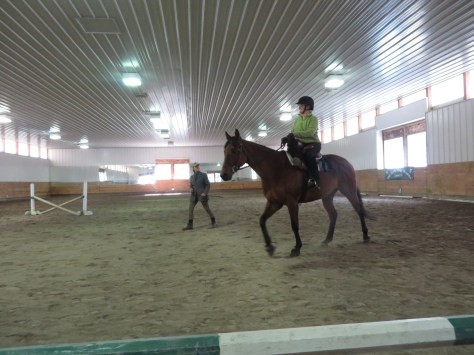
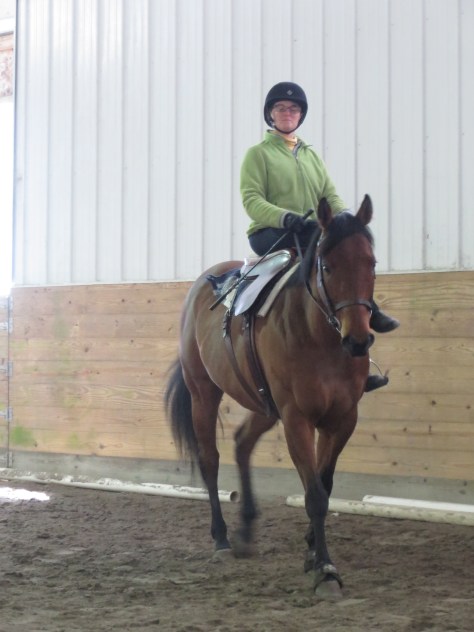
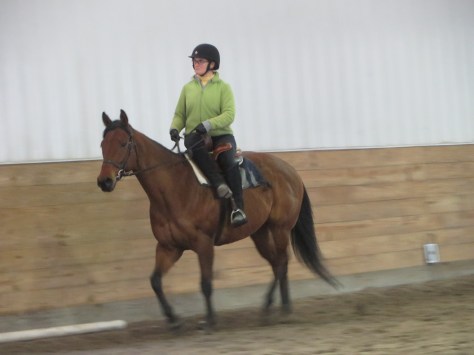



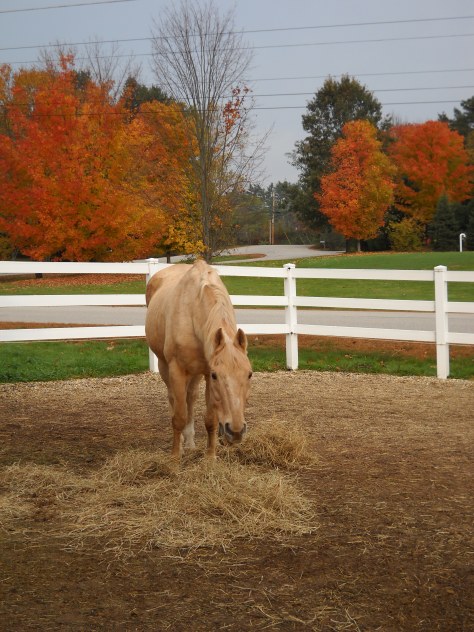
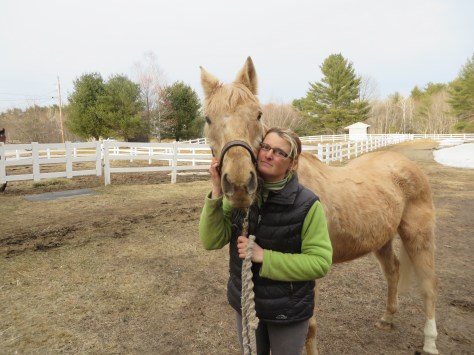
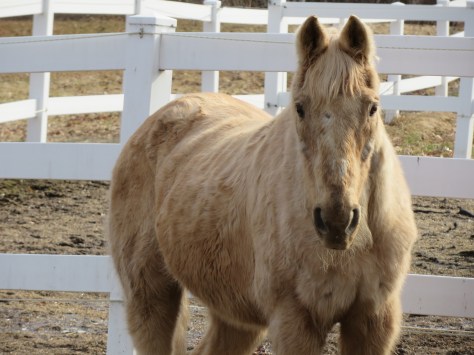


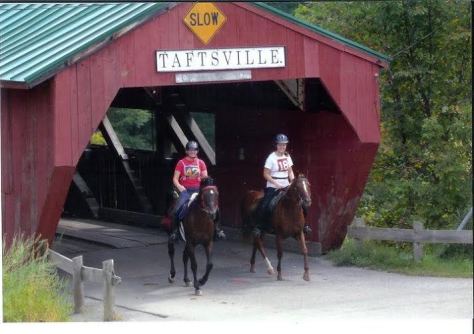
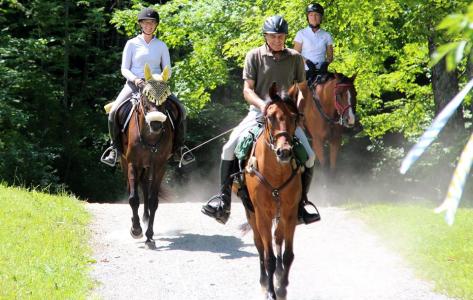
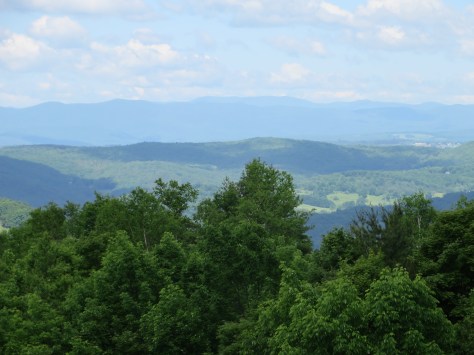
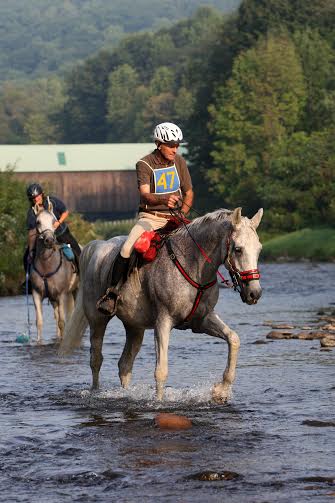
 The Academic Equestrian